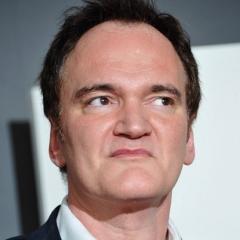
As a writer, I demand the right to write any character in the world that I want to write. I demand the right to be them, I demand the right to think them and I demand the right to tell the truth as I see they are.
I've always considered myself a filmmaker who writes stuff for himself to do.
To me, movies and music go hand in hand. When I'm writing a script, one of the first things I do is find the music I'm going to play for the opening sequence.
Don't write what you think people want to read. Find your voice and write about what's in your heart.
I'm very happy with the way I write. I think I do it good. But I've never really considered myself a writer.
I'm a big collector of vinyl - I have a record room in my house - and I've always had a huge soundtrack album collection. So what I do, as I'm writing a movie, is go through all those songs, trying to find good songs for fights, or good pieces of music to layer into the film.
I try not to get analytical in the writing process. I try to just kind of keep the flow from my brain to my hand as far as the pen is concerned and go with the moment and go with my guts.
You can't write poetry on the computer.
When I'm writing something, I try not to get analytical about it as I'm doing it, as I'm writing it.
My writing's like a journey. I'll know some of the stops ahead of time, and I'll make some of those stops and some of them I won't. Some will be a moot point by the time I get there. You know every script will have four to six basic scenes that you're going to do. It's all the scenes where your characters really come from.
Music is very, very important in my movies. In some ways the most important stage, whether it ends up being in the movie or not, is just when I come up with the idea itself before I have actually sat down and started writing. I go into my record room... I have a big vinyl collection and I have a room kind of set up like a used record store and I just dive into my music, whether it be rock music, or lyric music, or my soundtrack collection. What I'm looking for is the spirit of the movie, the beat that the movie will play with.
A thing when I was writing the movie 'The hateful eight' was, I hate The Confederate cause. I've always felt that they are our Nazis and the rebel flag was our swastika. So I totally have no love for that whole romance for that Antebellum time period.
I love thinking about things subtextually and I actually - like for instance when I write, I actually, I'm not very analytical about it. I don't ever deal with the subtext because I just know it's there so I don't have to deal with it. I just keep it about the scenario. I keep it on the surface, on my concerns. And one of the fun things is is when I'm done with everything, like now, for instance.
I write movies about mavericks, about people who break rules, and I don't like movies about people who are pulverised for being mavericks.
There are a lot of bad screenplays so if you write a good screenplay people are going to respond to it.
That's how it always is with me: the thing that sets me down to start writing is usually not what I end up doing. Because, as much as I love genre, and I try to deliver the goods, I go off from it. I go do my own thing.
With everything I've done from "Jackie Brown" on, I got really into really writing more prose in the - in what you're calling the stage directions, all right, and consequently my scripts have gotten bigger and bigger, and cut to "Kill Bill Volume 1 and 2."
I don't want to deal with the underneath while I'm, you know, while I'm making it or while I'm writing it or when I'm making it. Because again, I don't want to hit these nails on the head too strongly.
Everything I learned as an actor, I have basically applied to writing.
The way I write is really like putting one foot in front of the other. I really let the characters do most of the work, they start talking and they just lead the way.
I'm not writing novels, the screenplays are my novels, so I'm gonna write it the best that I can. If the movie never gets made, it'd almost be okay because I did it. It's there on the page.
When you start writing, you have your characters on a metaphorical paved road, and as they go down it, all these other roads become available that they can go down. And a lot of writers have roadblocks in front of those roads: they won’t allow their characters to go down those roads... I’ve never put any roadblocks on any of these paths. My characters can go wherever they would naturally go, and I’ll follow them.
By the time I was doing "Kill Bill," it was so much filled with prose that, you know, I start seeing why people write a screenplay and make it more like a blueprint, because basically I had written - in "Kill Bill," I had basically written a novel, and basically every day I was adapting my novel to the screen on the fly, you know, on my feet.
I'm not superstitious in my normal daily life but I get that way about writing, even though I know it's all bullshit. But I began that way and so, that's the way it is. My ritual is I never use a typewriter or computer. I just write it all by hand. It's a ceremony. I go to a stationary store and buy a notebook and then fill it up.
I've always equated the writing process with editing, sort of like when I get through editing the movie, that's like my last draft of the screenplay.
Follow AzQuotes on Facebook, Twitter and Google+. Every day we present the best quotes! Improve yourself, find your inspiration, share with friends
or simply: