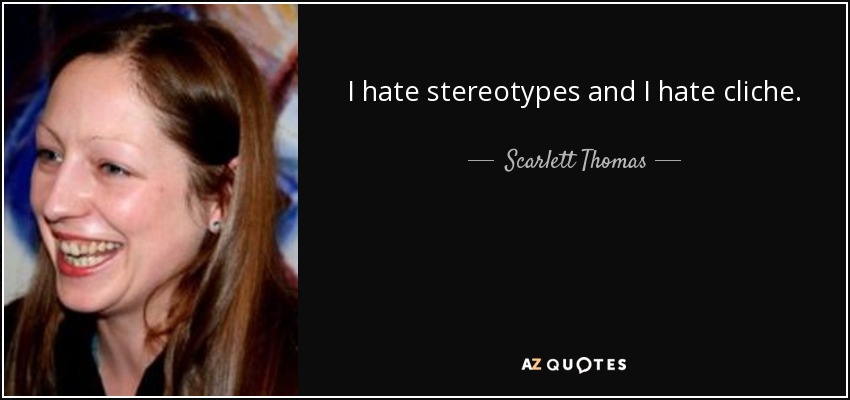
I hate stereotypes and I hate cliche.
Honesty and authenticity are a big deal for me.
One of the paradoxes of writing is that when you write non-fiction everyone tries to prove that it's wrong, and when you publish fiction, everyone tries to see the truth in it.
You tell them what a happy ending consists of, which is always individual success. You tell them that nothing irrational exists in this world, which is a lie. You tell them that conflict only exists only to be neatly resolved, and that everyone who is poor wants to be rich, and everyone who is ill wants to get better, and everyone who gets involved in crime comes to a bad end, and that love should be pure. You tell them that despite all this they are special, that the world revolves around them.
Homeopaths argue that water has a memory.
Sometimes you have to trust grownups, perhaps more so when they are not there to actually supervise you.
In real life nothing means anything. Stuff happens and there just is no structure.
One of the biggest problems for beginning writers is this need to over-explain.
Most people would look at an animal in a cage and instinctively feel that it should be set free. . . . It's a dangerous world out there, filled with predators. . . . What would you prefer? A comfortable, safe, warm, cosy life in a cage, or an uncertain life of freedom.
Real life is physical. Give me books instead. Give me the invisibility of the contents of books, the thoughts, the ideas, the images. Let me become part of a book. . . . an intertextual being: a book cyborg, or, considering that books aren't cybernetic, perhaps a bibliorg.
But I quite like the way you can talk about science without necessarily using mathematics, but using metaphors instead.
Follow AzQuotes on Facebook, Twitter and Google+. Every day we present the best quotes! Improve yourself, find your inspiration, share with friends
or simply: