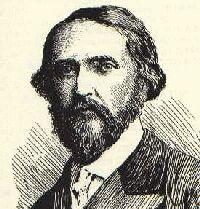
King René of Anjou [(1409-80)]was a strange compound of amiable, great and trifling qualities. He was so excellent a sovereign as to acquire the surnom of the Good. He was brave in war, delighted in tournaments and wrote on them, instituted festivals and processions, partly religious and partly burlesque, was a fond husband, a romantic lover, a good painter for that age, and a true philosopher.
A man of sense, though born without wit, often lives to have wit. His memory treasures up ideas and reflections; he compares themwith new occurrences, and strikes out new lights from the collision. The consequence is sometimes bons mots, and sometimes apothegms.
I have known several persons of great fame for wisdom in public affairs and councils governed by foolish servants. I have known great ministers, distinguished for wit and learning, who preferred none but dunces. I have known men of valor cowards to their wives. I have known men of cunning perpetually cheated. I knew three ministers who would exactly compute and settle the accounts of a kingdom, wholly ignorant of their own economy.
I look upon paradoxes as the impotent efforts of men who, not having capacity to draw attention and celebrity from good sense, fly to eccentricities to make themselves noted.
A poet who makes use of a worse word instead of a better, because the former fits the rhyme or the measure, though it weakens the sense, is like a jeweller, who cuts a diamond into a brilliant, and diminishes the weight to make it shine more.
Two large prominent eyes that rolled about to no purpose (for he was utterly short-sighted) a wide mouth, thick lips and inflated visage, gave him the air of a blind trumpeter. A deep untuneable voice which, instead of modulating, he enforced with unnecsessary pomp, a total neglect of his person, and ignorance of every civil attention, disgusted all who judge by appearance.
He was persuaded he could know no happiness but in the society of one with whom he could for ever indulge the melancholy that had taken possession of his soul.
Perhaps those, who, trembling most, maintain a dignity in their fate, are the bravest: resolution on reflection is real courage.
What is called chance is the instrument of Providence and the secret agent that counteracts what men call wisdom, and preserves order and regularity, and continuation in the whole, for ... I firmly believe, notwithstanding all our complaints, that almost every person upon earth tastes upon the totality more happiness than misery; and therefore if we could correct the world to our fancies, and with the best intentions imaginable, probably we should only produce more misery and confusion.
[Corneille] was inspired by Roman authors and Roman spirit, Racine with delicacy by the polished court of Louis XIV.
Without grace no book can live, and with it the poorest may have its life prolonged.
Every drop of ink in my pen ran cold.
I shun authors, and would never have been one myself, if it obliged me to keep such bad company.
When the Prince of Piedmont [later Charles Emmanuel IV, King of Sardinia] was seven years old, his preceptor instructing him in mythology told him all the vices were enclosed in Pandora's box. "What! all!" said the Prince. "Yes, all." "No," said the Prince; "curiosity must have been without.
Oh that I were seated as high as my ambition, I'd place my naked foot on the necks of monarchs.
Defaced ruins of architecture and statuary, like the wrinkles of decrepitude of a once beautiful woman, only make one regret that one did not see them when they were enchanting.
An ancient prophecy ... pronounced, That the castle and lordship of Otranto should pass from the present family, whenever the real owner should be grown too large to inhabit it!
One of the greatest geniuses that ever existed, Shakespeare, undoubtedly wanted taste.
How posterity will laugh at us, one way or other! If half a dozen break their necks, and balloonism is exploded, we shall be called fools for having imagined it could be brought to use: if it should be turned to account, we shall be ridiculed for having doubted.
It amazes me when I hear any person prefer blindness to deafness. Such a person must have a terrible dread of being alone. Blindness makes one totally dependent on others, and deprives us of every satisfaction that results from light.
Art is the filigrain of a little mind, and is twisted and involved and curled, but would reach farther if laid out in a straight line.
The passions seldom give good advice but to the interested and mercenary. Resentment generally suggests bad measures. Second thoughts and good nature will rarely, very rarely, approve the first hints of anger.
Shakespeare had no tutors but nature and genius. He caught his faults from the bad taste of his contemporaries. In an age still less civilized Shakespeare might have been wilder, but would not have been vulgar.
By deafness one gains in one respect more than one loses; one misses more nonsense than sense.
Posterity always degenerates till it becomes our ancestors.
Follow AzQuotes on Facebook, Twitter and Google+. Every day we present the best quotes! Improve yourself, find your inspiration, share with friends
or simply: