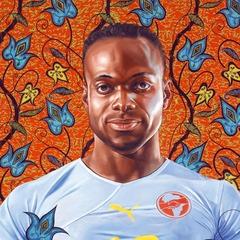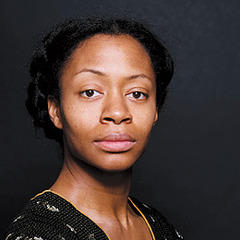
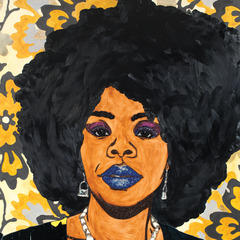
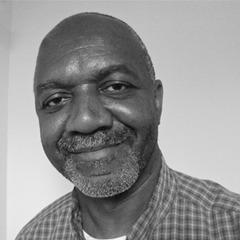
All art is self-portraiture.
Going to the Huntington gardens and libraries was radically important for me. They have one of the best collections of 18th- and 19th-century British portraiture that you can imagine in Southern California. One doesn't think about Southern California as being the capital of great art.
It became a question of taste. I have a certain taste in art history. And that - I had a huge library of art history books in my studio. And I would simply have the models go through those books with me, and we began a conversation about, like, what painting means, why we do it, why people care about it why or how it can mean or make sense today.
Just so [becoming a chef ] that I could support my art habit. You know? I mean, this is - this is something where you've been literally given an opportunity to put the world on pause for a second.
In our conversations, he [Michael Jackson] revealed a surprising understanding of art history. We were going through the finer points of the difference between one Italian sculptor to the next. You know, this - these are things that we don't necessarily assume of people in sanctified light.
I think, at the L.A. County Museum of Art, I saw my first example of Kerry James Marshall, who had a very sort of heroic, oversized painting of black men in a barbershop. But it was painted on the same level and with the same urgency that you would see in a grand-scale [Anthony] van Dyck or [Diego] Velazquez. The composition was classically informed; the painting technique was masterful. And it was something that really inspired me because, you know, these were images of young, black men in painting on the museum walls of one of the more sanctified and sacred institutions in Los Angeles.
I went back to my mother's house recently and I saw some of my earlier works as a 15-year-old art student. And a lot of them were reiterations of classic works.
Much like teaching art to young art students age 10 to 15 or so on, you have to break it down into bite-sized pieces, essential components. You have to - you know, at this point I'm so used to operating within given assumptions about art. But when you're explaining art to art students or people who are new to this experience, you have to really go back to the fundamentals.
He [Michael Jackson] would choose specific moments. They were art history books that I prefer. They were paintings that he prefers. It's this dance back and forth. We were halfway through the dance. He died.
I was 11 when I was first introduced to live drawing classes and going to art school.
One of my most strong memories was studying with Mel Bochner, one of the, I think, high water marks of American conceptual art.
In the Studio Museum in Harlem, when I was dealing with that community and dealing with my peers in the streets, it allowed for me to get outside of Yale, to get outside of art-speak, and to really think about art as a material practice that has very useful and pragmatic material precedent.
I think what's really interesting and useful about this question is that ultimately all art is a type of self-portraiture. And so in the act of identifying yourself, you're using others to get to that point. And so you're parsing out different aspects of different people in the world. You're choosing not only from America but increasingly globally different aspects of what's out there.
The art world has become so insular. The rules have become so autodidactic that, in a sense, they lose track of what people have any interest in thinking about, talking about or even looking at.
I was 12 in 1989 during perestroika, when my mother found a program that sent me to Russia to study art in the forests outside of Leningrad.
Mel [Bochner] sets a very high standard. He expects only the best and most thoughtful and rigorous examinations, not only of the history of art but your own practice.
If I have the same plan to go into the streets, find random strangers, use art-historical referent from their - from the specific location, to use decorative patterns from this location, that's a rule. That's a set of patterns that you can apply to all societies. But what gives rise or what comes out of each experiment is so radically different.
There is no purity with regards to the marketplace and art, I believe.
I guess art is in the eye of the beholder.
I think it was a matter of, like, I'm not going to have my kids in these wild streets. Both my twin brother and I were in art school together.
I think one of the things that I took from Mel [Bochner] specifically was his ability to look at oneself and one's relationship to the history of art and the practice of art at arm's length, the ability to sort of clinically and coldly remove oneself from the picture and to see it simply as a set of rules, habits, systems, moving parts.
So much of the hubris that surrounded conceptual art in the 1950s through '70s was that it had this arrogant presupposition that pointing in and of itself was a creative act. It never rigorously politically and socially analyzed the fact that the luxury to point is something that so many people throughout the world don't have.
One of the weirdest things that happened to artists and art criticism was this moment when everyone got cynical and stopped believing in the ability to engage the world in all of its myriad purposes, transformations, and incarnations.
That's partly the success of my work-the ability to have a young black girl walk into the Brooklyn Museum and see paintings she recognizes not because of their art or historical influence but because of their inflection, in terms of colors, their specificity and presence.
In high school I went to the Los Angeles County High School for the Arts. And this is like Fame. It's like that sort of prototypical, dancers in the hallway, theater students, musical students, art geeks. And it was a kindergarten in the truest sense of the world: a children's garden where I was able to sort of really come into myself as an artist, as a person, sexuality issues - like, all of this became something where there was a firming-up and a knowing that went on.
Follow AzQuotes on Facebook, Twitter and Google+. Every day we present the best quotes! Improve yourself, find your inspiration, share with friends
or simply: