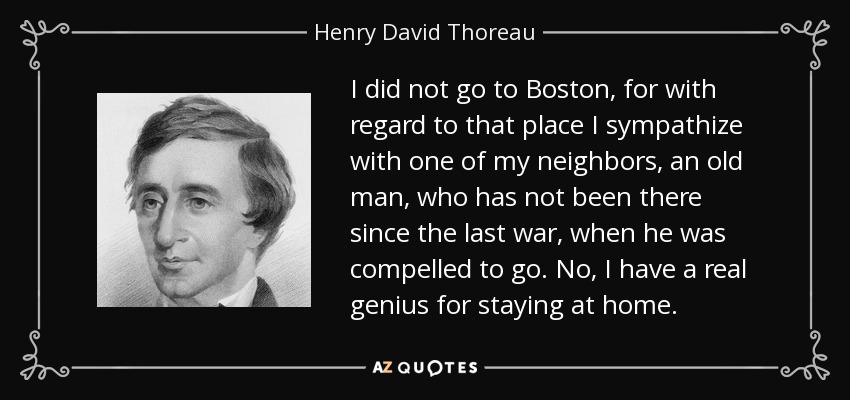
I did not go to Boston, for with regard to that place I sympathize with one of my neighbors, an old man, who has not been there since the last war, when he was compelled to go. No, I have a real genius for staying at home.
[Elsa Dorfman]was well known. Certainly in the Boston area, she's well known as a portrait photographer. My wife always wanted to meet her and then there was some benefit where she was taking pictures.
The common thread linking the major Islamic terrorist attacks that have recently occurred on our soil - 9/11, the Ft. Hood shooting, the Boston Bombing, the San Bernardino attack, the Orlando attack - is that they have involved immigrants or the children of immigrants. Clearly, new screening procedures are needed.
The Affordable Care Act is a huge problem. [Repealing the ACA is] going to have huge implications. We have millennials that live in Boston that are on their parents' health insurance. The businesses have hired them and have been able to hire more people because they have been able to be on their own health insurance. We have seniors in our city who have preexisting conditions, or something called a "donut hole," which is a prescription drug [gap] in Medicare. Whatever changes they make could have detrimental effects on people's health care, but also on the economy.
I don't know what started me, I just wrote poetry from the time was quite small. I guess I liked nursery rhymes and I guess I thought I could do the same thing. I wrote my first poem, my first published poem, when I was eight-and-a-half years old. It came out in The Boston Traveller and from then on, I suppose, I've been a bit of a professional.
Bill Russell, a famous philosopher from Boston Celtics once "When things go bad, things go bad." The [Iraq] war was terribly mismanaged-it was terribly mismanaged.
In America, we happen to be living in a third world country from the point of view of economic and social development. I came back from New York yesterday and I took the fastest train in the country, the Acela. My wife and I took the New York-Boston train sixty years ago - it wasn't called the Acela then - and I think it's improved by about fifteen minutes since then. Any other country in the world would be about half the time. In fact when it's riding along the Connecticut turnpike it's barely keeping up with traffic, which is just scandalous.
Peak oil is already upon us. It is destroying our banking system, that is, our system for marshalling capital, and that is about to put us out of business-as-usual. So, we have to carry on with business-not-so-usual. This could mean anything from your children finding careers in farming (rather than show biz or plastic surgery) to reorganizing households differently to traveling from New York to Boston by boat.
I really don't think that Detroit was any different than New York of Boston or Philadelphia. Kids always wanted to listen to music outside because that's where they hung out with their friends.
1967 race in Boston changed not just my life, but millions of women's lives. There are also things that, when you get older, resonate more.
Most people don't know this but over the course of time, the official of the race in 1967 in Boston, who attacked me Jock Semple and I became very good friends. That gave me a whole new perspective on forgiveness.
I was born and raised in Dallas, Texas and seasonally lived in New Orleans and Boston. Given that this was all at a tender age, I imagine I was very impressionable. I was a kid that was always moving, city to city, school to school. I adapted easily wherever I was, I knew how to blend.
When I was living in Boston I worked in this store that played the college radio station. I had to listen to it all day, and I didn't care for most of it.
Suddenly the land is haunted by all these dead Indians. There is this new fascination with the Southwest, with places like Santa Fe, New Mexico, where people come down from New York and Boston and dress up as Indians. When I go to Santa Fe, I find real Indians living there, but they are not involved in the earth worship that the American environmentalists are so taken by. Many of these Indians are interested, rather, in becoming Evangelical Christians.
Boston fans - and New York fans are the same - it doesn't matter what you do outside of baseball, they don't forgive or forget that you play in pinstripes and they don't care about your interests off the field.
When Emily Dickinson's poems were published in the 1890s, they were a best-seller; the first book of her poems went through eleven editions of a print run of about 400. So the first print run out of Boston for a first book of poems was 400 for a country that had fifty million people in it. Now a first print run for a first book is maybe 2,000? So that's a five-time increase in the expectation of readership. Probably the audience is almost exactly the same size as it was in 1900, if you just took that one example.
I spent a lot of time studying our Founders and people like Samuel Adams and the original Tea Party. What Adams and the Sons of Liberty did in Boston was spread the word about the abuses of the British. They had Committees of Correspondence that got the word out to the colonies. We need Committees of Correspondence now, and we are getting them.
I had written a book called "Boston Boy" some years ago, and that took me from the time I could speak, I guess, in Boston through the time when I finally left to come to New York. One was understanding and coping with anti-Semitism. Boston, at the time, was the most anti-Semitic city in the country. And I found out when I was an adolescent that you have to be crazy to go out after dark all by yourself; you'd get your head bashed in.
I went to school at a place that also shaped my life, Boston Latin School.
It was a competitive examination [in Boston Latin School]. Poor kids, Brahmans, middle-class kids. The masters, as the teachers were called, didn't give a damn about - how we felt, what was - things like at home. I mean, this goes against the current grain. All they thought about was: `You're here. You made the exam. You can do the work. And if you can't, we'll throw you out.'
My mother, when she was younger, worked at Filene's in Boston. And she was chief cashier. And I always wondered why she never went back to some kind of work 'cause that was a very responsible position.
I was writing - at least beginning to write Boston Boy and there were a lot of holes in my so-called research. I didn't know the towns my mother and father came from in Russia. I didn't know the name of the clothing store I went to work for when I was 11 years old. I didn't know a lot of things. So I called for my FBI files, not expecting to have that stuff there, but I wanted to know what they had on me.But they did have the towns my mother and father lived in in Russia. They had the grocery store I worked in when I was 11 years old.
When you think about the person responsible for creating the character and the dialogue, Bill Monahan, who's a Boston guy, obviously, his words roll off my tongue quite nicely.
For Democrats who are feeling completely discouraged, I've been trying to remind them, everybody remembers my Boston speech in 2004. They may not remember me showing up here in 2005 when John Kerry had lost a close election, Tom Daschle, the leader of the Senate, had been beaten in an upset. Ken Salazar and I were the only two Democrats that won nationally. Republicans controlled the Senate and the House, and two years later, Democrats were winning back Congress, and four years later I was President of the United States.
If we can't have an open and honest debate about the value of ideas in a university in Glasgow, or Boston, or anywhere else in the world, then where are they going to go?
Follow AzQuotes on Facebook, Twitter and Google+. Every day we present the best quotes! Improve yourself, find your inspiration, share with friends
or simply: