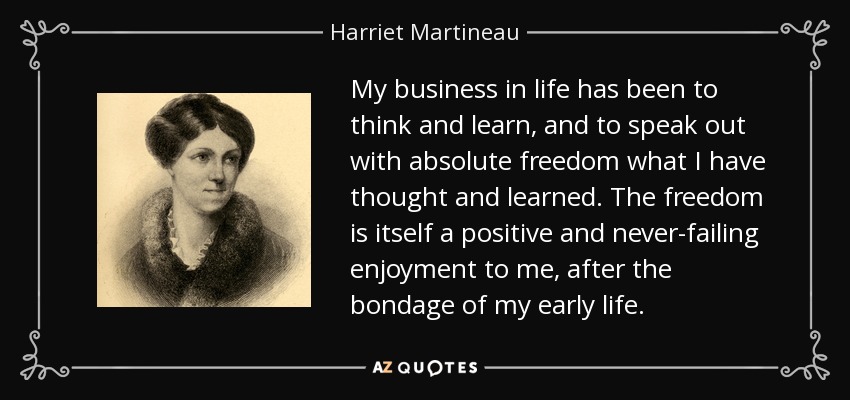
My business in life has been to think and learn, and to speak out with absolute freedom what I have thought and learned. The freedom is itself a positive and never-failing enjoyment to me, after the bondage of my early life.
I think so much of my early life, even though I grew up White and middle class, I was completely shattered by the horrifically violent atmosphere I grew up in. I am a consequence of violence. That opened a door to many realities that I would not have experienced had I not survived what I did.
Pianists of extraordinary talent, such as Christina Petrowska,spend a large part of their early lives perfecting technique…Miss Petrowska,a Canadian with a phenomenal ability to play the most difficult music cleanly, gave a demonstration of her achievements at Carnegie Recital Hall. A product of the Juilliard School who studied with Karlheinz Stockhausen and Gyorgy Ligeti in Europe, Miss Petrowska built most of her program around fiercely difficult contemporary works. She has fingers that work like chrome-plated pistons, and her high-seated position let her bring pulverizing power to bear.
... goodness is of a modest nature, easily discouraged, and when much elbowed in early life by unabashed vices, is apt to retire into extreme privacy, so that it is more easily believed in by those who construct a selfish old gentleman theoretically, than by those who form the narrower judgments based on his personal acquaintance.
... business training in early life should not be regarded solely as insurance against destitution in the case of an emergency. For from business experience women can gain, too, knowledge of the world and of human beings, which should be of immeasurable value to their marriage careers. Self-discipline, co-operation, adaptability, efficiency, economic management,--if she learns these in her business life she is liable for many less heartbreaks and disappointments in her married life.
I can't point to any major episodes of sexual discrimination in my early life. But I was so aware of the crime, the shame that there was no use of my mother's ability and energy.
I regard the effort to introduce women into colleges for young men as very undesirable, and for many reasons. That the two sexes should be united, both as teachers and pupils, in the same institution seems very desirable, but rarely in early life by a method that removes them from parental watch and care, and the protecting influences of a home.
I have a good memory for early life. My visual memory is good about childhood and adolescence, and less good in the last 10 years. I could probably tell you less what happened in the last 10 years. I remember what houses looked like, sometimes they just pop into my head.
In my early life, and probably even today, it is not sufficiently understood that a child's education should include at least a rudimentary grasp of religion, sex, and money. Without a basic knowledge of these three primary facts in a normal human being's life --subjects which stir the emotions, create events and opportunities, and if they do not wholly decide must greatly influence an individual's personality --no human being's education can have a safe foundation.
As we grow older, the memories of early life brighten, those of maturity and senescence grow dim and confused.
I was partially raised by an aunt who was a dress designer, so I was around her studio all of my early life. I know materials. I can look through Harper's Bazaar and decide what works and what doesn't, or any other magazine, Seventeen if you wish.
Every parent knows this moment in a child's age when he or she needs your attention in a very specific way because it's the beginning and ending of the early life of imagination. It's such a responsibility.
There will be some trouble about 'biography' because I have never troubled myself to supply particulars of my early life to any writer.
Discipline our youth in early life in sound maxims of moral, political, and religious duties.
I certainly spent many years in my early life chasing all over the globe for meaning and purpose. I'd feel like I'd found it, then it would fade away again.
I think the thing is that you're very affected by your early life, and I think that if you ever had that feeling of outsider, or loneliness or whatever, it just doesn't leave you. You can be happy and successful, whatever, but I think that thing stays inside of you. It doesn't ever really leave you. You kind of always will have that.
I don't think of myself as particularly earnest. I have long bouts of cynicism and skepticism. So much of my early life was full of uncertainties. It still is. My "Buddha book" expresses that. Perhaps that's what created this impression of earnestness.
I do remember how it was to be poor. I do remember that in my early years, we had to grow and raise all of our food, even our animals. And I remember in my early life, we didn't even have electricity. So it was very, very hard times then.
Almost all men are over anxious. No sooner do they enter the world than they lose that taste for natural and simple pleasures so remarkable in early life. Every hour do they ask themselves what progress they have made in the pursuit of wealth or honor and on they go as their fathers went before them till weary and sick at heart they look back with a sigh of regret to the golden time of their childhood.
If an enthusiastic, ardent, and ambitious man marry a wife on whose name there is a stain, which, though it originate in no fault of hers, may be visited by cold and sordid people upon her, and upon his children also: and, in exact proportion to his success in the world, be cast in his teeth, and made the subject of sneers against him: he may, no matter how generous and good his nature, one day repent of the connection he formed in early life; and she may have the pain and torture of knowing that he does so.
In early life I had felt a strong desire to devote myself to the experimental study of nature; and, happening to see a glass containing some camphor, portions of which had been caused to condense in very beautiful crystals on the illuminated side, I was induced to read everything I could obtain respecting the chemical and mechanical influences of light, adhesion, and capillary attraction.
In my early life my mother tried to create a nurturing environment in which my mind could play. Her big rule was "Never lose in your imagination." She told me that thoughts were things and that I would become the thing I thought of most. This kind of empowerment is crucial to creative thinking.
When we notice a connection between our present fears and their origins in early life, we are finding out how much of our identity is designed by fear. Is fear the architect of me?
For me Oliver Twist is a political novel. It is a furious critique of the treatment of orphans and poor children who were forced to spend their early lives in ghastly institutions.
The style of life is a unity because it has grown out of the difficulties of early life and out of the striving for a goal.
Follow AzQuotes on Facebook, Twitter and Google+. Every day we present the best quotes! Improve yourself, find your inspiration, share with friends
or simply: