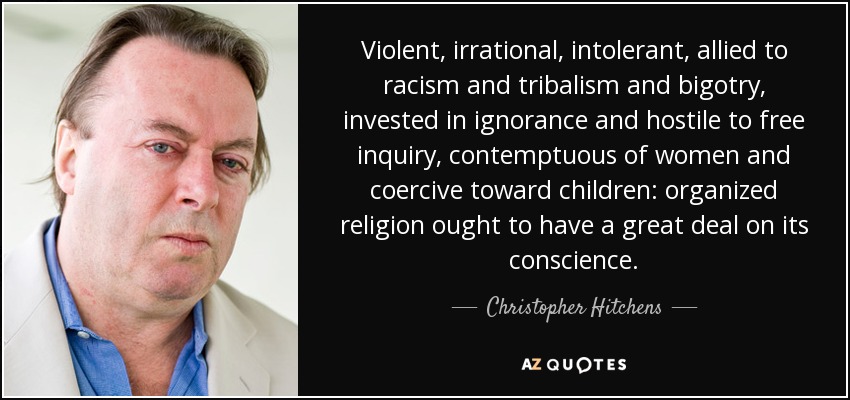
Violent, irrational, intolerant, allied to racism and tribalism and bigotry, invested in ignorance and hostile to free inquiry, contemptuous of women and coercive toward children: organized religion ought to have a great deal on its conscience.
Where everyone else sees a straight line, you see a maze, and when I'm done talking to you, the maze starts to make more sense --Reply by Dove to Aly's silent inquiry
But whenever one meets modern thinkers (as one often does) progressing toward a madhouse, one always finds, on inquiry, that they have just had a splendid escape from another madhouse. Thus, hundreds of people become Socialists, not because they have tried Socialism and found it nice, but because they have tried Individualism and found it particularly nasty.
They wouldn’t even lift a finger to save their own grandmothers from the Ravenous Bugblatter Beast of Traal without orders signed in triplicate, sent in, sent back, queried, lost, found, subjected to public inquiry, lost again, and finally buried in soft peat for three months and recycled as firelighters.
Stop looking all over the place for "the answers" - whatever they are - and start looking for the questions - the inquiries which are most important in your life, and give them answers. You do not live each day to discover what it holds for you, but to create it.
Some communities don't permit open, honest inquiry about the things that matter most. Lots of people have voiced a concern, expressed a doubt, or raised a question, only to be told by their family, church, friends, or tribe: "We don't discuss those things here." I believe the discussion itself is divine. Abraham does his best to bargain with God, most of the book of Job consists of arguments by Job and his friends about the deepest questions of human suffering, God is practically on trial in the book of Lamentations, and Jesus responds to almost every question he's asked with...a question.
Given the final futility of our struggle, is the fleeting jolt of meaning that art gives us valuable? Or is the only value in passing the time as comfortable as possible? What should a story seek to emulate, Augustus? A ringing alarm? A call to arms? A morphine drip? Of course, like all interrogation of the universe, this line of inquiry inevitably reduces us to asking what it means to be human and whether—to borrow a phrase from the angst-encumbered sixteeen-year-olds you no doubt revile—there is a point to it all.
What do you think dignity's all about?' The directness of the inquiry did, I admit, take me rather by surprise. 'It's rather a hard thing to explain in a few words, sir,' I said. 'But I suspect it comes down to not removing one's clothing in public.
The advantages of a uniform statistical nomenclature, however im- perfect, are so obvious, that it is surprising no attention has been paid to its enforcement in bills of mortality. Each disease has in many instances been denoted by three or four terms, and each term has been applied to as many different diseases ; vague, inconvenient names have been employed, or complications have been registered, instead of primary diseases. The nomenclature is of as much importance in this depart- ment of inquiry as weights and measures in the physical sciences, and should be settled without delay.
Religion is a valid inquiry; whether society accepts it or rejects it, it doesn't matter. Man is a religious animal and is going to remain that way. Religion is something natural. To ask from where you come is relevant; to ask, 'Who am I?' is going to remain relevant always. But the modern mind has created a climate of atheism so you cannot ask such questions. If you ask, people laugh. If you talk about such things, people feel bored If you start inquiring in these ways, people think you are slipping out of your sanity. Religion is no longer a welcome inquiry.
The notion of travelling to far places in order to study alien peoples and cultures, is unique to Western man; it springs from the predatory genius of the Greeks; no primitive peoples have ever come to study us. This is, on the one hand, a disinterested, intellectually inspired impulse. It is one of our glories. But it is, on the other, part and parcel of exploitation. [] The Western obsession with inquiry, with analysis, with the classification of all living forms, is itself a mode of subjugation, of psychological and technical mastery.
Well, does he still have his fingernails? Making inquiries while negotiating the release of a US Army pilot from North Korea, in Time.
The public school system: "Usually a twelve year sentence of mind control. Crushing creativity, smashing individualism, encouraging collectivism and compromise, destroying the exercise of intellectual inquiry, twisting it instead into meek subservience to authority." - Walter Karp, Editor Harper's Magazine The ground of liberty is to be gained by inches, and we must be contented to secure what we can get from time to time and eternally press forward for what is yet to get. It takes time to persuade men to do even what is for their own good.
Adrienne Mayor's inquiry into the myth--and surprising reality--of Amazon women begins with the fierce Greek huntress Atalanta, but takes us deep into the past and as far afield as the Great Wall of China. With the restless curiosity and meticulous scholarship that have become her hallmark, the author once again has found a gap in my bookshelf and filled it, admirably.
Although I know of no reference to Christ ever commenting on scientific work, I do know that He said, "Ye shall know the truth, and the truth shall make you free." Thus I am certain that, were He among us today, Christ would encourage scientific research as modern man's most noble striving to comprehend and admire His Father's handiwork. The universe as revealed through scientific inquiry is the living witness that God has indeed been at work.
Innovation is fostered by information gathered from new connections; from insights gained by journeys into other disciplines or places; from active, collegial networks and fluid, open boundaries. Innovation arises from ongoing circles of exchange, where information is not just accumulated or stored, but created. Knowledge is generated anew from connections that weren't there before.
It would appear... that moral phenomena, when observed on a great scale, are found to resemble physical phenomena; and we thus arrive, in inquiries of this kind, at the fundamental principle, that the greater the number of individuals observed, the more do individual peculiarities, whether physical or moral, become effaced, and leave in a prominent point of view the general facts, by virtue of which society exists and is preserved.
Literature is an inquiry into the deepest yearnings of the human spirit.
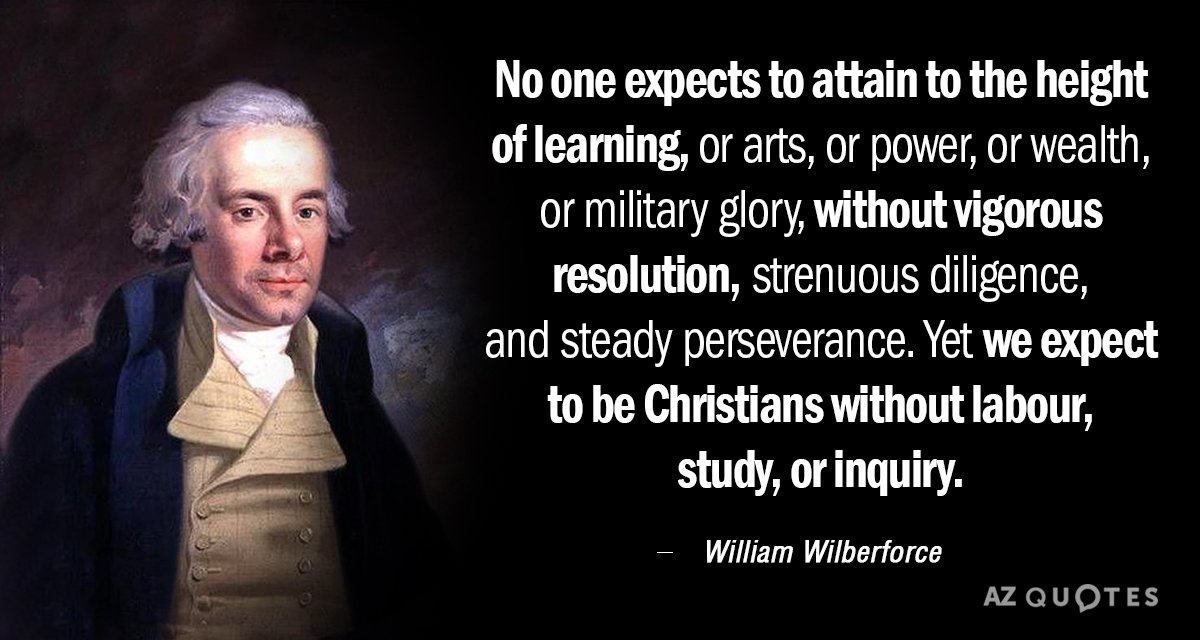
No one expects to attain to the height of learning, or arts, or power, or wealth, or military glory, without vigorous resolution, strenuous diligence, and steady perseverance. Yet we expect to be Christians without labour, study, or inquiry.
From the physician, as emphatically the student of Nature, is expected not only an inquiry into cause, but an investigation of the whole empire of Nature and a determination of the applicability of every species of knowledge to the improvement of his art.
The usefulness of mathematics in furthering the sciences is commonly acknowledged: but outside the ranks of the experts there is little inquiry into its nature and purpose as a deliberate human activity. Doubtless this is due to the inevitable drawback that mathematical study is saturated with technicalities from beginning to end.
Scientists tend to resist interdisciplinary inquiries into their own territory. In many instances, such parochialism is founded on the fear that intrusion from other disciplines would compete unfairly for limited financial resources and thus diminish their own opportunity for research.
for we are inquiring not in order to know what virtue is, but in order to become good, since otherwise our inquiry would have been of no use
Don't puzzle the mind with too many inquiries. One finds it difficult to put one single thing into practising, but dares invite distraction by filling the mind with too many things.
History is the art of making an argument about the past by telling a story accountable to evidence. In the writing of history, a story without an argument fades into antiquarianism; an argument without a story risks pedantry. Writing history requires empathy, inquiry, and debate. It requires forswearing condescension, cant, and nostalgia. The past isn’t quaint. Much of it, in fact, is bleak.
Follow AzQuotes on Facebook, Twitter and Google+. Every day we present the best quotes! Improve yourself, find your inspiration, share with friends
or simply: