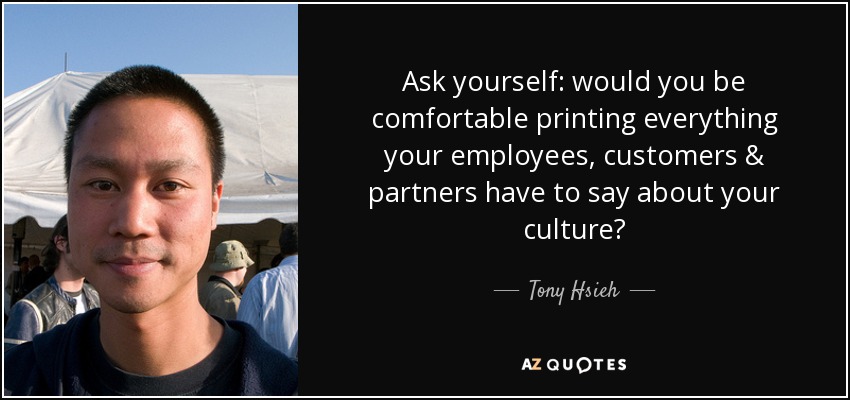
Ask yourself: would you be comfortable printing everything your employees, customers & partners have to say about your culture?
We're not a manufacturer, or an airline, but we do use energy. Printing and publishing newspapers, producing films and television programs, operating 24-hour newsrooms. It all adds carbon to the atmosphere.
What is the use of freedom of the press if the government is in possession of all the printing presses, what does freedom of assembly avail if all the meeting places belong to the government? In a society in which there is no more personal and economic freedom, even the freest form of the state cannot make political independence possible.
On our earth, before writing was invented, before the printing press was invented, poetry flourished. That is why we know that poetry is like bread; it should be shared by all, by scholars and by peasants, by all our vast, incredible, extraordinary family of humanity.
The world has been printing books for 450 years, and yet gunpowder still has a wider circulation. Never mind! Printer's ink is the greater explosive: it will win.
It may be that we exist and cease to exist in alternations, like the minute dots in some forms of toned printing or the succession of pictures on a cinema film. It may be that reality is an illusion of movement in an eternal, static, multidimensional universe. We may be only a story written on the ground of the inconceivable; the pattern on a rug beneath the feet of the incomprehensible.
Nothing could be more misleading than the idea that computer technology introduced the age of information. The printing press began that age, and we have not been free of it since.
Similar to computer technology in the '60s, 3-D printing is a universal technology that has the potential to revolutionize our life by enabling individuals to design and manufacture things.
The superhero genre speaks to a vast swath of humanity these days, and studios are in the business of constantly renewing their money-printing licenses. I sense we're nearing a saturation point with some of these icons, where it becomes more about the action figures and Happy Meals than it does the mythological heartbeat of the core ideas.
My dad didn't graduate from high school, ended up being a printing salesman, probably never made more than $8,000 a year. My mom sold real estate and did it part time.
The coming of the printing press must have seemed as if it would turn the world upside down in the way it spread and, above all, democratized knowledge. Provide you could pay and read, what was on the shelves in the new bookshops was yours for the taking. The speed with which printing presses and their operators fanned out across Europe is extraordinary. From the single Mainz press of 1457, it took only twenty-three years to establish presses in 110 towns: 50 in Italy, 30 in Germany, 9 in France, 8 in Spain, 8 in Holland, 4 in England, and so on.
All those commodities are going to have to rise in value as we are in short supply and we are printing too much money.
Hippo in a skirt: this was a comic reference to one of Solomon's principal wives, the one from Moab. Childish? Yes. But in the days before printing we had limited opportunities for satire.
They're constants, aren't they?" ... "Books are. That's why we like them so much. They seem immutable. They're not, of course. Not from the author's first draft to the tenth printing, but they seem like it.
Who taught you to write in blood on my back? Who taught you to use your hands as branding irons? You have scored your name into my shoulders, referenced me with your mark. The pads of your fingers have become printing blocks, you tap a message on to my skin, tap meaning into my body. Your morse code interferes with my heart beat. I had a steady heart before I met you, I relied upon it, it had seen active service and grown strong. Now you alter its pace with your own rhythm, you play upon me, drumming me taut.
The solution was eventually found by Johannes Gutenberg, who made the breakthrough that finally established printing as the communication technology of the future. Similar ideas may have been under development around the same time in Prague and Haarlem. But in business, the key question is not about who else is in the race, it's about who gets there first. Johannes Gutenberg was the first to make the new technology work, ensuring his place in any history of the human race.
It seems not more reasonable to leave the right of printing unrestrained, because writers may be afterwards censured, than it would be to sleep with doors unbolted, because by our laws we can hang a thief.
Another time factor is output: proofing and printing. That is, getting your work out of the computer and onto paper and having it satisfy you. It can be time consuming and expensive.
The greatest Inventions were produced in Times of Ignorance; as the Use of the Compass, Gunpowder, and Printing; and by the dullest Nation, as the Germans.
In the world's history certain inventions and discoveries occurred, of peculiar value, on account of their great efficiency in facilitating all other inventions and discoveries. Of these were the art of writing and of printing - the discovery of America, and the introduction of Patent-laws. The date of the first ... is unknown; but it certainly was as much as fifteen hundred years before the Christian era; the second-printing-came in 1436, or nearly three thousand years after the first. The others followed more rapidly - the discovery of America in 1492, and the first patent laws in 1624.
After the birth of printing books became widespread. Hence everyone throughout Europe devoted himself to the study of literature... Every year, especially since 1563, the number of writings published in every field is greater than all those produced in the past thousand years. Through them there has today been created a new theology and a new jurisprudence; the Paracelsians have created medicine anew and the Copernicans have created astronomy anew. I really believe that at last the world is alive, indeed seething, and that the stimuli of these remarkable conjunctions did not act in vain.
My take on the whole dot-com bubble was that a lot of people who wanted to make a lot of money got too excited and hyped up the commercial aspects of the Internet prematurely. I think the vision of the Internet as a democratizing medium - as everyone's printing press - is real. We got distracted from that by the mass hallucinations of the bubble.
It's complicated.' 'So's quantitative easing. But I still get that it means printing money.
If photography is allowed to stand in for art in some of its functions it will soon supplant or corrupt it completely thanks to the natural support it will find in the stupidity of the multitude. It must return to its real task, which is to be the servant of the sciences and the arts, but the very humble servant, like printing and shorthand which have neither created nor supplanted literature.
Printing up extra money - with no backing - used to be the sort of thing only counterfeiters did. Now it is done by the central bankers and Treasury Secretaries themselves. They don't apologize for it. They don't hang their heads and contemplate blowing their brains out. Instead, they're proud of it... announcing that they 'saved civilization,' or some such claptrap.
Follow AzQuotes on Facebook, Twitter and Google+. Every day we present the best quotes! Improve yourself, find your inspiration, share with friends
or simply: