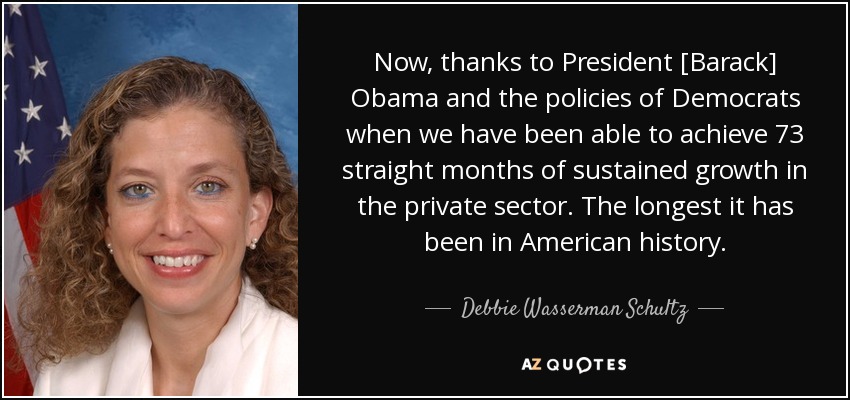
Now, thanks to President [Barack] Obama and the policies of Democrats when we have been able to achieve 73 straight months of sustained growth in the private sector. The longest it has been in American history.
We know that we have to have the right combinations of government policies and private sector energy and dynamism. Getting that balance right is what I know President Obama has tried to do, and at every turn he's been stopped.
These new investments in cyber security and the modernization of our military will spur substantial new job creation in the private sector and help create the jobs and technologies of tomorrow. It's what we have to do. America must be the world's dominant technological powerhouse of the twenty-first century, and young Americans - including in our inner cities - should get these new jobs!
I really haven't had time to think about what I'm going to do as a professional attorney. There is no doubt that I am going to try to achieve something positive in the private sector. I think it's important.
I entered politics out of a desire to serve, but I have always really wanted to achieve things in the private sector as well. As a father and a husband, that is my primary obligation, and that will always continue, whether I am in the Senate or out of the Senate.
I think in the '50s, the percentage of Americans employed by the private sector who were in unions was above 30 percent. And now it's in the single digits, so it plummeted. And with the plummeting of unions came the weakening of an organized working-class voice in politics.
Our current model of capitalism and the dominant ideas in policy making have led to a failure of investment by both the public and the private sector in the things that drive productivity, and which affect its distribution.
Rethinking capitalism means rethinking the role of the public sector, the role of the private sector, the role of finance, and the relationship between them all.
We're still fighting to make sure that basic anti-discrimination laws are enforced, not just at the federal level, by the way, but throughout government and throughout the private sector? And those are fights that we can win because - and this is where I do believe America has changed - the majority, not by any means 100 percent, but the majority of Americans believe in the idea of nondiscrimination.
I think philanthropy is also growing and catching on. Figuring out how the philanthropy sector, which is quite small compared to the private sector, which is the biggest by far, and then the governments, you know, even in these poor countries over time has to take on these key responsibilities. How does philanthropy accelerate that? Drive the kind of innovations, make sure they get used well. So it plays this kind of special role.
I want to help small businesses grow and thrive. I know how to make that happen. I spent my life in the private sector. I know why jobs come and why they go.
The whole Jeffersonian ideal was that people are temporarily in government. Government is not the basic reality. People are. The private sector. And government is just a limited power to make things go better.
If I were the treasury secretary or head of the Fed, you know, I would try to scare the hell the out of the private sector and say, you better save this because you're going down with the ship.
I think what people understand there probably - well, they were hoping the private sector would do it [rescuing AIG ].
I think there's a longer shortlist for that particular position and others.Highly qualified men and women who have come to Bedminster, come to Trump Tower. People of different races and ethnicities. All political persuasions. People who have different backgrounds, public sector, private sector. Most of them will not be in the cabinet. Most of them are coming because they love the country and they want to share what their work on a particular issue or a particular success story has been.
I do want to say, though, in terms of the people who are coming to see [Donald Trump], how thrilling it was to turn the corner and see people from entertainment, from the private sector, people of different races and ethnicities.
Energy is a sector of the economy that has been particularly resistant to innovation. This is precisely the problem. It is why we are still dependant on energy sources that are 100 to 150 years old while virtually every other sector of the economy has transformed itself. This is why we believe that the faith that many environmentalists still hold that carbon regulations and taxes will drive sufficient private sector investment into energy markets to create the kind of innovation we need is unfounded.
The Black public sector middle class teachers, policeman, firemen, and post office workers, those jobs have been on the decline but there hasn't been a corresponding increase in the private sector. What is especially painful is government policy bailed out the banks without making them make reinvestments for rebuilding. The result is 53-million Americans are food insecure, 50-million Americans are in poverty, 44 million are on food stamps, 26 million are looking for a job.
Once the government runs out of foreign and private sector bidders for new Treasurys, the Federal Reserve will be the only buyer, and the hyper-inflation cat will be completely out of the bag.
We need to make it very clear - whether it's Russia, China, Iran or anybody else - the United States has much greater capacity. And we are not going to sit idly by and permit state actors to go after our information, our private-sector information or our public-sector information.
Twenty million jobs is what we call for in the Green New Deal, which is essentially a New Deal focused on greening the economy on an emergency basis. So it's 20 million jobs, which are mixed, private sector, nonprofits, government jobs where others will not do the job and will not create the employment.
In a little while, I'd like to address one of the most important aspects of America's national security, and that's cyber security. To truly make America safe, we must make cyber security a major priority, which I don't believe we're doing right now, for both government and the private sector.
To enhance the defense of the other agencies of government, including our law enforcement agency - it's so important. They're doing such a great job, by the way. We will put together a team of our best military, civilian, and private sector cybersecurity experts to comprehensively review all of our cybersecurity systems and technologies.
I have argued that we need livelihood insurance, which would protect people against the risk of seeing their skills and expertise no longer needed. Such insurance could be offered by the private sector.
We need to give the private sector many more powerful incentives to do research and development, to bring ideas and new discoveries to market in Canada, and commercialize them here, and stay here through successive stages of growth. But they can only do it with better government policies that give them more powerful incentive.
Follow AzQuotes on Facebook, Twitter and Google+. Every day we present the best quotes! Improve yourself, find your inspiration, share with friends
or simply: