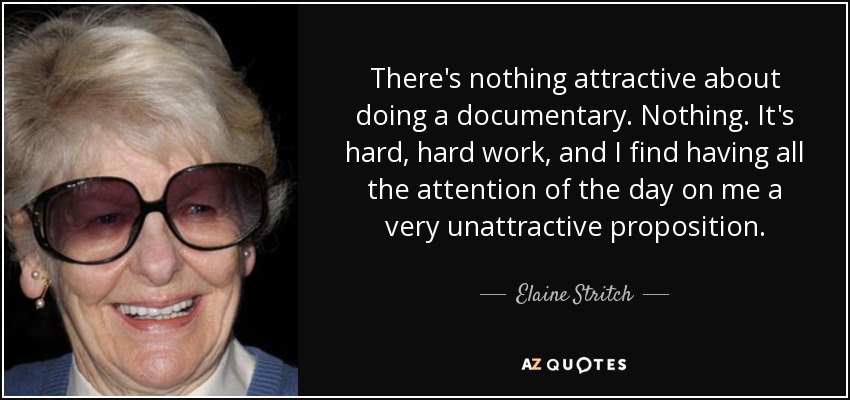
There's nothing attractive about doing a documentary. Nothing. It's hard, hard work, and I find having all the attention of the day on me a very unattractive proposition.
And this is also what he takes Christian doctrine, in all its complexity, to be centrally about, that is, teaching an attitude rather than a set of propositions. Call it joyous openness to life. What's not relevant about that?
There are different interpretations of the problem of universals. I understand it as the problem of giving the truthmakers of propositions to the effect that a certain particular is such and such, e.g. propositions like 'this rose is red'. Others have interpreted it as a problem about the ontological commitments of such propositions or a problem about what those propositions mean.
When philosophers use a word--"knowledge," "being," "object," "I," "proposition," "name"--and try to grasp the essence of the thing, one must always ask oneself: is the word ever actually used in this way in the language-game which is its original home?--What we do is to bring words back from their metaphysical to their everyday use.
All propositions are of equal value.
All philosophy is a 'critique of language' (though not in Mauthner's sense). It was Russell who performed the service of showing that the apparent logical form of a proposition need not be its real one.
My propositions serve as elucidations in the following way: anyone who understands me eventually recognizes them as nonsensical, when he has used them--as steps--to climb up beyond them. (He must, so to speak, throw away the ladder after he has climbed up it.) He must transcend these propositions, and then he will see the whole world aright.
It is possible--indeed possible even according to the old conception of logic--to give in advance a description of all 'true' logical propositions. Hence there can never be surprises in logic.
The so-called law of induction cannot possibly be a law of logic, since it is obviously a proposition with a sense.--Nor, therefore, can it be an a priori law.
The whole of natural theologyresolves itself into one simple, though somewhat ambiguous proposition, That the cause or causesof order in the universe probably bear some remote analogy to human intelligence.
In the old physics, three times two equals six and two times three equals 6 are reversible propositions. Not in quantum physics. Three times two and two times three are two different matters, distinct and separate propositions.
In a mathematical proposition, for example, the objectivity is given, but therefore its truth is also an indifferent truth.
I can entertain the proposition that life is a metaphor for boxing--for one of those bouts that go on and on, round following round, jabs, missed punches, clinches, nothing determined, again the bell and again and you and your opponent so evenly matched it's impossible not to see that your opponent is you.... Life is like boxing in many unsettling respects. But boxing is only like boxing.
In fact, of course, I hold that propositions that contemporary philosophers would properly count as 'empirical' can be necessary and be known to be such.
When two terms belong to the same category, it is proper to construct conjunctive propositions embodying them. Thus a purchaser may say that he bought a left-hand glove and a right- hand glove, but not that he bought a left-hand glove, a right- hand glove, and a pair of gloves. 'She came home in a flood of tears and a sedan-chair' is a well known joke based on the absurdity of conjoining terms of different types. Now the dogma of the Ghost in the Machine does just this. It maintains that there exist both bodies and minds.
A fact is a proposition of which the verification by an appeal to the primary sources of our knowledge or to experience is directand simple. A theory, on the other hand, if true, has all the characteristics of a fact except that its verification is possible only by indirect, remote, and difficult means.
It is the direct man who strikes sledgehammer blows, who penetrates the very marrow of a subject at every stroke and gets the meat out of a proposition, who does things.
The French are a tremendously verbal race: they kill you with their assurances, their repetitions, their reasons, their platitudes, their formulae, their propositions, their solutions.
It's a simple proposition to us: Everyone is entitled to adequate medical health care. If you call that a 'redistribution of income' -- well, so be it. I don't call it that. I call it just being fair -- giving the middle class taxpayers an even break that the wealthy have been getting.
The Divine intellect indeed knows infinitely more propositions [than we can ever know]. But with regard to those few which the human intellect does understand, I believe that its knowledge equals the Divine in objective certainty.
Philosophy, certainly, is some account of truths the fragments and very insignificant parts of which man will practice in this workshop; truths infinite and in harmony with infinity, in respect to which the very objects and ends of the so-called practical philosopher will be mere propositions, like the rest.
But in the prevalent discussion of classes, there are illegitimate transitions to the notions of a 'nexus' and of a 'proposition'. The appeal to a class to perform the services of a proper entity is exactly analogous to an appeal to an imaginary terrier to kill a real rat. Process and Reality
Proofs of the Euclidean [parallel] postulate can be developed to such an extent that apparently a mere trifle remains. But a careful analysis shows that in this seeming trifle lies the crux of the matter; usually it contains either the proposition that is being proved or a postulate equivalent to it.
The axioms of physics translate the laws of ethics. Thus, "the whole is greater than its part;" "reaction is equal to action;" "the smallest weight may be made to lift the greatest, the difference of weight being compensated by time;" and many the like propositions, which have an ethical as well as physical sense. These propositions have a much more extensive and universal sense when applied to human life, than when confined to technical use.
The power of story is potent and that's why historical fiction can be an extraordinarily significant way of teaching people logical truth propositions, moves you along, moves your emotions as well as informs your intellect.
Follow AzQuotes on Facebook, Twitter and Google+. Every day we present the best quotes! Improve yourself, find your inspiration, share with friends
or simply: