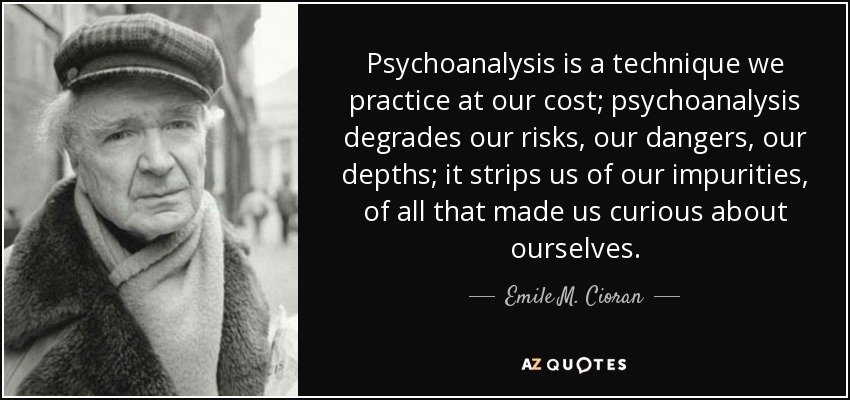
Psychoanalysis is a technique we practice at our cost; psychoanalysis degrades our risks, our dangers, our depths; it strips us of our impurities, of all that made us curious about ourselves.
I'm not sure I had ever written a fan letter before to a poet I had not met, but that's what I did when I read two poems by Gregory Woods ... I admired them especially for their technical virtuosity, in that it was technique completely used, never for the sake of cleverness but as a component of feeling ... What an enviable talent Gregory Woods has
Rules of Play is an exhaustive, clear, cogent, and complete resource for understanding games and game design. Salen and Zimmerman describe an encyclopedia of game design issues, techniques, and attributes. In particular, they analyze the elements that can make a game experience richer, more interesting, more emotional, more meaningful, and, ultimately, more successful. It should be the first stop you make when learning about game design.
If you lack technique you lose the freedom to create.
A successful social technique consists perhaps in finding unobjectionable means for individual self-assertion.
The technique of winning is so shoddy, the terms of winning are so ignoble, the tenure of winning is so brief; and the specter of the has-been-a shameful rather than a pitiable sight today-brings a sudden chill even to our sunlit moments.
The analytic psychotherapist thus has a threefold battle to wage -- in his own mind against the forces which seek to drag him down from the analytic level; outside the analysis, against opponents who dispute the importance he attaches to the sexual instinctual forces and hinder him from making use of them in his scientific technique; and inside the analysis, against his patients, who at first behave like opponents but later on reveal the overvaluation of sexual life which dominates them, and who try to make him captive to their socially untamed passion.
We are aware of yoga only as a technique to gain physical strength, flexibility, or increased health. And indeed these are potent side effects of the practice. But that is what they are: side effects. To focus on these largely insignificant manifestations is to miss the point entirely.
I don't like showing the technique. I don't like people who say, "Here, I'm going to act, but first I have to bounce off this wall." If you have to bounce off the wall, do it by yourself. Don't feature the technique. My old drama coach used to say, "Don't just do something, stand there." Gary Cooper wasn't afraid to do nothing.
To ensure that no one gained an advantage over anyone else, commercial law prohibited innovation in tools or techniques, underselling below a fixed price, working late by artificial light, employing extra apprentices or wife and under-age children, and advertising of wares or praising them to the detriment of others.
In a culture of technique, we often confuse authority with power, but the two are not the same. Power works from the outside in, but authority works from the inside out. . . . I am painfully aware of the times in my own teaching when I lose touch with my inner teacher and therefore with my own authority. In those times I try to gain power by barricading myself behind the podium and my status while wielding the threat of grades. . . . Authority comes as I reclaim my identity and integrity, remembering my selfhood and my sense of vocation.
Composition is a side issue. Its role in my selection of photographs is a negative one at best. By which I mean that the fascination of a photograph is not in its eccentric composition but in what it has to say: its information content. And, on the other hand, composition always also has its own fortuitous rightness.
I don't create blurs. Blurring is not the most important thing; nor is it an identity tag for my pictures.
This superficial blurring has something to do with the incapacity I have just mentioned. I can make no statement about reality clearer than my own relationship to reality; and this has a great deal to do with imprecision, uncertainty, transience, incompleteness, or whatever. But this doesn't explain the pictures. At best it explains what led to their being painted.
I wanted to make it as anonymous as a photo. But it was perhaps also the wish for perfection, the unapproachable, which then means loss of immediacy. Something is missing then, though; that is why I gave that up.
I was a student, and as such you generally rely on prior models of how to make art, but these were not satisfying. Then I discovered in photos what had been missing in paintings; namely that they make a terrific variety of statements and have great substance. That is what I wanted to convey to paintings and apply to it.
I choose depending on the way I feel; randomly, in other words. When I haven't done anything for a long time, I always start small, on paper.
If, while I'm painting, I distort or destroy a motif, it is not a planned or conscious act, but rather it has a different justification: I see the motif, the way I painted it, is somehow ugly or unbearable. Then I try to follow my feelings and make it attractive. And that means a process of painting, changing or destroying - for however long it takes - until I think it has improved. And I don't demand an explanation from myself as to why this is so.
The smudging makes the paintings a bit more complete. When they're not blurred, so many details seem wrong, and the whole thing is wrong too. Then smudging can help make the painting invincible, surreal, more enigmatic - that's how easy it is.
The techniques of opening conversation are universal. I knew long ago and rediscovered that the best way to attract attention, help, and conversation is to be lost. A man who seeing his mother starving to death on a path kicks her in the stomach to clear the way, will cheerfully devote several hours of his time giving wrong directions to a total stranger who claims to be lost.
Can a society in which thought and technique are scientific persist for a long period, as, for example, ancient Egypt persisted, or does it necessarily contain within itself forces which must bring either decay or explosion?
The habit of breaking up one's colour to make it brilliant dates from further back than Impressionism - Couture advocates it in a little book called 'Causeries d'Atelier' written about 1860 - it is part of the technique of Impressionism but used for quite a different reason.
For example I don't work with William Hurt the same way that I will work with Viggo. They're different guys and they work in different ways. So a good sensitive director has his general style and technique and personality that he uses but you don't impose that on the actors.
You know, comedy's hard. With drama, you have a responsibility to the emotional truth, but with comedy, you have emotional truth and you have technique on top of it.
I never studied anything about film technique in school. Eventually, I realized that cinema and theater are not so different: from the gut to the heart to the head of a character is the same journey for both.
Follow AzQuotes on Facebook, Twitter and Google+. Every day we present the best quotes! Improve yourself, find your inspiration, share with friends
or simply: