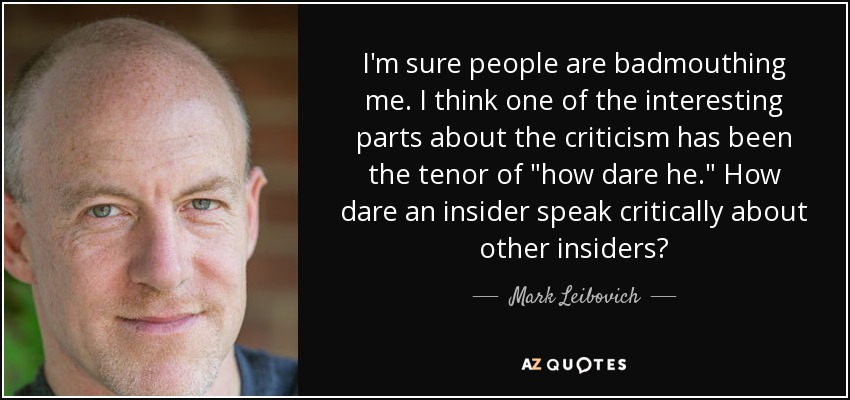
I'm sure people are badmouthing me. I think one of the interesting parts about the criticism has been the tenor of "how dare he." How dare an insider speak critically about other insiders?
As much as I think John Coltrane belongs on the list, I think without Coleman Hawkins and Lester Young, both of whom defined improvising on the tenor sax, there would not have been the evolution of the craft by John Coltrane.
You don't try to duplicate certain things that other cats do, because you could never do it as well as they do. Nobody can get on that tenor saxophone and play like Trane, because he's the only one who can spell out chords and sound good when he does it.
It is not unfrequent to hear men declaim loudly upon liberty, who, if we may judge by the whole tenor of their actions, mean nothing else by it but their own liberty, to oppress without control or the restraint of laws all who are poorer or weaker than themselves.
When I hear that young people have come to the theater for the first time to listen to opera, I'm very happy. Because it's the same thing that happened to me as a child. When I first heard the tenor voice, I immediately fell in love with this kind of music.
When I was very young, I started trying to sing like the great tenor Mario Lanza; my family used to play his records. We all learn best by imitating others.
I have learned as much about writing about my people by listening to blues and jazz and spirituals as I have from reading novels. The understatements in the tenor saxophone of Lester Young, the crystal, haunting, forever searching sounds of John Coltrane, and the softness and violence of Count Basie's big band - all have fired my imagination as much as anything in literature.
Alto (saxophone) is just a very hard instrument; there's so few people that play it really well. I feel it's the best one, too, now. At first I didn't feel that way; I wanted to be a tenor player. It took a long time for me to feel that alto was the most expressive of the saxophones.
My grammar school graduating class in 1941 had a little party for 13 or 14 year-old kids. [Trumpeter] King Kolax's band played for the party and Gene Ammons was playing tenor saxophone with the band. And that's when I said, "That's it!" Just like that, tunnelvision ever since.
I bought a tenor but I haven't dedicated the time to it, plus I haven't found a mouthpiece that I like as of yet. I've been doing a lot of mouthpiece searching for the alto in the last few years and now that that's cooled out maybe I can begin the search for a tenor mouthpiece. After doing it for the alto, I just haven't felt like looking for any more mouthpieces. You play both, right?
Scottish bagpipe has two tenors and one bass - three drone pipes - and then the one chanter. If you put bagpipes together, it creates such a fine sound.
The deeper we grow in the Spirit of Jesus Christ, the poorer we become - the more we realize that everything in life is a gift. The tenor of our lives becomes one of humble and joyful thanksgiving. Awareness of our poverty and ineptitude causes us to rejoice in the gift of being called out of darkness into wondrous light and translated into the kingdom of God's beloved Son.
The tenor of my life has been the opposite of everything that is vile, and no man can lay any such thing to my charge.
Bud Johnson, God rest his soul of fame, a tenor saxophonist. Bud was always a big, big, big booster of mine and he always when I first met Bud in Pittsburgh when he came through there, he heard me sing and he wanted me to come to Chicago.
An artist must be a reactionary. He has to stand out against the tenor [group think] of the age and not go flopping along. By doing this he helps us to question and reassess our past, present and future situations, our assumptions and our options.
I wanted my voice to be a tenor sax, really.
Chano Pozo created the role of the conga soloist in the modern band, somewhat th way Coleman Hawkins created the solo tenor sax.
When I was a young man, I was a baritone, very far from possessing the whole range of the tenor then.
My family was very encouraging, and both of my grandparents were both beautiful singers. My grandmother was a coloratura soprano, and my grandfather was an Irish tenor in a barbershop quartet.
My father was a Norwegian tenor and my mother a New York Irish librarian.
My father was a jazz tenor sax player. He played in a lot of big bands. So I had that sound around me all the time. The first record that really caught my ear was Clifford Brown's 'Brownie Eyes.' I grew up listening to John Coltrane and Illinois Jacquet. This is where I come from... I love improvisational music.
I don't know what I was trying to get out of a tenor - but it never really satisfied me until one day I picked up my alto and I said, 'Where have you been?' and I said right here for now on!
Well, you know, the first step I took was to drop the alto and baritone and concentrate on tenor exclusively, a decision I've never really looked back on with any regret. Another thing was that I was 17 when I moved up there, and my listening had really focused on freer music in the previous couple of years- Coltrane was playing with his expanded group, and everyone was listening closely to that, and we were into Shepp and Ayler as well.
I spent five years, at least, working with Miles. Together, we recorded ESP, Nefertiti, Sorcerer -- and I can tell you; each of these albums instantly became jazz classics. Hey, we had Wayne Shorter playing tenor sax, Ron [Carter] on bass, Tony Williams played drums. That was great band we had.
In fact, the capitalist class in the '50s was sort of part of a social contract. It was part of the tenor of the times.
Follow AzQuotes on Facebook, Twitter and Google+. Every day we present the best quotes! Improve yourself, find your inspiration, share with friends
or simply: