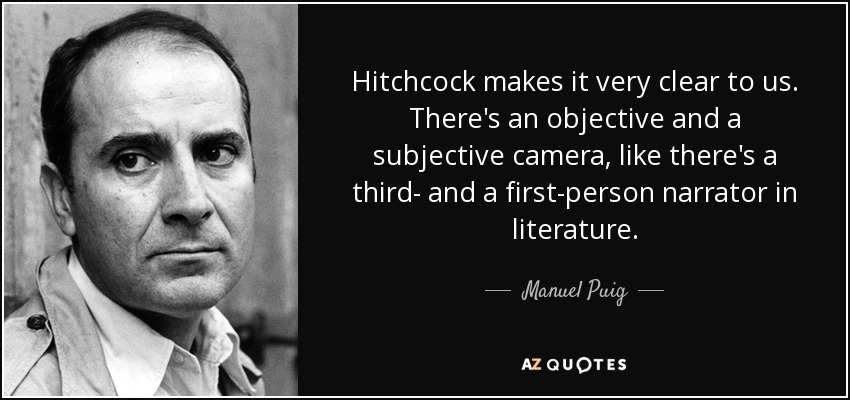

Hitchcock makes it very clear to us. There's an objective and a subjective camera, like there's a third- and a first-person narrator in literature.
What's better, a poetic intuition or an intellectual work? I think they complement each other.
The translator's task is to create, in his or her own language, the same tensions appearing in the original. That's hard!
I believe that people who don't achieve anything in life are isolated and resent those that are successful.
One performs a very different act when reading a movie and when reading a novel. Your attention behaves differently.
My stories are very somber, so I think I need the comic ingredient. Besides, life has so much humor.
I think cinema is closer to allegories than to reality. It's closer to our dreams.
Modern American cinema seems to me superficial. The intention is to understand a certain reality, and the result is nothing but a photographing of that reality.
I am very interested in what has been called bad taste. I believe the fear of displaying a soi-disant bad taste stops us from venturing into special cultural zones.
I had stories that needed more space than the hour and a half or two hours a movie gives you.
In film, you can't go into analytical explorations because the audience will reject that.
Most of the movies I saw growing up were viewed as totally disposable, fine for quick consumption, but they have survived 50 years and are still growing.
I like the beauty of Faulkner's poetry. But I don't like his themes, not at all.
I do believe that reading can help you understand what you're writing and see what others are doing. But sometimes the desire for more information can act as an inhibitor.
I'm not terribly happy about rock and roll. Certain rock music is uninspiring, numbing; it makes you feel like an idiot.
Follow AzQuotes on Facebook, Twitter and Google+. Every day we present the best quotes! Improve yourself, find your inspiration, share with friends
or simply: