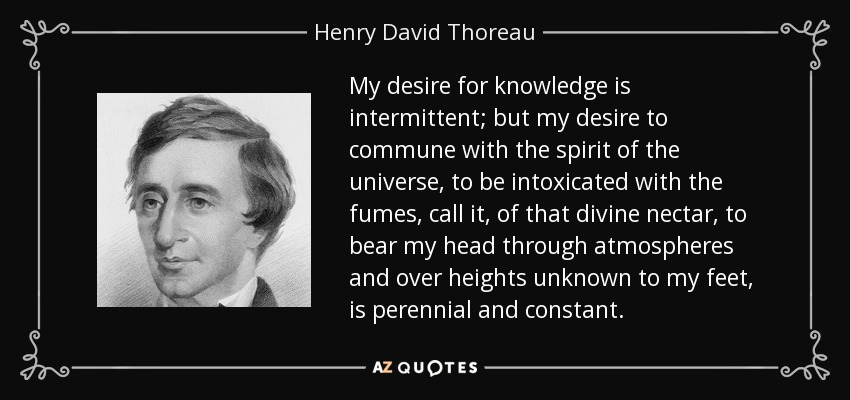
My desire for knowledge is intermittent; but my desire to commune with the spirit of the universe, to be intoxicated with the fumes, call it, of that divine nectar, to bear my head through atmospheres and over heights unknown to my feet, is perennial and constant.
No chemical compound in the atmosphere has a worse reputation than CO2, thanks to the single-minded demonization of this natural and essential atmospheric gas by advocates of government control and energy production. The incredible list of supposed horrors that increasing carbon dioxide will bring the world is pure belief disguised as science.
I am troubled by the lack of common sense regarding carbon dioxide emissions. Our greatest greenhouse gas is water. Atmospheric spectroscopy reveals why water has a 95 percent and CO2 a 3.6 percent contribution to the 'greenhouse effect.' Carbon dioxide emissions worldwide each year total 3.2 billion tons. That equals about 0.0168 percent of the atmosphere's CO2 concentration of about 19 trillion tons. This results in a 0.00064 percent increase in the absorption of the sun's radiation. This is an insignificantly small number.
It is a search for a mythical CO2 sink to explain an immeasurable CO2 lifetime to fit a hypothetical CO2 computer model that purports to show that an impossible amount of fossil fuel burning is heating the atmosphere. It is all a fiction.
Global warming results not from the emission of greenhouse gases into the atmosphere, but from an unusually high level of solar radiation and a lengthy - almost throughout the last century - growth in its intensity.
The Kyoto theorists have put the cart before the horse. It is global warming that triggers higher levels of carbon dioxide in the atmosphere, not the other way round.
Global warming results not from the emission of greenhouse gases into the atmosphere, but from an unusually high level of solar radiation and a lengthy - almost throughout the last century - growth in its intensity. It is no secret that when they go up, temperatures in the world's oceans trigger the emission of large amounts of carbon dioxide into the atmosphere. So the common view that man's industrial activity is a deciding factor in global warming has emerged from a misinterpretation of cause and effect relations.
The hard truth is carbon pollution has built up in our atmosphere for decades now. And even if we Americans do our part, the planet will slowly keep warming for some time to come.
Vegetation is really controlling what happens...whereas the emphasis in the climate models has always been on the atmosphere.
We simply don't know yet what's going to happen to the carbon in the atmosphere.
Our atmosphere can't tell the difference between emissions from an Asian factory, the exhaust from a North American SUV, or deforestation in South America or Africa.
The international equity question arises from the costs of climate change itself and mitigation varying greatly across countries. It is affected by the historical responsibility for current greenhouse gas emissions, which countries which were not responsible for what's in the atmosphere now think are very important. Currently rich countries don't think those issues are very important.
We're not a manufacturer, or an airline, but we do use energy. Printing and publishing newspapers, producing films and television programs, operating 24-hour newsrooms. It all adds carbon to the atmosphere.
We are upsetting the atmosphere upon which all life depends. In the late 80s when I began to take climate change seriously, we referred to global warming as a "slowmotion catastrophe" one we expected to kick in perhaps generations later. Instead, the signs of change have accelerated alarmingly.
Human use of fossil fuels is altering the chemistry of the atmosphere; oceans are polluted and depleted of fish; 80 per cent of Earth's forests are heavily impacted or gone yet their destruction continues. An estimated 50,000 species are driven to extinction each year. We dump millions of tonnes of chemicals, most untested for their biological effects, and many highly toxic, into air, water and soil. We have created an ecological holocaust. Our very health and survival are at stake, yet we act as if we have plenty of time to respond.
Essentially, by 2050 we need all activities outside agriculture to be near zero carbon emitting if we are to stop carbon dioxide levels in the atmosphere growing
We're putting 70 million tonnes of pollution into the atmosphere every day, trapping an enormous amount of extra heat from the sun inside the earth's atmosphere. It's threatening to push the planet past a tipping point beyond which climate change would be difficult to stop
Although reducing human emissions to the atmosphere is undoubtedly of critical importance, as are any and all measures to reduce the human environmental "footprint", the truth is that the contribution of each individual cannot be reduced to zero... If we believe that the size of the human "footprint" is a serious problem (and there is much evidence for this) then a rational view would be that along with a raft of measures to reduce the footprint per person, the issue of population management must be addressed.
[W]hen we look at the graphs of rising ocean temperatures, rising carbon dioxide in the atmosphere and so on, we know that they are climbing far more steeply than can be accounted for by the natural oscillation of the weather ... What people (must) do is to change their behavior and their attitudes ... If we do care about our grandchildren then we have to do something, and we have to demand that our governments do something.
Unless we stop dumping 70 million tons of global warming pollution into the atmosphere every 24 hours, which we are doing right now ... the continued acceleration of this pollution would destroy the future of human civilization.
I believe in working together to solve the problems we've got. And we need to get rid of the venom in the political atmosphere in D.C. It's a poisonous atmosphere.
We are enjoying in Africa what I call the democracy dividend. The progress we are seeing, economic development are all part of the dividend of good governance, respect for human rights, rule of law. It has created an enabling environment that allows not only foreigners to come in and invest but for Ghanaians to invest. It has created an atmosphere for our young people to be creative, innovative
Extreme weather like the droughts in Russia, China and Brazil and the flooding in Pakistan and Australia [in 2010] have contributed to a level of food price volatility we haven't seen since the oil crisisof 40 years ago. Unfortunately, this could be just a taste of things to come because in the next few decades the build-up of greenhouse gases already in the atmosphere could greatly increase the risk of droughts, flooding, pest infestation and water scarcity for agriculture systems already under tremendous stress.
If sequestered pain made a sound, the atmosphere would be humming all the time.
The biggest gains, in terms of decreasing the country's energy bill, the amount of carbon dioxide we put into the atmosphere, and our dependency on foreign oil, will come from energy efficiency and conservation in the next 20 years. Make no doubt about it. That's where everybody who has really thought about the problem thinks the biggest gains can be and should be.
Follow AzQuotes on Facebook, Twitter and Google+. Every day we present the best quotes! Improve yourself, find your inspiration, share with friends
or simply: