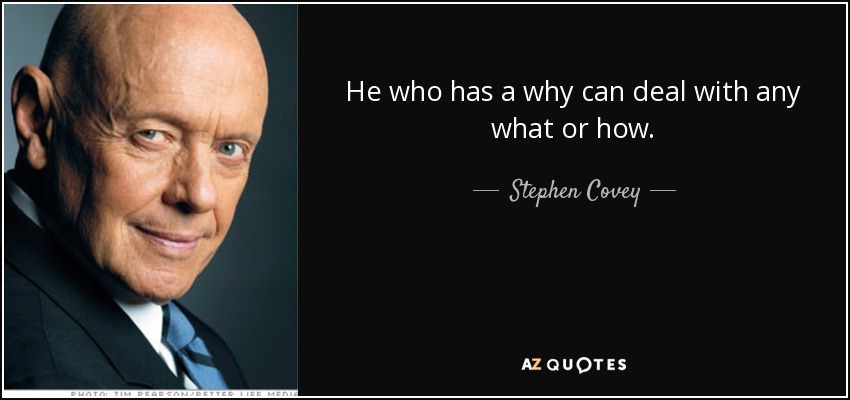
He who has a why can deal with any what or how.
It is always a question of knowing and seeing, and not that of believing. The teaching of the Buddha is qualified as ehi-passika, inviting you to 'come and see', but not to come and believe.
Belief is like plastic flowers, which look like flowers from far away. Trust is real rose. It has roots, and roots go deep into your heart and into your being.
As a child I became a confirmed believer in the ancient gods simply because as between the reality of fact and the reality f myth, I chose myth...Myth is the truth of fact, not fact the truth of myth.
SETH said: The natural person is to be found, now, not in the past or in the present, but beneath layers and layers of official beliefs, so you are dealing with an archeology of beliefs to find the person who creates beliefs to begin with. As I have said often, evidence of clairvoyance, telepathy, or whatever, are not eccentric, isolated instances occurring in man's experience, but are representative of natural patterns of everyday behavior that become invisible in your world because of the official picture of behavior and reality.
Philosophy's power to blunt all the blows of circumstance is beyond belief.
I believe that persistent effort, supported by a character-based foundation, will enable you to get more of the things money will buy and all of the things money won't buy.
Constant you are, But yet a woman; and for secrecy, No lady closer; for I well believe Thou wilt not utter what thou dost not know.
Belief is desecrated when given to unproved and unquestioned statements for the solace and private pleasure of the believer . . . It is wrong always, everywhere, and for every one, to believe anything upon insufficient evidence.
Fhairshon had a son, Who married Noah's daughter, And nearly spoil'd to Flood, By trinking up ta water: Which he would have done, I at least believe it, Had ta mixture peen Only half Glenlivet.
You say, "Where goest Thou?" I cannot tell, And still go on. But if the way be straight I cannot go amiss: before me lies Dawn and the day: the night behind me: that Suffices me: I break the bounds: I see, And nothing more; believe and nothing less. My future is not one of my concerns.
We must believe that "emotion recollected in tranquillity" is an inexact formula. For it is neither emotion, nor recollection, nor without distortion of meaning, tranquillity. It is a concentration, and a new thing resulting from the concentration of a very great number of experiences which to the practical and active person would not seem to be experiences at all; it is a concentration which does not happen consciously or of deliberation. These experiences are not "recollected" and they finally unite in an atmosphere which is "tranquil" only in that it is a passive attending upon the event.
I'm not a Luddite completely; I believe in refrigerators to cool my martinis, and washing machines because I hate to see women smacking their laundry against a rock. When I hear about hardware, I think of pots and pans, and when I hear about software, I think of sheets and towels.
. . . when the nature of mind is introduced by a master, it is just too simple for us to believe. Our ordinary mind tells us this cannot be, there must be something more to it than this. It must surely be more "glorious", with light blazing in space around us, angels with flowing golden hair swooping down to meet us, and a deep Wizard of Oz voice announcing, "Now you have been introduced to the nature of your mind." There is no such drama.
That miracles have been, I do believe; that they may yet be wrought by the living, I do not deny: but have no confidence in those which are fathered on the dead.
"Have you heard any Stockhausen?" Beecham was asked. "No, but I believe I have stepped in some."
. . . Newton was an unquestioning believer in an all-wise creator of the universe, and in his own inability - like the boy on the seashore - to fathom the entire ocean in all its depths. He therefore believed that there were not only many things in heaven beyond his philosophy, but plenty on earth as well, and he made it his business to understand for himself what the majority of intelligent men of his time accepted without dispute (to them it was as natural as common sense) - the traditional account of the creation.
I believe the root of all happiness on this earth to lie in the realization of a spiritual life with a consciousness of something wider than materialism; in the capacity to live in a world that makes you unselfish because you are not overanxious about your own comic fallibilities; that gives you tranquility without complacency because you believe in something so much larger than yourself.
I am interested in the shape of ideas even if I do not believe in them. There is a wonderful sentence in Augustine . . . "Do not despair: one of the thieves was saved; do not presume: one of the thieves was damned." That sentence had a wonderful shape. It is the shape that matters.
Brody cannot believe the size of the creature, and with a classic, practical understatement tells Quint his assessment: You're gonna need a bigger boat. Awestruck, they all view the full-sized, massive shark circling the boat. Quint estimates it is 25 feet long: Three tons of him.
The terminology of philosophical art is coercive: arguments are powerful and best when they are knockdown, arguments force you to a conclusion, if you believe the premisses you have to or must believe the conclusion, some arguments do not carry much punch, and so forth. A philosophical argument is an attempt to get someone to believe something, whether he wants to beleive it or not. A successful philosophical argument, a strong argument, forces someone to a belief.
In the first is the last, in thy will is my power to believe.
If you are ever going to lie, you go to jail for the lie rather than the crime. So believe me, don't ever lie.
The conversation between Fletcher and Jonathan Livingston Seagull is centered on why some have achieved more than others . . . are they divine . . . ahead of their times . . . Fletcher says, Well, this kind of flying has always been here to be learned by anybody who wanted to discover it; that's got nothing to do with time. We're ahead of the fashion, maybe. Ahead of the way most gulls fly. Poor Fletch. Don't you believe what your eyes are telling you? All they show is limitations. Look with your understanding, find out what you already know, and you'll see the way to fly.
Science does not know its debt to imagination. Goethe did not believe that a great naturalist could exist without this faculty.
Follow AzQuotes on Facebook, Twitter and Google+. Every day we present the best quotes! Improve yourself, find your inspiration, share with friends
or simply: