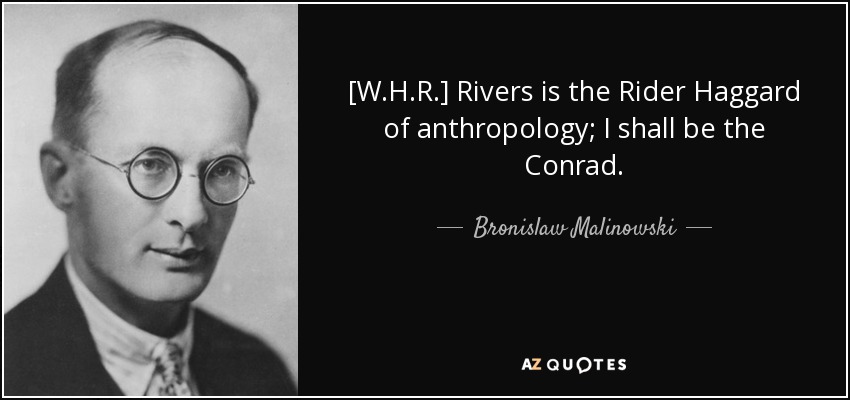
[W.H.R.] Rivers is the Rider Haggard of anthropology; I shall be the Conrad.
My biography of Frank Sinatra is not paean to his music but rather an illumination of the man behind the music, who once described himself as 'an 18-karat manic-depressive who lived a life of violent emotional contradictions with an over-acute capacity for sadness as well as happiness.
I have believed in the biographies I have written. I truly can tell you that they have influenced our society politically, culturally, socially.
I would love to do an unauthorized biography about Congress. It's like a secret society up there.
The difference between authorized and unauthorized biographies is the difference between riding in carriage or squatting in steerage.
I don't give you editorial control. I want to meet you. I want to interview everybody who's ever known you. I want to see your correspondence. I want to see your bank statements. But you will have no control over what I write. That's why I really believe in the unauthorized biography.
For me writing biographies is impossible, unless they are brief and concise, and these are, I feel, the most eloquent.
I love to read different books on completely different subjects at the same time. I cannot focus on one. I read a few pages of literature, then I jump to philosophy and at the same time I'm reading biographies of Mahler.
Sometimes I read a biography of some tempestuous artist and find myself longing for fireworks! booze! bloody fights!; I do think that life must be so much more thrilling when you're actively miserable.
I wanted to be a poet when I was 20; I had no interest in fiction or biography and precious little interest in history, but those three elements in my life have become the most important.
When I was 8 years old, I made my own encyclopedia of American biography - Johnny Appleseed, Jim Bowie, Davy Crockett, Daniel Boone, Charles Lindbergh, my pantheon of favorite heroes. Then I would write my own things and sew them together and try to make my own book.
In a world of alternative lifestyle options, strategic life planning becomes of special importance. Like lifestyle patterns, life plans of one kind or another are something of an inevitable concomitant of post-traditional social forms. Life plans are the substantial content of the reflexively organised trajectory of the self. Life-planning is a means of preparing a course of future actions mobilised in terms of the self's biography. We may also speak here of the existence of personal calendars or life-plan calendars, in relation to which the personal time of the lifespan is handled.
Eight years ago, I was drawn into Keats's world by Andrew Motion's biography. Soon I was reading back and forth between Keats's letters and his poems. The letters were fresh, intimate and irreverent, as though he were present and speaking. The Keats spell went very deep for me.
I'm not one of those people who writes a biography or tries to figure out what kind of ice cream the character liked when he was 10.
I've always enjoyed reading history, particularly presidential biographies.
I've been a lifelong horror fan, but at the same time, I would say 90 percent of my reading is biographies and nonfiction history.
I was at my best at a little past forty, when I was a professor at Oxford.
I've just finished reading some of my early papers, and you know, when I'd finished I said to myself, 'Rutherford, my boy, you used to be a damned clever fellow.' (1911)
Modernism really started with people getting infatuated with the idea of "it's the twentieth century, is this suitable for the twentieth century." This happened before the First World War and it wasn't just the soldiers. You can see it happening if you read the Bloomsbury biographies. It was a reaction to a great extent against Victorianism. There was so much that was repressive and stuffy. Victorian buildings were associated with it, and they were regarded as very ugly. Even when they weren't ugly, people made them ugly. They were painted hideously.
A surprising number [of novels] have been read aloud to me, and I like all if moderately good, and if they do not end unhappily-against which a law ought to be passed.
At the age of eleven, I began Euclid, with my brother as my tutor. ... I had not imagined that there was anything so delicious in the world. After I had learned the fifth proposition, my brother told me that it was generally considered difficult, but I had found no difficulty whatsoever. This was the first time it had dawned on me that I might have some intelligence.
But nothing ever put 'Hoppy' in the shade. No one could fail to recognize in the little figure... the authentic gold of intellectual inspiration, the Fundator et Primus Abbas of biochemistry in England.
Cuvier had even in his address & manner the character of a superior Man, much general power & eloquence in conversation & great variety of information on scientific as well as popular subjects. I should say of him that he is the most distinguished man of talents I have ever known on the continent: but I doubt if He be entitled to the appellation of a Man of Genius.
Education in my family was not merely emphasized, it was our raison d'être. Virtually all of our aunts and uncles had Ph.D.s in science or engineering, and it was taken for granted that the next generation of Chu's were to follow the family tradition. When the dust had settled, my two brothers and four cousins collected three MDs, four Ph.D.s and a law degree. I could manage only a single advanced degree.
For three days now this angel, almost too heavenly for earth has been my fiancée ... Life stands before me like an eternal spring with new and brilliant colours. Upon his engagement to Johanne Osthof of Brunswick; they married 9 Oct 1805.
Follow AzQuotes on Facebook, Twitter and Google+. Every day we present the best quotes! Improve yourself, find your inspiration, share with friends
or simply: