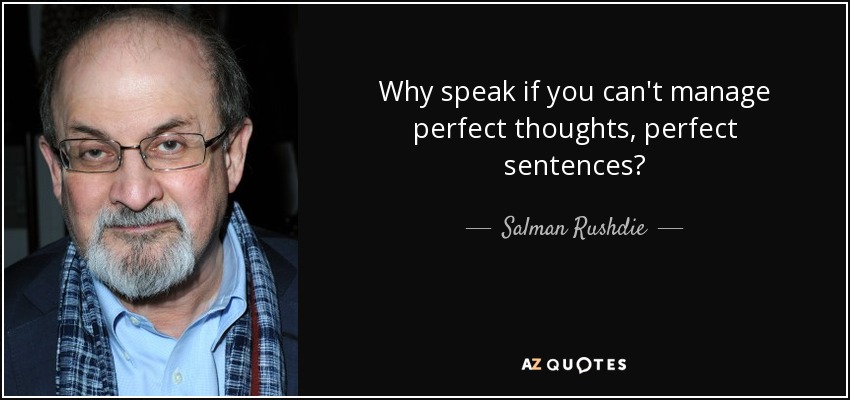
Why speak if you can't manage perfect thoughts, perfect sentences?
I like to work with multiple sections because they lend themselves to the structure of the poem: its intensifications and arcs and closures. I feel like working with smaller units feels more natural to the way I write poems.
'Ornithologists concluded that migratory birds take hundreds of naps as they fly; they also practice unilateral eye closure, in which one eye closes, thereby permitting half the brain to sleep.' Is this what happens when photographers close one eye to look through a viewfinder? If so, they might be operating with only half a brain. Perhaps that explains.
Often, one discovery leads to interest in another. After the Dauphin's heart had undergone DNA testing and was placed in the crypt at St. Denis, I think people wanted some closure to the story about the fate of the royal couple's only child who survived the gruesome Temple Prison. I know I did.
Closure is a preposterous concept worthy of the worst aspects of American daytime TV.
The critiques I received from my father's community didn't actually have to do with any of the things I'd been afraid of - spiritual or cultural aspects - they were more annoyed that I'd killed off this character or those characters hadn't hooked up or I'd done an open ending and it didn't give them a sense of closure that they were expecting.
I do think there is great strength, though, in starting a sermon with a story, then returning to that story at the end. That puts book ends to a sermon. It is a real simple technique that communicates to the audience that there is a sense of closure, that they have a package here, or we began and we closed with this. I think that's just a nice technique.
If I'm being honest, I'm sad even right now because I've been Darth Maul for several years and we've been through a lot together, me and that guy. Saying goodbye was - there was some sorrow but there was a great satisfaction in having that closure. And in a weird way, I think Darth Maul shared my satisfaction with that.
Improvisation in general is good, and improvising material into themes, turning the material into something codified and repeatable, taught me scenic structure and dramatic gambits that work and things that are appealing both as a performer and an audience member, like you know, what does "want" really mean in a scene, and how do you achieve your want, and how is that expressed, and how do you achieve closure? Those are all things that I learned performing at the cabaret after just doing the same scenes over and over and over again over the years, with my own ability to change.
Books have this function that help me to understand the work I've done, to wrap it up. Once it's done, fortunately, it doesn't mean there's closure. Change in my work happens not in revolutions - it's more evolutionary.
A novel requires a certain kind of world building and also a certain kind of closure, ultimately. Whereas with a short story you have this sense that there are hinges that the reader doesn't see. I would say that all short stories have mystery naturally built into them.
The idea that murder victims' families are best served by continuing the cycle of violence is something that I consider to be not only a lie, but criminally negligent. You lie to victims' families when you tell them they're going to receive closure if they participate in the process and witness the execution of a human being.
If a movie isn't released, it's one thing, but if you know it will be, it's nice to have closure and see it come out.
Nationalisation...does not in itself engender greater equality, more jobs in the regions, higher investment or industrial democracy. The public knows this perfectly well, and so do the workers who have suffered from pit closures, steel redundancies and the run-down of the railways. It is idiotic to try to bamboozle them.
I will continue to work for the advancement of freedoms in Egypt and the Arab world until I drop dead... Education itself - which can and should play an important role in the apprenticeship of tolerance and respect for other people -sometimes encourages identitarian closure, or even extremist behaviour... It is therefore vital to ensure that education does not encourage rejection of other people or identitarian closure, but that on the contrary it encourages knowledge and respect for other cultures, other religions and other ways of being and living.
Sometimes people decide to write reports even though they haven't been to Guantanamo . And so I would just suggest that people look at some of the work that's been done by people who have been there. But that's not to say that we will not be very glad at the day that conditions permit the closure of Guantanamo and the trying of its inhabitants or for their release.
I think we need to understand what we mean when we talk about closure, we don't mean transfer or prosecute which is what many of the critics of Guantanamo would like to see happen. When the US government talks about closing Guantanamo, they talk about moving some set of detainees to some other place where they continue to be detained without charge.
There is an art to grieving. To grieve well the loss of anyone or anything--a parent, a love, a child, an era, a home, a job--is a creative act. It takes attention and patience and courage. But many of us do not know how to grieve. We were never taught, and we don't see examples of full-bodied grieving around us. Our culture favors the fast-food model of mourning--get over it quick and get back to work; affix the bandage of "closure" and move on.
I'm not interested in leaving it open-ended. That would just cause me frustration. I wouldn't be satisfied. What's really cool about Fringe, and one of the things we did do right, was that the way we chose to tell the story was that, with every season, there was a closure and then a new chapter. That allowed us to actually make the closure.
I wanted to look at the differences between how we fought then and how we fight now, because the current lack of closure generates a state of psychological unease that is interesting to acknowledge and examine.
Oil is a tangible commodity, so there is a global market. The fact that we may need less may affect the global price because we're big consumers: we probably take about a quarter of global demand. But if suddenly, let's just use a crazy example, fighting in the Middle East led to the closure of the Strait of Hormuz and no oil could get out through the Strait of Hormuz, well that would affect China, India, Europe, it will affect the whole global economy. It will affect us, too, then.
The fascinating thing about standard economic stories is exactly that: they assume that everybody wants that kind of closure. That all human relations are forms of exchange, because if everything is an exchange then it's true that we're both equals. We walk up, I give you something, you give me something, and we walk away. Or I give you something, you don't give me something right now, and you owe me. So if we have any ongoing relationships at all, it's because somebody is in debt.
A dance feels finished to me when I suddenly see this moment in the movement that feels like closure and makes me want to cry. And then I'll realize, "Oh, that's the end. This whole thing is working because it all led up to this moment." It pulls all this together and it sends the correct message in a very poetic way.
I see that very clearly in my own state of Maine, where there are people who have been affected by mill closures, some of which have been brought about by poorly negotiated trade agreements, and they do feel marginalized and left behind. They have not been able to find new work, despite the fact that they did nothing wrong that caused them to lose their jobs. Both parties need to do a better job of reaching out to those individuals, to those hardworking families, and providing job training, matching people and giving them new skills for new jobs.
Some among the European elite have sought out confrontation with us. As a consequence, we won't help Europe, although we could do so when it comes to the refugee question. A joint closure of borders would be essential. In this regard, the Russians would be 10 times more effective than the Europeans.
Follow AzQuotes on Facebook, Twitter and Google+. Every day we present the best quotes! Improve yourself, find your inspiration, share with friends
or simply: