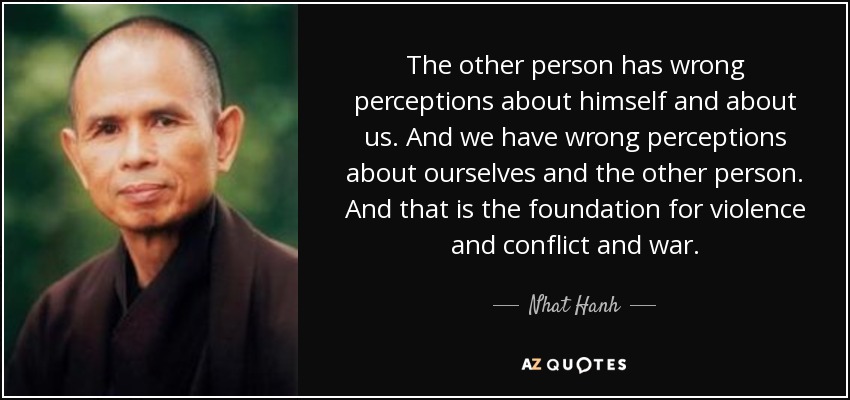
The other person has wrong perceptions about himself and about us. And we have wrong perceptions about ourselves and the other person. And that is the foundation for violence and conflict and war.
The process of decolonisation in Nigeria was a very untidy one. The British, when they were leaving finally and knew exactly who they wanted to take over, they wanted pliant government, figures, structures, they wanted to continue indirectly in effect their control over much of their colonial possessions and this was one of the very early causes of conflict.
Despite all the noise and hullabaloo - military cooperation, intelligence cooperation, all of that has continued. We have defended them consistently in every imaginable way. But I also believe that both for our national interests and Israel's national interests that allowing an ongoing conflict between Israelis and Palestinians that could get worse and worse over time is a problem. And that settlements contribute.
I've lived here [in Egypt] among Christians and Muslims, and we never had a conflict. Now you have a conflict between Christians and Muslims and Baha'is and Sunni and Shia. The Salafists are trying to abort the revolution and make it religious, though the revolution started secular.
The Israeli-Palestinian problem becomes very acute with Gaza dominated by Hamas. With the possibility of the conflict escalating, not only in terms of Gaza but also the Hezbollah and Lebanon, with the continuing crisis in Iraq, which is very dynamic and unpredictable and which could get out of hand, and maybe even escalate and enlarge.
The kind of problem that America faces in Iraq is a little bit the kind of problem that Israel faced in dealing with Hezbollah. If the conflict, the theater of conflict enlarges, it's going to become more and more absorbing and more and more costly.
Now we have a whole series of problems - energy, environment, proliferation - which go beyond the nation. And we also know that a conflict between major powers would be a catastrophe for which there is no compensation in anything you can gain.
Any move by Israel to end the conflict with the Palestinians by unilateral moves - such as annexing the West Bank, delinking Gaza and declaring that there be no further diplomatic process - will lead to strong regional and global reactions, as well as intensify efforts at the UN and in civil society to brand Israel as an outlaw state dangerous to regional and world peace and guilty of criminal behavior.
I am still covering conflict to some degree. I was back in Iraq. I've covered quite a bit of the Israel and Palestine. But I'm not doing it with the kind of intensity I was before and I'm not seeking out the front line and the kind danger that comes with being at the edge of the war the way I used to.
We live in a world of absolute immediacy. It is an interconnected, combustible world, where technology and many other actions have given nonstate actors a reach, into countries and societies, for both good and evil, that we have never seen before. So it isn't a matter of just state versus state challenges or conflict. The bigger problem is nonstate actors.
What is the worst, is that you will have the meltdown of Zimbabwe that the IMF is talking about. And indeed what you will have is growing unemployment in Zimbabwe, growing impoverishment among the people, growing social conflict. And I think that is the worst sort of outcome, that collapse of Zimbabwe certainly would have a much, much worse effect on the region than mere image.
Karzai is Afghanistan's first democratically elected president. He brought the international community into partnership on an unprecedented level, and he championed a new constitution that is liberal, democratic and still very Afghan. All of that does reflect a vision. But he's presided over a country that is still in conflict, and he hasn't taken some of the difficult decisions his own government wanted him to take. On corruption, he hasn't been as decisive as he should've been. There are legitimate questions about him.
It's never too late to try to end a conflict.
I love swimming in the darker seas, so even if I play a noble guy (well, like Lincoln for instance) I am pre-disposed to try and show the conflict; the regret; the less-than-perfect choices that any human faces. That's what I like and it seems to be what the camera likes to see me do.
There are lots of signs that average Israelis want peace. But after such a long war - this conflict has been going on now for 120 years - you have a fifth generation being born into it on both sides. Such a conflict creates hatred, fears, stereotypes, and demonizations of the other. It would be an illusion to believe you can put an end to this overnight.
Trouble, hardship, difficulty, pain, suffering, conflict, tragedy, evil - they're all part of the [Christian] Story. Indeed, the problem of evil is the reason there's any Story at all.
That love is a conflict seems to me obvious and natural. There isn't a single worthwhile work in world literature based on love that is only about the conquest of happiness, the effort to arrive at what we call love. It's the struggle that has always interested those who produce works of art - literature, cinema or poetry.
In Guatemala, the gap between rich and poor must be eliminated, or we will continue to be the example of conflict in America.
Look at the Israel-Palestine conflict, for example. If you look at a map from 1947 to now, you'll see that Israel has gobbled up almost all of Palestinian land with its illegal settlements. To talk about justice in that battle, you have to talk about those settlements. But, if you just talk about human rights, then you can say, "Oh, Hamas violates human rights," "Israel violates human rights." Ergo, both are bad.
"The Theory of Everything" is an extraordinary story because [Jane Hawing] was incredibly religious and [Stephen Hawking] was an atheist, so you have this conflict both on a domestic level between a couple in a difficult situation but also this bigger conflict of science versus religion, so it's a really fascinating project.
If you want to bring an end to long-standing conflict, you have to be prepared to compromise. If either or both sides insist on getting everything that they want - that is to say 100 percent of their demands to be met, then there can never be a settlement.
Too much of this book knowledge just leads to doubts and confusion. You get too many doubts asking 'what is this?' and 'what is that?', and you waste a lot of time in this conflict.
You have to comply, you have to obey - or you'd better resign and leave. But that is also the mark of a great leader - somebody who, in the presence of inner conflict, will do the right thing.
We deal with our mind from morning until evening. This mind can be our best friend or our worst enemy. We should do everything we can to improve outer circumstances - remedying poverty, inequalities, conflicts, and so on - while also doing our best to achieve a state of mind that give us the inner resources to deal with the ups and downs of life.
Being an older person now, I'm finding that people are calling me to play various things. Variations on the theme of mother, caretaker, and in some cases, doctors, heads of organizations and things like that. For some people, I'm finally old enough to play those roles. We see men playing them when they're a little bit younger, and also in roles that call for some form of conflict and violence, either generating it or trying to curtail it. Women don't seem to be a big part of those common and often used movie themes.
Follow AzQuotes on Facebook, Twitter and Google+. Every day we present the best quotes! Improve yourself, find your inspiration, share with friends
or simply: