I was always interested in French poetry sort of as a sideline to my own work, I was translating contemporary French poets. That kind of spilled out into translation as a way to earn money, pay for food and put bread on the table.
I have learned to interface - what I think would be the contemporary term - with various different lexicons, and people speak very different languages. I've learned to speak in a lot of tongues, and I can live with the bellicose language of some fervent, fire-breathing Christians, sure.
While I love to read contemporary fiction, I'm not drawn to writing it. Perhaps it's because the former journalist in me is too inhibited by the press of reality; when I think about writing of my own time I always think about nonfiction narratives. Or perhaps it's just that I find the present too confounding.
Maya Angelou, the famous African American poet, historian, and civil rights activist who is hailed be many as one of the great voices of contemporary literature, believes a struggle only makes a person stronger.
It is clear that when you write a story that takes place in the past, you try to show what really happened in those times. But you are always moved by the suspicion that you are also showing something about our contemporary world.
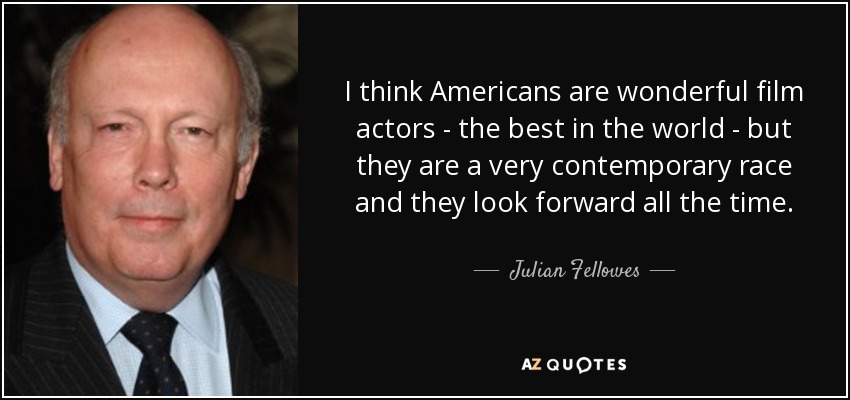
I think Americans are wonderful film actors - the best in the world - but they are a very contemporary race and they look forward all the time.
There is a small world of people who are very interested in contemporary art and a slightly bigger world of people who look at contemporary art. But then there is a much larger world that doesn't realise how influential art is on things that they actually look at.
Artist - musicians, painters, writers, poets, always seem to have had the most accurate perception of what is really going on around them, not the official version or the popular perception of contemporary life.
I know I'm a rare person, a trained scientist who writes fiction, because so few contemporary novelists engage with science.
I always listen to all kinds of different music from different years. I listen to the contemporary, but once in a while into eighties, you know just for fun, and sometimes classical too. So I have this big mix on my i-pod... Amy Winehouse, Gwen Stefani, OutKast, Jay-Z. I listen to trance, pop, everything. It really depends on my mood.
One gets the impression that Elvis Presley does what his business advisors think will be most profitable. My advice to them: Put Elvis Presley in the studio with a bunch of good, contemporary rockers, lock the studio up, and tell him he can't come out until he's done made an album that rocks from beginning to end.
Somebody who only reads newspapers and at best books of contemporary authors looks to me like an extremely near-sighted person who scorns eyeglasses. He is completely dependent on the prejudices and fashions of his times, since he never gets to see or hear anything else.
[M]an has been accustomed, ever since he was a boy, to having a dozen incompatible philosophies dancing about together inside his head. He doesn't think of doctrines as primarily "true" or "false," but as "academic" or "practical," "outworn" or "contemporary," "conventional" or "ruthless." Jargon, not argument, is your best ally in keeping him from the Church. Don't waste time trying to make him think that materialism is true! Make him think it is strong or stark or courageous—that it is the philosophy of the future. That's the sort of thing he cares about.
Most contemporary novels are not really "written." They obtain what reality they have largely from an accurate rendering of the noises that human beings currently make in their daily simple needs of communication; and what part of a novel is not composed of these noises consists of a prose which is no more alive than that of a competent newspaper writer or government official. A prose that is altogether alive demands something of the reader that the ordinary novel-reader is not prepared to give.
The leaders of the future will be those who dare to claim their irrelevance in the contemporary world as a divine vocation.
By virtue of the way it has organized its technological base, contemporary industrial society tends to be totalitarian. For "totalitarian" is not only a terroristic political coordination of society, but also a non-terroristic economic-technical coordination which operates through the manipulation of needs by vested interests.
Saying 'I notice you're a nerd' is like saying, 'Hey, I notice that you'd rather be intelligent than be stupid, that you'd rather be thoughtful than be vapid, that you believe that there are things that matter more than the arrest record of Lindsay Lohan. Why is that?' In fact, it seems to me that most contemporary insults are pretty lame. Even 'lame' is kind of lame. Saying 'You're lame' is like saying 'You walk with a limp.' Yeah, whatever, so does 50 Cent, and he's done all right for himself.
What the semicolon's anxious supporters fret about is the tendency of contemporary writers to use a dash instead of a semicolon and thus precipitate the end of the world. Are they being alarmist?
But perhaps more important, as someone wishing to make a comment or two about contemporary life and values, I don't have to dig through libraries or travel to exotic lands to arrive at a view of our modern situation refracted through the lens of the preindustrial world, or the uncommercialized, unfranchised, perhaps unsanitized-and therefore supposedly more "authentic"-perspective ofthe Third World. Very simply, this is because that "other" world, as alien as if separated by centuries in time, is the one from which I came
it's a rare day when she speaks in anything but platitudes--all those exhausted phrases and hand-me-down ideas that cram the dump sites of contemporary wisdom
Feminist education — the feminist classroom — is and should be a place where there is a sense of struggle, where there is visible acknowledgment of the union of theory and practice, where we work together as teachers and students to overcome the estrangement and alienation that have become so much the norm in the contemporary university.
We really must understand that the lust for affluence in contemporary society is psychotic. It is psychotic because it has completely lost touch with reality. We crave things we neither need nor enjoy. We buy things we do not want to impress people we do not like.
We are contemporary citizens living in a technological world. Swimming in crosscultural waters can be dangerous, and if you are honest you can't stay there very long. Sooner or later you have to look at your own reflection and decide what to do with yourself. We are urban people. We make periodic pilgrimages to the country. . . . If we align ourselves with the spirit of place we will find humility fused with joy. The land holds stories.
You really want to know what being an X-Man feels like? Just be a smart bookish boy of color in a contemporary U.S. ghetto. Mamma mia! Like having bat wings or a pair of tentacles growing out of your chest.
Whenever I read statistical reports, I try to imagine my unfortunate contemporary, the Average Person, who, according to these reports, has 0.66 children, 0.032 cars, and 0.046 TVs.
Follow AzQuotes on Facebook, Twitter and Google+. Every day we present the best quotes! Improve yourself, find your inspiration, share with friends
or simply: