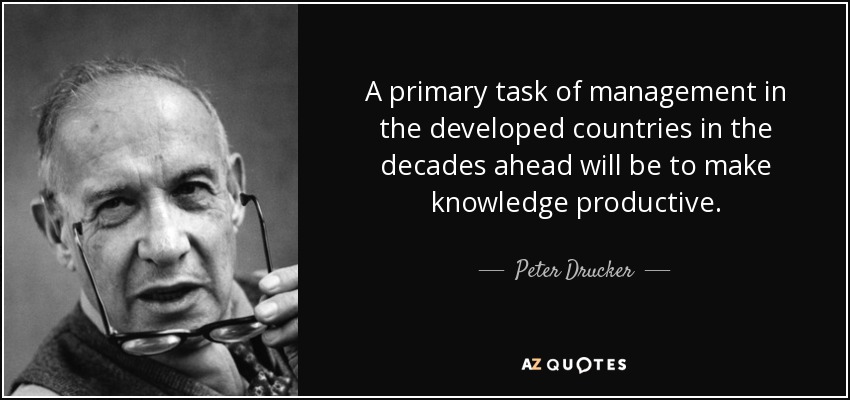
A primary task of management in the developed countries in the decades ahead will be to make knowledge productive.
Undoubtedly, at the moment, the major cause of CO2 emission is what happens in developed countries.
Now, for the moment, we are safe. The only kind of international violence that worries most people in the developed countries is terrorism: from imminent heart attack to a bad case of hangnail in fifteen years flat. We are very lucky people--but we need to use the time we have been granted wisely, because total war is only sleeping. All the major states are still organized for war, and all that is needed for the world to slide back into a nuclear confrontation is a twist of the kaleidoscope that shifts international relations into a new pattern of rival alliances.
Thanks to the scientific method, most people in "developed" countries have an outlook of mild deism. We assume things like weather and disease operate according to fixed natural laws. Every so often, though, problems impinge on us so directly that we stretch beyond that mildly deistic stance and ask God to intervene. When a drought drags on too long, we pray for rain. When a young mother gets a diagnosis of cervical cancer, we solicit prayers for her healing. We beseech God as if trying to talk God into something God otherwise might not want to do.
The Unites States is the largest developed country. Canada enjoys a flourishing economy and advanced technology. Mexico is an important developing country. China attaches great importance to the friendly cooperation with the three countries,.
The aging and decreasing population is a serious problem in many developed countries today. In Japan's case, these demographic changes are taking place at a more rapid pace than any other country has ever experienced.
I find it interesting that many of the people who want to restrict fossil fuels live in well-developed countries where abundant and affordable energy is readily available.
I'm not going to recommend recklessness but somewhere just short of it - testing yourself and proactively pursuing a rite of passage has become necessary because in western developed countries we've become very comfort-addicted.
I think one big improvement would be if we somehow made it cheaper and easier for developing countries to learn from the sad experience of some of the developed countries, and also from some of the positive experiences we have of building good transportation systems, like high-speed rail.
First of all, developed countries have basically expropriated the atmosphere of the world community. But one must say clearly that we redistribute de facto the world's wealth by climate policy. Obviously, the owners of coal and oil will not be enthusiastic about this. One has to free oneself from the illusion that international climate policy is environmental policy. This has almost nothing to do with environmental policy anymore.
We may feel the pain of falling back from a level of affluence to which we have grown accustomed, but most people in developed countries are still, by historical standards, extraordinarily well off.
Money comes to Switzerland through three illegal sources: tax evasion in other developed countries, the blood money of dictators and other rulers in the Third World and organized crime.
Developed countries will always welcome the Einsteins of this world - those individuals whose talents are already recognized and deemed to have value. This welcome doesn't usually extend to the poor and uneducated people seeking to enter the country. But the truth, supported by the facts of history and the richness of immigrant contribution to America's distinction in the world, is that the most entrepreneurial, innovative, motivated citizen is the one who has been given an opportunity and wants to repay the debt.
Technology is probably the single biggest driver of productivity gains for the developed countries. For example, I think it's much more important than free trade.
What is urgently needed is a bold new move from a consumer economy to a conserver economy in all of the developed countries, and particularly in the United States.
I just play to progressive audiences. You know, if they're watching Discovery Channel, History Channel, that kind of thing, "Monty Python" have already laid the groundwork. They're known around the world. People like that kind of surrealist, left-field humor, and that's what I do. And "Saturday Night Live," a lot of American humor. "The Simpsons," above all, the weird, left-field humor, which I love. And sardonic. So that's all I'm doing. I find that audience, and they're in every developed country around the world.
Capitalism survives by forcing the majority, whom it exploits, to define their own interests as narrowly as possible. This was once achieved by extensive deprivation. Today in the developed countries it is being achieved by imposing a false standard of what is and what is not desirable.
Depopulation should be the highest priority of foreign policy towards the third world, because the US economy will require large and increasing amounts of minerals from abroad, especially from less developed countries
There is not going to be, we can be quite certain, there's not going to be any action on reducing greenhouse gas emissions by China or India or Indonesia or Brazil unless all developed countries are making a major effort. It will still be a big job to get them in, even if we are all making the effort. But our making the effort is a necessary condition.
I am convinced that Nigeria would have been a more highly developed country without the oil. I wished we'd never smelled the fumes of petroleum.
Globally, emissions may have to be reduced, the scientists are telling us, by as much as 60% or 70%, with developed countries likely to have to make even bigger cuts if we're going to allow the developing world to have their share of growing industrial prosperity...The Kyoto Protocol is only the first rather modest step. Much, much deeper emission reductions will be needed in future. The political implications are mind-blowing.
The majority of people in developed countries spend at least some time interacting with the Internet, and Governments are abusing that necessity in secret to extend their powers beyond what is necessary and appropriate.
A considerable proportion of the developed world's prosperity rests on paying the lowest possible prices for the poor countries' primary products and on exporting high-cost capital and finished goods to those countries. Continuation of this kind of prosperity requires continuation of the relative gap between developed and underdeveloped countries - it means keeping poor people poor. Increasingly, the impoverished masses are understanding that the prosperity of the developed countries and of the privileged minorities in their own countries is founded on their poverty.
The suddenness of the leap from hardware to software cannot but produce a period of anarchy and collapse, especially in the developed countries.
The inflow of capital from the developed countries is the prerequisite for the establishment of economic dependence. This inflow takes various forms: loans granted on onerous terms; investments that place a given country in the power of the investors; almost total technological subordination of the dependent country to the developed country; control of a country's foreign trade by the big international monopolies; and in extreme cases, the use of force as an economic weapon in support of the other forms of exploitation.
Follow AzQuotes on Facebook, Twitter and Google+. Every day we present the best quotes! Improve yourself, find your inspiration, share with friends
or simply: