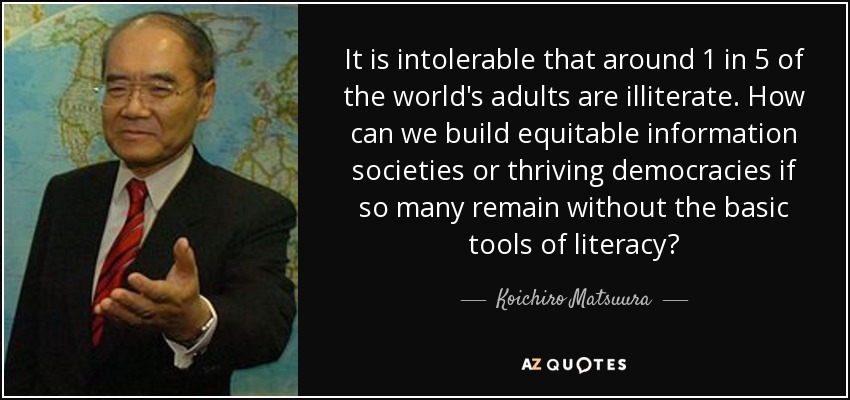
It is intolerable that around 1 in 5 of the world's adults are illiterate. How can we build equitable information societies or thriving democracies if so many remain without the basic tools of literacy?
As an element in human progress, the right of private property, in importance, has taken first and almost only place in the current systems of law and of political economy. While admitting its great importance, we cannot conceal the fact that the writers on those subjects have wholly failed to distinguish between its use and its abuse, or to recognize its rational and equitable limits.
It's important to know that, unlike lawyers, land surveyors put the public interest first. That means we're not biased by our client - this means that the property line will be drawn in the most equitable position, regardless of which neighbor is paying the bill.
Considering that future generations will be far better off than current generations even after accounting for climate change, it would be more equitable for today's industrialized world to help solve the real problems facing today's poorer developing world than to mitigate climate change now to help reduce the burden on future populations that would not only be wealthier but also technologically superior.
That's what I'm trying to get over: the idea that anarchism offers a description of equitable relations that go way back rather than a hypothesis of what the future should look like.
When resources are degraded, we start competing for them, whether it is at the local level in Kenya, where we had tribal clashes over land and water, or at the global level, where we are fighting over water, oil, and minerals. So one way to promote peace is to promote sustainable management and equitable distribution of resources.
There was no private property in the past. Everything was communal property. In the Indian community where I was born, everything belonged to the community. This way of life is more equitable.
The Captains of Industry have always counseled the rest of us "to be realistic." Let us, therefore, be realistic. Is it realistic to assume that the present economy would be just fine if only it would stop poisoning the air and water, or if only it would stop soil erosion, or if only it would stop degrading watersheds and forest ecosystems, or if only it would stop seducing children, or if only it would stop buying politicians, or if only it would give women and favored minorities an equitable share of the loot?
Let the amelioration in our laws of property proceed from the concession of the rich, not from the grasping of the poor. Let us understand that the equitable rule is, that no one should take more than his share, let him be ever so rich.
This book is a must for anyone who wants to know how leaders develop their practices within a community context. Bordas has pulled together illuminating examples with great lessons for anyone working to create an equitable and truly diverse society.
Broad access to opportunity is the key to a truly equitable America. No matter who you are or where you grew up, Black Faces in White Places provides a blueprint to seizing opportunities at hand - and expanding opportunity for your entire community.
An individual can be truly moral only when they are their own master. From the moment when they awaken to a comprehension of that which is equitable and good it is for them to direct their own movements, to seek in the their conscience reasons for their actions, and to perform them simply, without either fearing punishment or looking for reward.
To think that land reform is going to somehow automatically create an equitable system, I think that's just wrong. It's a very technical view of the world.
Russia, as well as any other country, does not need dictators, but it needs equitable principles of organizing the state and society: just, effective, flexibly responding to changes inside and outside the country - that is what Russia needs.
If we don't have an egalitarian, equitable, and peaceful society, being very wealthy isn't worth much. If I can make a little bit of a dent in addressing this issue, I'll have done my service.
We must agree on what matters: kissing in public places, bacon sandwiches, disagreement, cutting-edge fashion, literature, generosity, water, a more equitable distribution of the world's resources, movies, music, freedom of thought, beauty, love.
Virtually all informed observers agree that a fair and equitable resolution of the plight of the Palestinians would considerably weaken the anger and hatred of Israel and the US in the Arab and Muslim worlds - and far beyond, as international polls reveal. Such an agreement is surely within reach, if the US and Israel depart from their long-standing rejectionism.
We began to temper Western democracy with what I'd call a social contract. We put in Social Security, graduated income tax, workers' compensation. We developed strong unions to negotiate with business owners so workers got an equitable share of the profits.
The way in which we can promote peace, is by promoting sustainable management of our resources, equitable distribution of these resources, and that the only way you can actually do that, is that then you have to have a political, economic system that facilitates that. And then you get into the issues of human rights, justice, economic justice, social justice, and good governance or democratic governance. That's how it ties up.
To be equitable, economic growth has to be sustainable. To be sustainable, economic growth has in turn to be all-inclusive. All-inclusive is no longer the greatest good of the greatest number. It is actually 'Sarvodaya' or the 'rise of all'. This Mahatma Gandhi saw as essential to Satyagraha itself.
Whereas our common past, out of Africa, saw a global diaspora of humankind, our common future depends on a global coming together and consensus, resulting in a more equitable distribution of the Earth's largesse. When Africa, which gave us the wealth of life, has that debt returned, the world will have come of age.
I firmly believe that the principles behind Contraction & Convergence provide the best long-term framework for a fair and equitable climate change mitigation policy
We should know that only replacing the economics of competition and greed with the economics of equitable cooperation will guarantee a globalization that takes advantage of potential efficiency gains in ways that also promote environmental protection, international equity, economic democracy, and variety.
One of the things I have been preaching around the world is collecting taxes in an equitable manner, especially from the elites.
All "public interest' legislation (and any distribution of money taken by force from some men for the unearned benefit of others) comes down ultimately to the grant of an undefined undefinable, non-objective, arbitrary power to some government officials. The worst aspect of it is not that such a power can be used dishonestly, but that it cannot be used honestly. The wisest man in the world, with the purest integrity, cannot find a criterion for the just, equitable, rational application of an unjust, inequitable, irrational principle.
Follow AzQuotes on Facebook, Twitter and Google+. Every day we present the best quotes! Improve yourself, find your inspiration, share with friends
or simply: