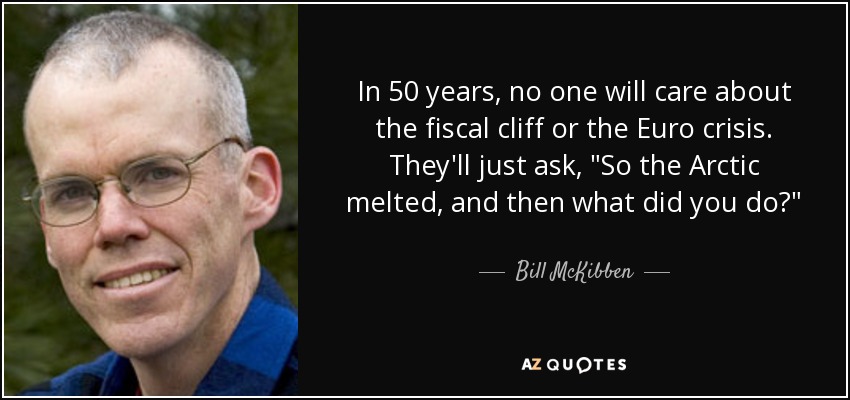
In 50 years, no one will care about the fiscal cliff or the Euro crisis. They'll just ask, "So the Arctic melted, and then what did you do?"
We will do whatever we could do to keep Greece inside the euro and inside Europe.
Our policy is European and Euro-Atlantic integration. There is no substitute for NATO.
If another euro country fails, so does Slovakia. Our economy is 80% open and if the citizens of Spain and Portugal have no money to buy cars made here in Slovakia then that will be bad for us. Everything is connected.
It is the entire euro zone system which is under threat at the moment, not just a few small countries anymore... Our euro is under threat. The changing situation needs a quick and immediate reaction.
The euro is a sickly premature infant, the result of an over-hasty monetary union.
After the accession to the euro zone, interest rates declined substantially in Portugal.
Another question has been raised rather widely in Europe, in Japan as well as in the United States is what, to what extent will the euro become a reserve currency.
Part of the concept of the euro zone was to establish a common market. The banks were going to bank across all their countries like we bank across states. But that concept got killed for a whole bunch of reasons that I won't get into. That was a good concept, by the way. It may yet return, because there are huge economies of scale in banking. That's another thing people don't quite get.
Europe isn't something connected by the Euro. Every little dimension of Europe is so hugely different, and I think America is different in its states as well, so I never really think of things in big blocks, in terms of other artists.
When the next big problem comes online, be it the Euro crisis, nuclear proliferation, an overstretched Internet, a killer flu, or any of the other possibilities I consider in X-Events, we will suffer a complexity overload.
Greeks have to know that they are not alone ... Those who are fighting for the survivor of Greece inside the Euro area are deeply harmed by the impression floating around in the Greek public opinion that Greece is a victim. Greece is a member of the EU and the euro. I want Greece to be a constructive member of the Union because the EU is also benefiting from Greece.
The Financial Times is pro-British membership of the European Union. We have taken that position for decades. But we are not starry-eyed about the European Union. And we do not believe and have not believed for at least 10 years that Britain should be part of the euro.
I just don't accept that there is a trade off between trade and democracy ... what we've got now is an institution that has utterly outgrown its roots which were noble... the real difference was the introduction of the euro.
I find it extraordinary that I'm being told I can't trust you the voter to get a government in to protect workers rights and that we need Brussels to defend you, the euro is a broken project we are going to pay, no you are going to pay out of your taxes one bailout out of another and the European union does not protect your jobs.
Businesses will only invest in Greece if three conditions are fulfilled. First, there must be a clear commitment to the euro. No businesses will invest if they have to fear that Greece will leave the euro zone at some point. Second, the Greek government must be prepared to work together with European institutions in order to restructure the country.
In China the largest denomination bill they have is 100 yen, and that's maybe $7. So here you have a whole economy working with only a $7 note as the largest denomination. The euro wants to get rid of the 500-euro bill just as the United States years ago got rid of the $1,000 bill because only the criminals used $1,000 bills.
Look at Ukraine. Its currency, the hernia, is plunging. The euro is really in a problem. Greece is problematic as to whether it can pay the IMF, which is threatening not to be part of the troika with the European Central Bank and the European Union making more loans to enable Greece to pay the bondholders and the banks. Britain is having a referendum as to whether to withdraw from the European Union, and it looks more and more like it may do so. So the world's politics are in turmoil.
In the end, the British didn't vote to leave because of the euro. They're not even members of the currency union. Even the refugee crisis hardly affected the country.
Stories are invented: Juncker wants to introduce the euro everywhere or immediately deepen the EU - although I publicly stated the opposite that same day.
I would describe that [friendship with Greek Prime Minister Alexis Tsipras] as a utilitarian friendship. At the time, his country was facing the prospect of leaving the euro zone and many Greeks felt abandoned by Europe. In such a situation, it seemed appropriate to me to present myself as a friend to Greece. It had to do with the country's dignity.
Concerning the common currency: today, the euro is not worth it for Poland. The reason why we survived the financial and economic crisis quite well is that we have a national currency. This will not change in the near future.
The euro is going to be a big source of problems, not a source of help.
Germany cannot get out of the euro. What it has to do, therefore, is make the economy more flexible - to eliminate the restrictions on prices, on wages and on employment; in short, the regulations that keep 10 percent of the German workforce unemployed.
Italy may well be the main problem. It has benefited most from the euro by having been able to get the euro interest rate instead of what otherwise would have been its own. That would be much higher because Italy has been accumulating so much debt. In the past, Italy has inflated away its debt. The virtue of the euro is that Italy can't do it alone. A tight ECB policy wouldn't permit that to happen again.
Follow AzQuotes on Facebook, Twitter and Google+. Every day we present the best quotes! Improve yourself, find your inspiration, share with friends
or simply: