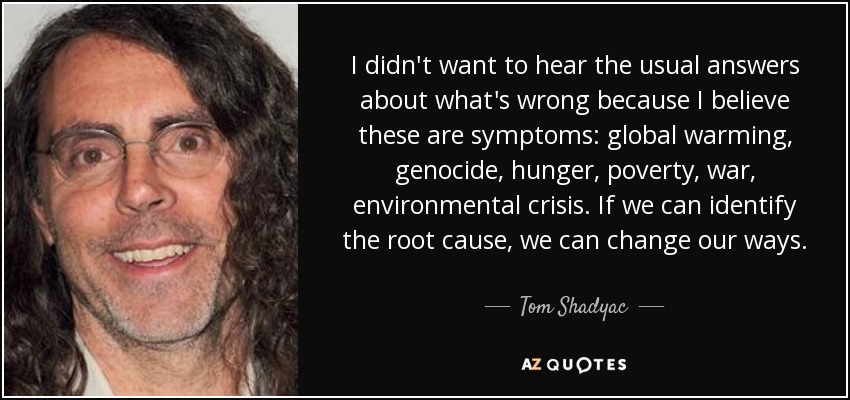
I didn't want to hear the usual answers about what's wrong because I believe these are symptoms: global warming, genocide, hunger, poverty, war, environmental crisis. If we can identify the root cause, we can change our ways.
Historical atrocities have certainly shown that dehumanizing any group is the first step toward genocide.
I'm enthralled by the national yearning that the Russians had during the 50s and 60s. The whole century was pretty rough for them. They suffered genocide, war, poverty, and half the population was sent to labor camps. But they were determined to get into space first.
I make a difference between genocide and Holocaust. Holocaust was mainly Jewish, that was the only people, to the last Jew, sentenced to die for one reason, for being Jewish, that's all.
It would be a huge mistake to abandon democracy promotion. Peaceful political change has been enormously successful in the past years in Eastern European countries as well as in countries like South Korea, South Africa, Chile and Indonesia. However, if possible, the use of force is something to avoid except in cases where genocide is threatened, like Bosnia or Libya or with regimes that threaten our security, like the Taliban and Saddam Hussein.
Justice-seekers everywhere will celebrate Dunbar-Ortiz's unflinching commitment to truth-a truth that places settler-colonialism and genocide exactly where they belong: as foundational to the existence of the United States.
Turks continued their previous policy. They would not stop committing massive and most awful massacres that even Leng Timur would not dare to do.
Think about the amount of crap the US has done! Between slavery and the genocide of the Native Americans - if any of that had been filmed like [Adolf] Hitler, we'd never live it down.
What does it mean then to live with one another? It can be unhappy, it can be wretched, it can be ambivalent, it can even be full of antagonism, but all of that can play out in the political sphere without recourse to expulsion or genocide. And that is our obligation, to stay in the sphere with whatever murderous rage we have, without acting on it.
Anyway, what is a country? When people say, "Tell me about India," I say, "Which India?.... The land of poetry and mad rebellion? The one that produces haunting music and exquisite textiles? The one that invented the caste system and celebrates the genocide of Muslims and Sikhs and the lynching of Dalits? The country of dollar billionaires? Or the one in which 800 million live on less than half-a-dollar a day? Which India?"
I think if there is to be a crime of 'political genocide' it needs to be formulated with great care and precision to avoid unpopular views from being criminalised.
I've had all the lessons I could get. I've learned from everybody I've ever met.
The majority of American states had laws by the 1930s that allowed for forced sterilization of socially undesirable categories of people, so-called feeble-minded, for example, and with Hitler culminating in genocide.
The other thing is even the Jews in the course - even though metaphorically aligning themselves with Indians, and, you know, you have genocide aligning itself with another genocide.
Lyrically I like to use themes that make the listener use his or her imagination, and to give a little of the lessons I've learned in my own life.
About the time we can make the ends meet, somebody moves the ends.
Lessons are not given, they are taken.
We still name our military helicopter gunships after victims of genocide. Nobody bats an eyelash about that: Blackhawk. Apache. And Comanche. If the Luftwaffe named its military helicopters Jew and Gypsy, I suppose people would notice.
If you add up all the forms of genocide, from female infanticide and genital mutilation to so-called honor crimes, sex trafficking, and domestic abuse, everything, we lose about 6 million humans every year just because they were born female. That's a holocaust every year.
...it is proper that the duty of helping the poor and unfortunate should especially stir Catholics, since they are members of the Mystical Body of Christ. In this we have come to know the love of God, said John the Apostle, that He laid down His life for us, and we likewise ought to lay down our life for the brethren. He who has the goods of this world and sees his brother in need and closes his heart to him, how does the love of God abide in him? (1Jn 3:16 17)
Contemporary scholars have little explored the preconditions of genocide. Still less have they asked whether a society's weapons policy might be one of the institutional arrangements that contributes to the probability of its government engaging in some of the more extreme varieties of outrage. Though it is a long step between being disarmed and being murdered - one does not usually lead to the other - but it is nevertheless an arresting reality that not one of the principal genocides of the 20th century, and there have been dozens, has been inflicted on a population that was armed.
We find ourselves ethically destitute just when, for the first time, we are faced with ultimacy, the irreversible closing down of the earth's functioning in its major life systems. Our ethical traditions know how to deal with suicide, homicide and even genocide, but these traditions collapse entirely when confronted with biocide, the killing of the life systems of the earth, and geocide, the devastation of the earth itself.
Goods move in response to price differences from points of low to points of higher price, the movement tending to obliterate the price difference and come to rest.
We fight wars not to have peace, but to have a peace worth having. Slavery is peace. Tyranny is peace. For that matter, genocide is peace when you get right down to it. The historical consequences of a philosophy predicated on the notion of no war at any cost are families flying to the Super Bowl accompanied by three or four trusted slaves and a Europe devoid of a single living Jew.
You see, when a nation threatens another nation the people of the latter forget their factionalism, their local antagonisms, their political differences, their suspicions of each other, their religious hostilities, and band together as one unit. Leaders know that, and that is why so many of them whip up wars during periods of national crisis, or when the people become discontented and angry. This is the explanation of all wars, all racial and religious hatreds, all massacres, and all attempts at genocide.
Follow AzQuotes on Facebook, Twitter and Google+. Every day we present the best quotes! Improve yourself, find your inspiration, share with friends
or simply: