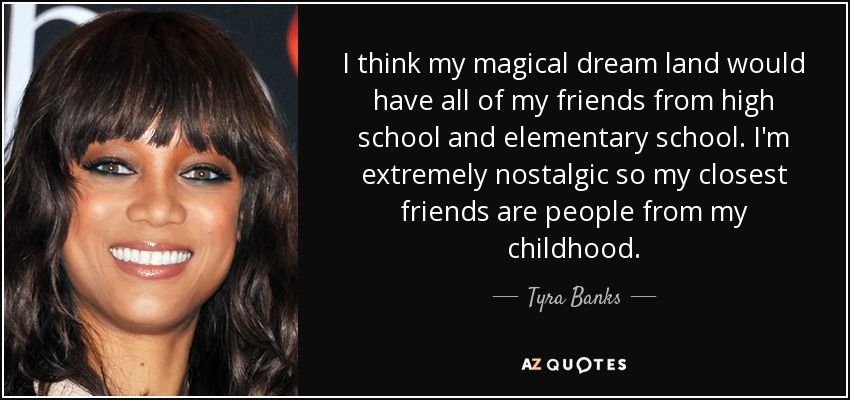
I think my magical dream land would have all of my friends from high school and elementary school. I'm extremely nostalgic so my closest friends are people from my childhood.
In my teens I fancied myself an artist; I hung out with the eccentric art teacher at my high school, painted still lifes and portraits and landscapes in watercolor and acrylics, took private lessons, won some blue ribbons for my earnest renderings. My lack of talent did little to dampen my enthusiasm. In college I thought I'd continue, but, like Salieri, I quickly realized that while I had the ability to appreciate art, I wasn't actually very good.
Gay, straight - whatever - adolescents in high school and coming out of junior high, that's such a difficult, awkward period and kids can be so cruel and mean.
I think it is an accurate statement to say that some people consider feelings of same-gender attraction to be the defining fact of their existence. There are also people who consider the defining fact of their existence that they are from Texas or that they were in the United States Marines. Or they are red-headed, or they are the best basketball player that ever played for such-and-such a high school. People can adopt a characteristic as the defining example of their existence and often those characteristics are physical.
When I read the script [of Glee], the whole premise was that all the high school kids were being cruel to this kid in the wheelchair, and then the quarterback comes along and has a heart of gold and takes him out of a Porta Potty. That's too often what I see in media, that the characters with disabilities are there to make other people seem like heroes for treating the character with a disability with respect. Those are the kinds of roles that are out there.
I grew up as an only child of two parents who had dropped out of high school. They had enormous respect for education and encouraged me as a child when I had strong interests in both math and science, but we really didn't have much by way of educational role modeling in our family.
For me, I don't do nip or bush. I won't do it. And that's because I talk to numerous young women in high school and I talk to them about owning who they are, and not giving up their sexuality because they have to.
I am not in touch with other writers. I don't have very much contact with other writers. I don't get invited to these things or I don't go to them. I hate panels. I speak to librarians and to conferences of English teachers. That's what I do: teachers and librarians. And high school kids.
My mother didn't feel sorry for herself, she was left with no child support, no alimony at a very young age, with a child to raise, a high school education and she just figured it out. She didn't complain, she didn't rely upon government, she relied upon her own skill set, her own self confidence, her own drive in moxie and her own duty to me and her and she relied upon her family and her faith.
My greatest influences are actually probably a set of different teachers. And these teachers, most prominently at my high school, but also a few others, helped kind of instill in me, thinking thoughts about how life is meaningful in terms of how we all kind of live in a network of people and how you interact with those people is part of what makes life essentially meaningful and then kind of concepts to think about, how do you add value to other people's lives? How do they add value to yours? And how do you kind of form a community together in the network?
To be honest, I wasn't crazy about the kind of poetry I found in high school English books. I didn't get really excited about poetry until I discovered Lorca in college. If it wasn't for surrealism, I'm not sure I'd have become so involved in poetry. I was attracted by the extravagant imagery and elements of fantasy. This was in the '70s and it seemed to fit the psychedelic mood of the times. I found it liberating.
I went from a naive, regular girl in high school to trying to realize my dream. When my family moved from the East Coast to California, I thought in my little brain, "Wow, I'm going to Hollywood. I could actually make this happen." It was easier for me to think it's possible living in a place like Los Angeles than trying to do it in suburban Maryland.
My mom said the term heavy petting existed a lot when she was in high school.
It was also incredibly serendipitous that I would later learn I shared a birthday with Whoop [Goldberg ]. I went on to be inspired by many other artists and forms of art, and was soon directed to a place that would help harness my experiences and develop my voice within the craft, LaGuardia High School of Performing Arts in New York City.
It was fun to play that surreal high school life [in Jawbreaker]. I was a huge fan of the movie Heathers. But I think at the time - you know, when the movie was released, it was a very limited release, and it didn't do very well at the box office. And I love the fact that it has found legs and that the audience has kept growing and growing over the years.
For those of us who got into good colleges or the professions, did we stand up to that high school history teacher who told us some ridiculous lie about American history and say, "That's a ridiculous lie. You're an idiot"? No. We said, "All right, I'll keep quiet, and I'll write it in the exam and I'll think, yes, he's an idiot." And it's easy to say and believe things that improve your self-image and your career and that are in other ways beneficial to yourselves.
[Larry Laurenzano] gave me a junior high school saxophone to take to high school, because I was always taking one of our school horns home to practice and I couldn't afford to buy one. He gave my friend, Tyrone, a tuba and he gave me a junior high saxophone for each of us to use at Performing Arts High School with. My audition piece was selections from Rocky. We were not sophisticated. But we had some spirit about it. We enjoyed it, and it was a way out.
I didn't always have time to practice as much as I wanted to do, that was a real problem for me in high school and college.
I had a lot of bad habits in how I was playing the horn. And I slowly, in high school and college, started to recognize them and get them a little better. But it was not an overnight process, I'll say that.
By the latter part of high school, by the middle of junior year in high school, Jay Rodriguez played me some Irakere records that that Paquito [D'Rivera] was on. And he also played me and our friend, Curtis Haywood, some Phil Woods records. And when I heard Phil, I just about lost my mind. I was playing the Charlie Parker Omnibook as part of my lessons. This was the '80s. There was no YouTube and all that. And we had three or four jazz records at that point.
I was also sitting in from the middle of senior year of high school at Sweet Basil, it was a great club in New York.
Justin [Di Cioccio] was [at Laguardia School of Arts]. He later took over at Manhattan. But I knew Justin through the McDonald's band, which at the time I was finishing high school and starting college, I got involved with. I was not that heavily involved with the school at MSM my first year there. I took a semester off to start my 2nd year. Took classes I felt like taking during my third semester, but by the start of my third year, September of '86, they began the undergraduate jazz program and I joined that program.
There are great jazz educators that I meet all the time. I met a guy named Paul Luchessi who has a high school jazz program in Fresno. And Bob Athayde who runs a junior high program in Lafayette, California. And man, we walked into these schools and Paul Luchessi said, "Jon is the composer of Paradox." A hundred or something kids started to applaud. "What? You guys know that? I'm so blown away.
I thought, oh, I'm going to be a painter. And eventually my family had moved near Chicago, and when I graduated from high school, I went to the Chicago Art Institute, and it was there that I thought, well, now I'm going to be a painter.
Talent doesn't appear over night. It takes a lot of work and honing your craft, but also don't give up because people may say you're not good enough. I had so many teachers in high school and college saying "You're not going to make it. You're not. You can't." Luckily I had enough people around me who said I could.
Follow AzQuotes on Facebook, Twitter and Google+. Every day we present the best quotes! Improve yourself, find your inspiration, share with friends
or simply: