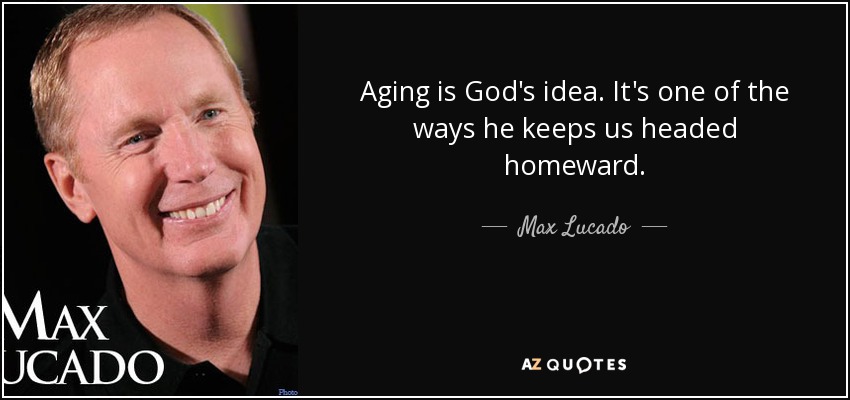
Aging is God's idea. It's one of the ways he keeps us headed homeward.
Pure mathematics is, in its way, the poetry of logical ideas. ... [By seeking] logical beauty spiritual formulas are discovered necessary for the deeper penetration into the laws of nature.
"I'm at your house?" Kody asked."You don't have to sound so offended. I do have people clean it, you know?""Sorry." She sighed wearily. "You have no idea how confusing it is to wake up in a strange place with no idea how you got there."Caleb laughed. "Sure I do. Happens to me frequently."She rolled her eyes at his frightening lifestyle. "Yes, but I woke up in this bed alone."
Get rid of the bondage of body; we have become slaves to it and learnt to hug our chains and love our slavery; so much so that we long to perpetuate it, and go on with "body" "body" for ever. Do not cling to the idea of "body", do not look for a future existence in any way like this one; do not love or want the body, even of those dear to us.
In teaching, you do not want to COVER things, you want to UNCOVER them. The best way to get good ideas is to have lots of ideas.
Olive Ann describes Sanna as 'a perfectionist and a worrier.' She is obsessed with the idea of finding happiness, and for her, as Olive ann wrote in her notes for the novel, 'happiness means being first with somebody, having perfect, loving children...The theme of Sanna is disillusionment,' Olive Ann wrote. 'Her life is the pursuit of happiness and perfection, but she finds happiness and perfection impossible to obtain-her idea of happiness is constant joy, no changes.
I have tried to avoid long numerical computations, thereby following Riemann's postulate that proofs should be given through ideas and not voluminous computations.
Every successful photograph, except for lucky shots, begins with an idea and a plan. The more precisely a photographer knows what it is he wishes to do, the better the chances are that he will do it.
I don't have an idea for a play until after I've finished writing it. I write first, and come up with what it's about later. My technique could be compared to having a large canvas and coming in every day and putting a dot on it somewhere, and after several years - literally - I begin to say, That reminds me of an elephant, so I think I'll make it one.
The play is a very simple idea really; someone needs some support and consolation, and she finds a place where she gets it.
It was a roller-coaster process. For a long time I had no idea what I was doing. I wasn't writing with an outline. And, rare for me, I wrote scenes out of sequence. . . . I didn't understand the play when I wrote it. It was something I'd give in to. It happens to me periodically. I give over and write whatever comes to me and I don't know what it means and then I do. It's thrilling.
Plays are literature: the word, the idea. Film is much more like the form in which we dream - in action and images (Television is furniture). I think a great play can only be a play. It fits the stage better than it fits the screen. Some stories insist on being film, can't be contained on stage. In the end, all writing serves to answer the same question: Why are we alive? And the form the question takes - play, film, novel - is dictated, I suppose, by whether its story is driven by character or place.
One [of the two ideas for PROOF] was to write about two sisters who are quarreling over the legacy of something left behind by their father. The other was about someone who knew that her parent had had problems of mental illness [and that] she might be going through the same thing.
. . . I wrote a letter to Thomas Pynchon asking, Can I have your permission to try to make an [adaptation] of your book? And I had no idea that he would answer me, because he's pretty elusive. But he did send a letter back that said, Yes, you can do that - as long as the only instrument in the opera is a banjo. I thought, That's an interesting way of saying No.
. . . the whole idea of WHAT HAPPENED WAS.... is not about dating. It is more about people who are not committed to who they are or are indifferent about their life in general, which is how I felt about myself when I wrote it. I had turned 40 and I was unhappy and I wanted to write about that. Dating just became the framework. . . . I like all those fringy, weird, nonverbal, quiet, tiny little things, those powerful interchanges between people, things that go unsaid, that people know are happening all the time but nobody wants to talk about. That's what I want to make movies about.
Faith is a great thing, and really religious people would like us to believe that faith and knowing are the same thing, but I don't believe that myself. Because there are too many different ideas on the subject. What we know is this: When we die, one of two things happens. Either our souls and thoughts somehow survive the experience of dying or they don't. If they do, that opens up every possibility you could think of. If they don't, it's just blotto. The end.
It's the pool where we all go down to drink, to swim, to catch a little fish from the edge of the shore; it's also the pool where some hardy souls go out in their flimsy wooden boats after the big ones. It is the pool of life, the cup of imagination, and she has an idea that different people see different versions of it, but with two things ever in common: it's always about a mile deep in the Fairy Forest, and it's always sad. Because imagination isn't the only thing this place is about.
We must become free. We are free; the work is to know it. We must give up all slavery, all bondage of whatever kind. We must not only give up our bondage to earth and everything and everybody on earth, but also to all ideas of heaven and happiness.
The product of mathematics is clarity and understanding. Not theorems, by themselves. ... In short, mathematics only exists in a living community of mathematicians that spreads understanding and breathes life into ideas both old and new.
Mathematics is about problems, and problems must be made the focus of a student's mathematical life. Painful and creatively frustrating as it may be, students and their teachers should at all times be engaged in the process - having ideas, not having ideas, discovering patterns, making conjectures, constructing examples and counterexamples, devising arguments, and critiquing each other's work.
Combinatorics is an honest subject. No adèles, no sigma-algebras. You count balls in a box, and you either have the right number or you haven't. You get the feeling that the result you have discovered is forever, because it's concrete. Other branches of mathematics are not so clear-cut. Functional analysis of infinite-dimensional spaces is never fully convincing; you don't get a feeling of having done an honest day's work. Don't get the wrong idea - combinatorics is not just putting balls into boxes. Counting finite sets can be a highbrow undertaking, with sophisticated techniques.
What is the fundamental hypothesis of science, the fundamental philosophy? We stated it in the first chapter: the sole test of the validity of any idea is experiment. ... If we are told that the same experiment will always produce the same result, that is all very well, but if when we try it, it does not, then it does not. We just have to take what we see, and then formulate all the rest of our ideas in terms of our actual experience.
Although this may seem a paradox, all exact science is based on the idea of approximation. If a man tells you he knows a thing exactly, then you can be safe in inferring that you are speaking to an inexact man.
We do not associate the idea of antiquity with the ocean, nor wonder how it looked a thousand years ago, as we do of the land, for it was equally wild and unfathomable always.
If history were a photograph of the past it would be flat and uninspiring. Happily, it is a painting; and, like all works of art, it fails of the highest truth unless imagination and ideas are mixed with the paints.
Follow AzQuotes on Facebook, Twitter and Google+. Every day we present the best quotes! Improve yourself, find your inspiration, share with friends
or simply: