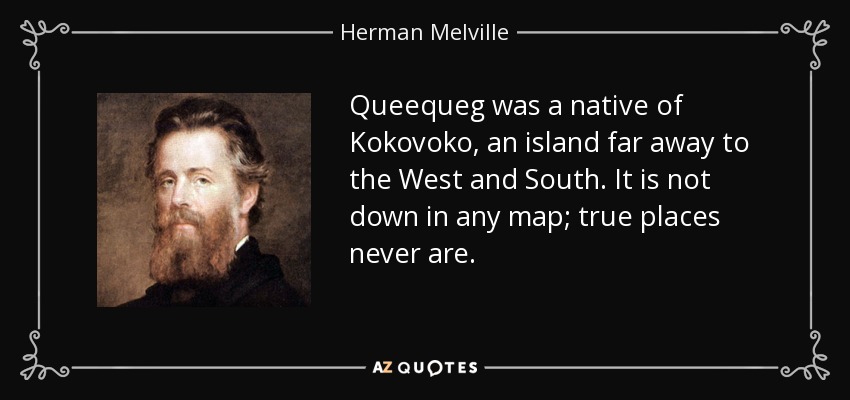
Queequeg was a native of Kokovoko, an island far away to the West and South. It is not down in any map; true places never are.
Why don’t you purchase an Italian dictionary? I will assume the expense.” “I have one,” she said, “but I don’t think it’s very good. Half the words are missing.” “Half?” “Well, some,” she amended. “But truly, that’s not the problem.” He blinked, waiting for her to continue. She did. Of course. “I don’t think Italian is the author’s native tongue,” she said. “The author of the dictionary?” he queried. “Yes. It’s not terribly idiomatic.
Our defeat was always implicit in the victory of others; our wealth has always generated our poverty by nourishing the prosperity of others - the empires and their native overseers. In the colonial and neocolonial alchemy, gold changes into scrap metal and food into poison.
I don't understand why people never say what they mean. It's like the immigrants who come to a country and learn the language but are completely baffled by idioms. (Seriously, how could anyone who isn't a native English speaker 'get the picture,' so to speak, and not assume it has something to do with a photo or a painting?)
It is a strange world," I murmered, more to myself than to the native soul. "The strangest," he agreed.
At noon I observed a bevy of nude young native women bathing in the sea, and I went and sat down on their clothes to keep them from being stolen.
She had spent all her life in feeling miserable; this misery was her native element; its fluctuations, its varying depths, alone save her the impression of moving and living. What bothers me is that a sense of misery, and nothing else, is not enough to make a permanent soul. My enormous and morose Mademoiselle is all right on earth but impossible in eternity.
I wonder what it felt to move to a country where you didn't grow up. I had thought about that often since my sister got married. Do you become a character in a story native to that land, or do you, somewhere in your heart, want to return to your homeland.
One cannot be pessimistic about the West. This is the native home of hope. When it fully learns that cooperation, not rugged individualism, is the quality that most characterizes and preserves it, then it will have achieved itself and outlived its origins. Then it has a chance to create a society to match its scenery.
One of our people in the Native community said the difference between white people and Indians is that Indian people know they are oppressed but don’t feel powerless. White people don’t feel oppressed, but feel powerless. Deconstruct that disempowerment. Part of the mythology that they’ve been teaching you is that you have no power. Power is not brute force and money; power is in your spirit. Power is in your soul. It is what your ancestors, your old people gave you. Power is in the earth; it is in your relationship to the earth.
And in "Elbow Room" the cast sings the glories of westward expansion in the United States, which involved the murder of native peoples and the violent conquest of half of Mexico. Among the lines in the song is one that intones, "There were plenty of fights / To win land right / But the West was meant to be / It was our Manifest Destiny?" Let it suffice to say that happily belting out a tune in which one merrily praises genocide is always easier for those whose ancestors weren't on the receiving end of the deal.
The best prophet is common sense, our native wit.
If European symbols and traditions have grown tired, perfunctory and oppressively banal in Australia, or been drained of spirit and meaning by the dreary dictates of materialism and secularity, then the raw spirit truth of our native land is alive and radiant by comparison. For joy and meaning we might well turn to our natural country and witness miracles of vitality and new life, of inspiration and profound beauty; all in some humble, quiet and improbable place.
We do not own the freshness of the air or the sparkle of the water. How can you buy them from us?
We were taught to believe that the Great Spirit sees and hears everything, and that he never forgets; that hereafter he will give every man a spirit-home according to his deserts: if he has been a good man, he will have a good home; if he has been a bad man, he will have a bad home. This I believe, and all my people believe the same.
I am tired of talk that comes to nothing It makes my heart sick when I remember all the good words and all the broken promises. There has been too much talking by men who had no right to talk. It does not require many words to speak the truth.
The song and the drumming were like this: Behold, a sacred voice is calling you; All over the sky a sacred voice is calling.
Everywhere is the center of the world. Everything is sacred.
All I try to do is portray Indians as we are, in creative ways. With imagination and poetry. I think a lot of Native American literature is stuck in one idea: sort of spiritual, environmentalist Indians. And I want to portray everyday lives. I think by doing that, by portraying the ordinary lives of Indians, perhaps people learn something new.
What we did in the 1960s and early 1970s was raise the consciousness of white America that this government has a responsibility to Indian people. That there are treaties; that textbooks in every school in America have a responsibility to tell the truth. An awareness reached across America that if Native American people had to resort to arms at Wounded Knee, there must really be something wrong. And Americans realized that native people are still here, that they have a moral standing, a legal standing. From that, our own people began to sense the pride.
I certainly don't object to [writers] trying to imagine the lives of other societies, but you have to do it with a certain amount of humility and respect. If it were not for the ethnographic material that had been collected by missionaries and anthropologists and so forth, much of past Native American society would no longer be accessible. What I object to is making kitsch of things that are very serious.
It's impossible to write about Native life without humor-that's how people maintain sanity.
It is my land, my home, my father's land, to which I now ask to be allowed to return. I want to spend my last days there, and be buried among those mountains. If this could be I might die in peace, feeling that my people, placed in their native homes, would increase in numbers, rather than diminish as at present, and that our name would not become extinct.
Every part of the earth is sacred to my people.
Base men being in love have then a nobility in their natures more than is native to them.
Follow AzQuotes on Facebook, Twitter and Google+. Every day we present the best quotes! Improve yourself, find your inspiration, share with friends
or simply: