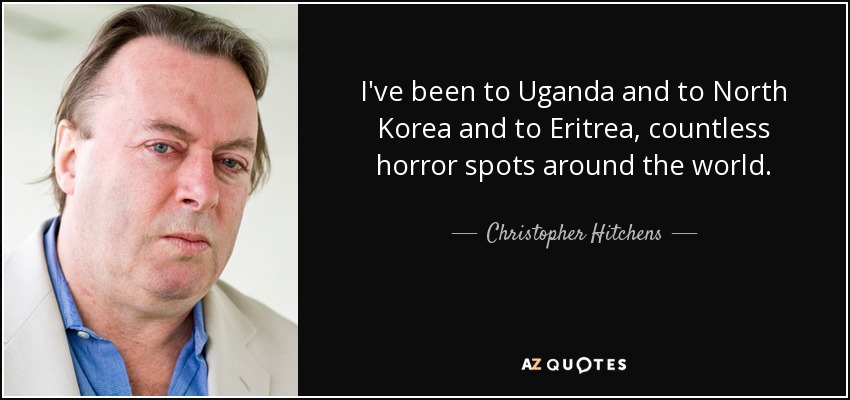
I've been to Uganda and to North Korea and to Eritrea, countless horror spots around the world.
One morning, just like 9/11, there's going to be a disaster. I have yet to see the United Nations do anything effective with either Iran or North Korea.
Unfortunately, the cyber threat to 'the grid' is only one means of eviscerating the soft underbelly of American society. Another which has been getting increasing attention could be delivered via the kind of nuclear-armed ballistic missile that Iran and North Korea have been developing: a strategic electro-magnetic pulse attack.
The greatest threat to the security of the people of North Korea comes from the government of North Korea.
I think the issue of North Korea is one where the international community as a whole has to work to resolve the crisis.
We've gotten a long way on missile defense. We know how to do it. We know how to take down incoming warheads, but we need to do a lot more work in order to be - to deploy a system that'll defend the United States against those kinds of limited strikes that might be possible by a nuclear armed North Korea or Iran.
I would not suggest the U.S. should sit down with the North Koreans bilaterally immediately after they've fired missiles - because the appearance is that you reward bad behavior. But if North Korea behaves for some period of time, I would pretty much favor direct talks.
North Korea is not an insane nation. It is not a crazy nation.
The larger picture here is that a North Korea with nuclear weapons adds to the larger proliferation risk.
The hope of internet anarchists was that repressive governments would have only two options: accept the internet with its limitless possibilities of spreading information, or restrict internet access to the ruling elite and turn your back on the 21st century, as North Korea has done.
We have treated our most serious adversaries, such as Iran and North Korea, in the most juvenile manner - by giving them the silent treatment. In so doing, we have weakened, not strengthened, our bargaining position and our leadership.
Create the impression of endless willingness to compromise and you almost invite deadlines. That's the challenge we now have in North Korea and have had in North Korea for 10 years. In this sense, diplomacy and foreign policy and other elements of political activity have to be closely linked and have to be understood by the negotiators
We oppose the reactionary policies of the U.S. government but we do not oppose the American people. We want to have many good friends in the United States.
There are a lot of universities that are as dangerous with the indoctrination of the children as terrorists are in Iran or North Korea. We have been setting up reeducation camps. We call them universities.
Our challenge is much more pervasive than it would be if we were just facing one enemy in one place. [Instead there is] the Middle East, Iraq, North Korea, Iran. There's a relatively long list that we believe are linked to the al Qaeda network in the Philippines, in Indonesia and in Yemen and other places. That makes it very clear that this is a global network.
We recognize that North Korea is in severe financial straits, and they have decided to use their resources to build their military, rather than to feed their people and to take care of the various humanitarian responsibilities that they have.
Today, former President Bill Clinton met with North Korean dictator Kim Jong-Il and convinced him to release two American journalists that have been jailed since March. Isn't that great? This is big, yeah. Or as Clinton calls it, another Asian happy ending.
The point is, once they have a missile that can hit the United States, we are now back in the kind of game we used to worry about with the Soviet Union, only the Soviet Union was more mature about this whole thing than I think the North Koreans will be.
Most people in Seoul don't care about the North's belligerent statements: The farther one is from the Korean Peninsula, the more one will find people worried about the recent developments here. Scary impressions are important to North Korea because for the last two decades its policy has been, above all, a brilliant exercise in diplomatic blackmail. And blackmail usually works better when the practitioners are seen as irrational and unpredictable.
If Iran and North Korea, by some horrible, devilish, nightmarish scenario, got together and went to war at the same time, one against Saudi Arabia and one against South Korea, I don't know what we would do about that. I don't know that we could stop them short of using nuclear weapons.
North Korea aside, most authoritarian governments have already accepted the growth of the Internet culture as inevitable; they have little choice but to find ways to shape it in accord with their own narratives - or risk having their narratives shaped by others.
What Iran wants and what North Korea wants is respect.
To survive, China had to open up to the West. It could not survive otherwise. This was after many millions have died of hunger in a country that was like North Korea is today. Once we became part of global competition, we had to agree to some rules. It's painful, but we had to. Otherwise there was no way to survive.
We can not underestimate the potential harm North Korea's capabilities can cause for the rest of the world.
Fifty-seven countries in the world, a third of the United Nations, do not recognize Israel. In a way, I think North Korea has better international relations than Israel.
Follow AzQuotes on Facebook, Twitter and Google+. Every day we present the best quotes! Improve yourself, find your inspiration, share with friends
or simply: