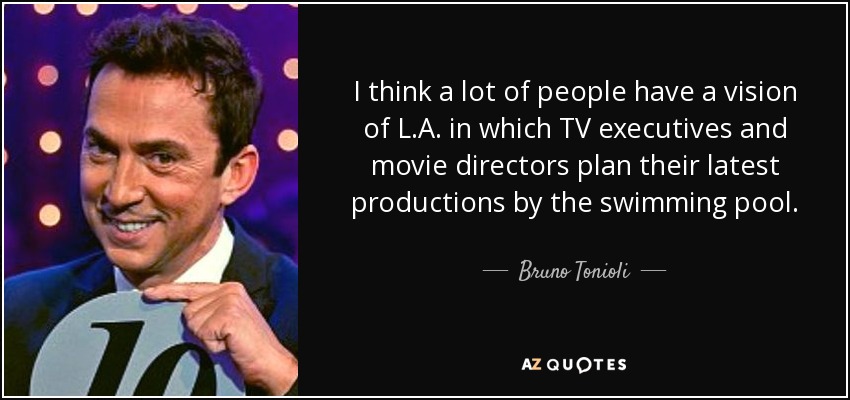
I think a lot of people have a vision of L.A. in which TV executives and movie directors plan their latest productions by the swimming pool.
Throughout school I appeared in all sorts of productions and deep in my heart of hearts I knew that was what I want to do more than anything else.
New discoveries and production of resources like shale oil and gas are dramatically altering our energy supply outlook and the entire global geopolitical landscape. And the pace of change - particularly in the past few years - continues to accelerate.
It looks like bribery. I mean,there is every appearance that Hillary Clinton was bribed to grease the sale of, what, 20 percent of America's uranium production to Russia, and then it was covered up by lying about a meeting with her home with the principals, and by erasing e-mails. And I presume we might know for sure whether there was or was not bribery if she hadn't wiped out you know, out thousands of e-mails.
I am taking my production style more into the world of dub. I mean true dub production techniques but in house music.
So I majored in Drama, did all the plays that were possible to do, skated through school in order to be in every production on stage or backstage in whatever capacity and I came to New York looking for work in the summers.
I think good actors - good, collaborative actors who see themselves as leaders in a given production - can and should offer ideas that have nothing to do with wanting to direct themselves.
Colombia is in a risky position. They've got a peace process that's going nowhere, and a drug production problem that's skyrocketing.
Strapped by tight credit and plummeting sales, businesses have overhauled the way they manage supply chains, inventory, production practices, and staffing.
The blending of architecture, solar, wind, biological and electronic technologies with housing, food production, and waste utilization within an ecological and cultural context will be the basis of creating a new ...design science for the post-petroleum era.
I had three weeks of prep on 'Wolfman,' a ridiculously inadequate amount of time to try to bring together the fractured and scattered pieces of the production. I had taken the job mostly because I had a cash flow problem, the only time in my career I've ever let finances enter into the decision process.
I have my own production company called Urban Dreams.
My way of remaining French was the financing scheme I used for Quest for Fire, with Fox funds, since it started as a 100% American production. The film was not in French and yet was French in style, reflecting my personality.
Phillip Harrison was the production designer, though, I think he's uncredited. He's done most of my films like Blue Thunder. Lots and lots over the years.
The direct investment of Japanese businesses to East Asian economies accelerates the reallocation of their production bases. Consequently, between Japan and the other East Asian countries, both exports and imports are growing substantially.
The way that I sort of direct the writers is, let's do the best story we can. Let's not worry about production issues. 'How much will that cost? How are we going to shoot that?' Let's not set up those constraints on the writing. I don't think it helps the project to work like that.
It is said that the American vocabulary has declined by half in the past few decades. It's a tragic instance of desertification following upon monocultural commodity production, the clear-cutting of written and spoken English.
The moment when the finished book or, better yet, a tightly packed carton of finished books arrives on my doorstep is the moment of truth, of culmination; its bliss lasts as much as five minutes, until the first typographical error or production flaw is noticed.
Opera was the cinema of its time, so to bring back that popular appeal, you just need to unleash its visceral immediacy and excitement. Most productions don't manage that - but when an opera does do it, you never forget it.
The designer must understand that form does not follow function nor does form follow a production process. For every use and for every production process there are innumerable equally attractive solutions.
Since man does not create physical matter, those who handle material objects in the production process are not producers in that sense. Economic benefits result from the transformation of matter in form, location, or availability (intellectually or temporally). It is these transformations that create economic benefits valued by consumers, and whoever arranges such transformations contributes to the value of things, whether his hands actually come into contact with physical objects or not.
The growing complexity of science, technology, and organization does not imply either a growing knowledge or a growing need for knowledge in the general population. On the contrary, the increasingly complex processes tend to lead to increasingly simple and easily understood products. The genius of mass production is precisely in its making more products more accessible, both economically and intellectually to more people.
Let me here call attention to one of the most universally popular mistakes that have to do with photography - that of classing supposedly excellent work as professional, and using the term amateur to convey the idea of immature productions and to excuse atrociously poor photographs.
One can thus state, without fear of being wrong, that every truly artistic production has been conceived and executed according to the principle of irregularity.
Going from 'Shark Night' to 'Piranha,' a guy holding a fish on a stick in front of you that they're going to replace in post-production, it's a lot different than seeing this animatronic shark that, if you get caught up in the moment, looks, acts and you sometimes think could be real.
Follow AzQuotes on Facebook, Twitter and Google+. Every day we present the best quotes! Improve yourself, find your inspiration, share with friends
or simply: