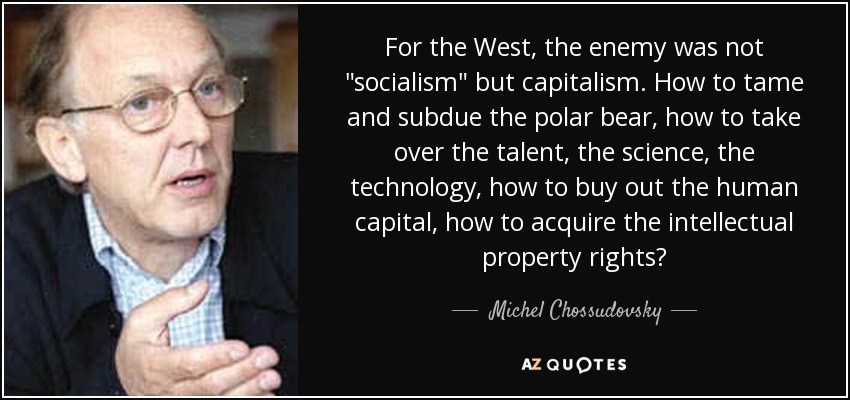
For the West, the enemy was not "socialism" but capitalism. How to tame and subdue the polar bear, how to take over the talent, the science, the technology, how to buy out the human capital, how to acquire the intellectual property rights?
The Assembly passed a budget that makes the right choices for young students across the state by helping schools avoid cutting essential educational programs, laying off teachers and increasing local property taxes. Without a sound investment in our children and their education, New York would face crumbling school buildings, overcrowded classrooms, and few opportunities to excel.
Man treats woman as his own property and not as being capable of feelings, like himself. The way man treats women is much worse than the way landlords treat servants and the high-caste treat the low-caste. These treat them so demeaningly only in situations mutually affecting them; but men treat cruelly and as slaves, from their birth till death.
I know of no case in which you are to have a judicial proceeding, by which a man is to be deprived of any part of his property, without his having an opportunity of being heard.
It is an essential attribute of the jurisdiction of every country to preserve peace, to punish acts in breach of it, and to restore property taken by force within its limits.
No freedom is secure if your property rights are not secure.
All nonstate threats to life, liberty, and property appear to be relatively petty and therefore can be dealt with. Only states can pose truly massive threats, and sooner or later the horrors with which they menace mankind invariably come to pass.
If we're living in a free country,we should be free to do what we want to do if we're not hurting anyone else or their property. Why should I be incarcerated if I'm doing something that doesn't hurt anyone else?
In virtually every Continental state at this time, aristocracies had to live with the risk that their property might be pillaged or confiscated. Only in Great Britain did it prove possible to float the idea that aristocratic property was in some magical and strictly intangible way the people's property also. The fact that hundreds of thousands of men and women today are willing to accept that privately owned country houses and their contents are part of Britain's national heritage is one more proof of how successfully the British elite reconstructed its cultural image in an age of revolution.
It is in the nature of a group and its power to turn against independence, the property of individual strength.
We must speak first about the division of land and about those who cultivate it: who should they be and what kind of person? We do not agree with those who have said that property should be communally owned, but we do believe that there should be a friendly arrangement for its common use, and that none of the citizens should be without means of support.
Collective property and individual property, these two banners will be the standards under which, from now on, the great battles of the future will be fought.
Capitalism had arisen through the misuse and exaggeration of certain rights, notably the right of property - the basis of economic freedom - and the right of contract, which is one of the main functions of economic freedom. Therefore, even under Capitalism, so long as the old principles were remembered it was possible to recall the principles whereby Society had once been sane and well ordered.
Economic freedom is in our eyes a good. It is among the highest of temporal goods because it is necessary to the highest life of society through the dignity of man and through the multiplicity of his action, in which multiplicity is life. Through well-divided property alone can the units of society react upon the State. Through it alone can a public opinion flourish. Only where the bulk of the cells are healthy can the whole organism thrive.
Had there been any existent vital and energetic institution left in Society after the Reformation for the use of small property in coordinated form-that is, in combination, so that the average man's holding could be put to useful purpose in company with the holdings of a great number of other men of his own sort, the new evils would not have arisen.
It is Mind which determines the change of Society, and it was because the mind at work was a Catholic mind that the slave became a serf and was on his way to becoming a peasant and a fully free man-a man free economically as well as politically. The whole spirit of the Church was for small property, and that spirit was slowly, instinctively, working for the establishment of small property throughout Christendom.
Ownership by delegation is a contradiction in terms. When men say, for instance (by a false metaphor), that each member of the public should feel himself an owner of public property-such as a Town Park-and should therefore respect it as his own, they are saying something which all our experience proves to be completely false. No man feels of public property that it is his own; no man will treat it with the care of the affection of a thing which is his own.
The larger the unit of capital present, the easier the transaction called emission of credit. Centralized lending of this kind (which is today universal) actively promotes the absorption of the small man by the great, the reduction of small property owners to a proletarian condition.
Under the old social philosophy which had governed the Middle Ages, temporal, and therefore all economic, activities were referred to an eternal standard. The production of wealth, it distribution and exchange were regulated with a view to securing the Christian life of Christian men. In two points especially was this felt: First in securing the independence of the family, which can only be done by the wide distribution of property, in others words the prevention of the growth of a proletariat; secondly, in the close connection between wealth and public function.
Under the old philosophy which had governed the high Middle Ages things had been everywhere towards a condition of Society in which property was well distributed throughout the community, and thus the family rendered independent.
When the mass of families in a State are without property, then those who were once citizens become virtually slaves. The more the State steps in to enforce conditions of security and sufficiency; the more it regulates wages, provides compulsory insurance, doctoring, education, and in general takes over the lives of the wage-earners, for the benefit of the companies and men employing the wage-earners, the more is this condition of semi-slavery accentuated.
In the midst of all these innumerable forms of a common protest and universal ill-ease there has grown up one definite body of doctrine whose adherents are called Communists and who desired the total subversion of what had been, hitherto unquestioned among civilized European men, the general doctrines of property and individual freedom.
The power of perpetuating our property in our families is one of the most valuable and interesting circumstances belonging to it, and that which tends the most to the perpetuation of society itself.
All the controversialists who have become conscious of the real issue are already saying of our ideal exactly what used to be said of the Socialists' ideal. They are saying that private property is too ideal not to be impossible. They are saying that private enterprise is too good to be true. They are saying that the idea of ordinary men owning ordinary possessions is against the laws of political economy and requires an alteration in human nature.
If the common man in the past had a grave respect for property, it may conceivably have been because he sometimes had some of his own.
Follow AzQuotes on Facebook, Twitter and Google+. Every day we present the best quotes! Improve yourself, find your inspiration, share with friends
or simply: