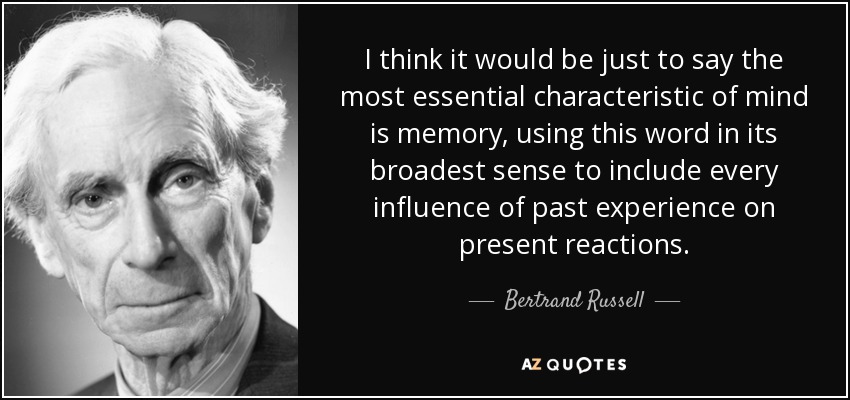
I think it would be just to say the most essential characteristic of mind is memory, using this word in its broadest sense to include every influence of past experience on present reactions.
'Tis a short sight to limit our faith in laws to those of gravity, of chemistry, of botany, and so forth. Those laws do not stop where our eyes lose them, but push the same geometry and chemistry up into the invisible plane of social and rational life, so that, look where we will, in a boy's game, or in the strifes of races, a perfect reaction, a perpetual judgment keeps watch and ward.
History is the action and reaction of these two, nature and thought.
This is revolution in reaction, as well as in radicalism, and Toryism speaking a jargon of law and order may often be a graver menace to liberty than radicalism bellowing the empty phrases of the soapbox demagogue.
If I love myself I will express that love in my interactions with you, and then I am being impeccable with the word, because that action will produce a like reaction. If I love you, then you will love me. If I insult you, you will insult me. If I have gratitude for you , you will have gratitude for me. If I'm selfish with you, you will be selfish with me.
You always get negative reactions. If you worry about that, you would never do anything.
The man who is asleep reacts; he knows nothing of action. And reaction is a binding: it binds you into new prisons, new chains. Response is out of freedom, hence it brings more freedom. Reaction is out of the past; you act according to your memories, built-in by your experiences, conditionings. You react not to the present, not in the present. You don`t reflect the real situation as it is; you go on interpreting it according to your past, your past experiences. The man who is awake is like a mirror: he reflects that which is the case. HE IS AWAKE.
Poor human nature cannot bear such strains as heavenly triumphs bring to it; there must come a reaction. Excess of joy or excitement must be paid for by subsequent depressions. While the trial lasts, the strength is equal to the emergency; but when it is over, natural weakness claims the right to show itself.
Problems assault us to the degree they preoccupy us. The key to release, rest, and inner freedom is not the elimination of all external difficulties. It is letting go of our pattern of reactions to those difficulties.
I would like to start by emphasizing the importance of surfaces. It is at a surface where many of our most interesting and useful phenomena occur. We live for example on the surface of a planet. It is at a surface where the catalysis of chemical reactions occur. It is essentially at a surface of a plant that sunlight is converted to a sugar. In electronics, most if not all active circuit elements involve non-equilibrium phenomena occurring at surfaces. Much of biology is concerned with reactions at a surface.
The person who understands Dharma will have the opposite reaction to a "hard" job. That person will be eager to get started, no matter what kind of work is in front of her, because she understands that she's doing God's work. And when you're working for God, nothing is too hard.
Regardless of the reaction of others, one thing is certain: True worship and devotion will make our lives fragrant and will perfume the environment around us. Our homes, our churches, even our places of work will bear the sweet scent of our devotion. Most important, the Lord Jesus will be pleased. And ultimately that is all that really matters.
Truth and falsity, indeed understanding, is not necessarily something purely intellectual, remote from feelings and attitudes. ... It is in the total conduct of men rather than in their statements that truth or falsehood lives, more in what a man does, in his real reaction to other men and to things, in his will to do them justice, to live at one with them. Here lies the inner connection between truth and justice. In the realm of behavior and action, the problem recurs as to the difference between piece and part.
The grateful outreaching of your mind in thankful praise to the Supreme is a liberation or expenditure of force; it cannot fail to reach that to which it is addressed, and the reaction is an instantaneous movement towards you.
It is impossible to encircle the hips of a girl with my right arm and hold her smile in my left hand, then proceed to study the two items separately. Similarly, we can not separate life from living matter, in order to study only living matter and its reactions. Inevitably, studying living matter and its reactions, we study life itself
Scheele, it was said, never forgot anything if it had to do with chemistry. He never forgot the look, the feel, the smell of a substance, or the way it was transformed in chemical reactions, never forgot anything he read, or was told, about the phenomena of chemistry. He seemed indifferent, or inattentive, to most things else, being wholly dedicated to his single passion, chemistry. It was this pure and passionate absorption in phenomena-noticing everything, forgetting nothing-that constituted Scheele's special strength.
It was obvious-to me at any rate-that the answer was to why an enzyme is able to speed up a chemical reaction by as much as 10 million times. It had to do this by lowering the energy of activation-the energy of forming the activated complex. It could do this by forming strong bonds with the activated complex, but only weak bonds with the reactants or products.
It was a reaction from the old idea of "protoplasm", a name which was a mere repository of ignorance.
We have all had the experience of finding that our reactions and perhaps even our deeds have denied beliefs we thought were ours.
A disease is never a mere loss or excess. There is always a reaction on the part of the organism or individual to restore, replace or compensate for and to preserve its identity, however strange the means may be.
The more passive one's life in the field, the greater the need to reverse the situation when one returns home, which is why the arcane and authoritative character of academic writing may be seen, to some extent, as a vengeful reaction to the inertia, uneventfulness, and waiting one had to endure as a guest at someone else's banquet. A way of redressing an existental imbalance, as it were reclaiming authorial will by superimposing one's own meaning on theirs...
I ask you what is the taste of your mouth all you can do is to say: it is neither sweet nor bitter, nor sour nor astringent; it is what remains when all these tastes are not. Similarly, when all distinctions and reactions are no more, what remains is reality, simple and solid.
All life depends on organic reactions. A favorite saying.
So you can see that if you direct that force at several objectives, it becomes divided, and each objective receives a fairly weak stimulus, which results in a slow reaction, or no reaction at all. Do you have a great, ultimate goal to reach that requires attaining lesser objectives along the way? Well then, let the many lie inactive and direct your force at the nearest or first; once you accomplish that, take up the next and so on.
In the dog two conditions were found to produce pathological disturbances by functional interference, namely, an unusually acute clashing of the excitatory and inhibitory processes, and the influence of strong and extraordinary stimuli. In man precisely similar conditions constitute the usual causes of nervous and psychic disturbances. Different conditions productive of extreme excitation, such as intense grief or bitter insults, often lead, when the natural reactions are inhibited by the necessary restraint, to profound and prolonged loss of balance in nervous and psychic activity.
Follow AzQuotes on Facebook, Twitter and Google+. Every day we present the best quotes! Improve yourself, find your inspiration, share with friends
or simply: