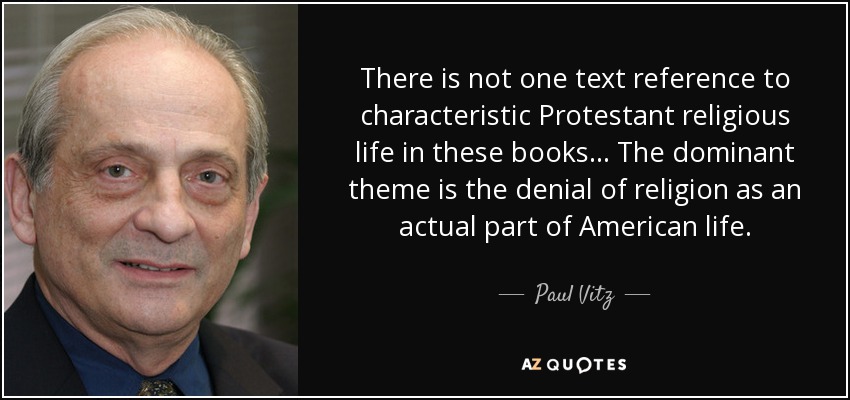
There is not one text reference to characteristic Protestant religious life in these books... The dominant theme is the denial of religion as an actual part of American life.
It is a sign of our times, conspicuous to the coarsest observer, that many intelligent and religious persons withdraw themselves from the common labors and competitions of the market and the caucus, and betake themselves to a certain solitary and critical way of living, from which no solid fruit has yet appeared to justify their separation.
I'd say my religious life has shaped my worldview; my writing, I'd say too, is an extension of the pulpit...it reaches folks who don't care for organized religion in a different way.
India is a culture in which religious life and spirituality is very much on the surface of things. That doesn't mean it doesn't have depth, but it is very visible. There are lots of temples, lots of Islamic centers, lots of gurdwaras, and lots of teachers.
I was a young woman who had grown up in the mountains of Montana as a Protestant Methodist in a pretty good social gospel tradition. I became fascinated with the religious lives of others who seemed also to be very religious, yet in ways that were quite different from my own. That fascination led to relationships, in India and elsewhere, with families of Hindus, of Muslims, of Sikhs, and a lot of study.
At the center of the religious life is a peculiar kind of joy, the prospect of a happy ending that blossoms from necessarily painful ordeals, the promise of human difficulties embraced and overcome.
Perhaps society should give actors the same sort of protection it gives to those who follow a religious life. Actor/priest was originally the same job. The theater is left wing magic and theology is right wing magic.
It is because we underrate thought, because we do not see what a great element it is in religious life, that there is so little of practical and consistent religion among us.
My father's religious life was not Biblically centered. He was a saintly man, whom I could never emulate, so I went into scholarship rather than into the kind of pastoral activity that he pursued.
The motive, principle, and end of the religious life is to make an absolute gift of self to God in a self-forgetting love, to end one's own life in order to make room for God's life.
It is easy to turn our religious life into a cathedral for beautiful memories, but there are feet to be washed . . .
Virtually every agnostic lives like an atheist, living completely irreligious lives
My goal is to live the truly religious life, and express it in my music. If you live it, when you play there's no problem because the music is part of the whole thing. To be a musician is really something. It goes very, very deep. My music is the spiritual expression of what I am - my faith, my knowledge, my being.
Worship is yet another paradox of the religious life: it is simultaneously the greatest duty and the greatest pleasure of faith. Worship is the act of truly loving God. Believe in this brilliant Being, this magnificent "higher power," who not only created us but nurtures us with care and intelligence beyond our imagination, and obviously we are called to worship Him.
While both denominations maintain missions in Asia and Africa in order to win new followers for their doctrine- an activity which can boast but very modest success compared to the advance of the Mohammedan faith in particular- right here in Europe they lose millions and millions of inward adherents who either are alien to all religious life or simply go their own ways. The consequences, particularly from a moral point of view, are not favorable.
I thought that coming out was going to be the end of my religious life but actually it was the beginning. Because it only afterwards that I could be honest about who I was, what I wanted, how I understood spirituality.
I am what I am, and what I am is always due to him; whatever in me or in my words is good and true and eternal came to me from his mouth, his heart, his soul. Sri Ramakrishna is the spring of this phase of the earth's religious life, of its impulses and activities. If I can show the world one glimpse of my Master, I shall not have lived in vain.
In religious belief as elsewhere, we must take our chances, recognizing that we could be wrong, dreadfully wrong. There are no guarantees; the religious life is a venture; foolish and debilitating error is a permanent possibility. (If we can be wrong, however, we can also be right.)
The devil put before me that I could not endure the trials of the religious life, because of my delicate nurture. I defended myself against him by alleging the trials which Christ endured, and that it was not much for me to suffer something for His sake; besides, He would help me to bear it.
Self-absorption is always a temptation to young people, and if their religion is of a sort to add to this self-absorption, I feel that it is a serious mistake. If I had my way, the whole subject of feelings and emotions in the religious life would be absolutely ignored. Feelings there will be, doubtless, but they must not be in the least depended on, nor in any sense taken as the test or gauge of one's religion. They ought to be left out of the calculation entirely. You may feel good or you may feel bad, but neither the good feeling nor the bad feeling affects the real thing.
The ultimate purpose of religious life is to make this evolution move in a direction far more important to the destiny of the ego than the moral health of the social fabric which forms his present environment.
In every aspect of the religious life, American faith has met American culture--and American culture has triumphed.
Business is religion, and religion is business. The man who does not make a business of his religion has a religious life of no force, and the man who does not make a religion of his business has a business life of no character.
The Government, being resolved to undertake the political and moral purification of our public life, are creating and securing the conditions necessary for a really profound revival of religious life
Habit must play a larger place in our religious life. We worship when we feel like it, we pray when we feel like it. We read the Bible when we feel like it. Leaving our religious exercises to the promptings of impulse, we become creatures of impulse rather than soldiers of Christ. An army made up of creatures of impulse would be only a mob. So is a church.
Follow AzQuotes on Facebook, Twitter and Google+. Every day we present the best quotes! Improve yourself, find your inspiration, share with friends
or simply: