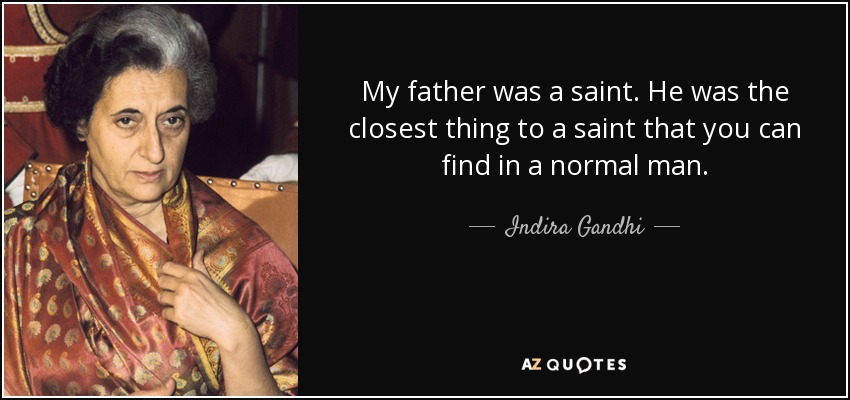
My father was a saint. He was the closest thing to a saint that you can find in a normal man.
"Moksha" is really a satire of myself. I've always been interested in Eastern spirituality. I'm particularly interested in enlightenment and the spiritual pursuit to liberate ourselves (I'm a Buddhist at heart). During my teenage years, I imagined I'd end up going to India to become a yogi; study with the last living saints in a cave; give up all my worldly possessions; learn to levitate. And there's still part of me that can see myself "disappearing" for some years at an ashram somewhere.
There's a huge amount of work on Adam and Eve, from the ancient world to the present. Saint Augustine was obsessed with them.I don't know if it helps my research, but I get a big kick out of Mark Twain, who wrote "The Diaries of Adam and Eve." He wrote very funny stuff on them. I sometimes read things that are loosely related to what I'm thinking and writing about.
The gods in Yoruba mythology are not remote at all. They're benign, they're malign, they are mischievous, like Eshu for instance, tricksters, rascally, fornicators, that's a similarity to Greek mythology, for instance, you know. They're not saints, they're not saints. They're powerful. It's why they're not tyrannical. Of course, a number of them are also very, you know, benevolent, you know, there are saintly virtues to be found in them.
The term Christian used to be a pejorative. Back in the day, Christians were persecuted; however, over time, it became one of the word's biggest religions. Same thing with the term Mormons in the religious area. Mormons didn't want to be called that. They wanted to be called Latter-day Saints. It's only been in recent decades that they kind of shifted that position and took ownership of it.
On Saint Paul, he's probably one of the best theologians of all time, but I don't believe that some of his teachings are appropriate today.
Let's take Adam Smith, the patron-saint of capitalism, what did he think? He thought the main human instinct was sympathy. In fact, take a look at the word "invisible hand." Which, of course, you learned about, or you think you've learned about. Take a look at the actual way in which he used the phrase. There is almost no relation to what is claimed.
There's something about Saint Francis's approach to life, zero expectations but pleasant surprise. In a lot of ways he was a really conflicted person. Some people would say he's masochistic . I don't really know, but I've always loved his reverence and his mindfulness.
We need saints; we need this head - this talking head - to communicate. Every single religion you have people that go in-between, that can talk to god or communicate ideas. Then there are the talking heads in the news every time we watch TV. No matter how complex, you still need a person there to tell you what happened: a storyteller of sorts. I find that fascinating that we feel so attached to this primitive mode of connection, this primitive interface to the world.
The Sufi saint Mazhar Jaan Jana of 18th century Delhi believed that the Quran condemns bowing before deities because in pre-Islamic idol worship stones were considered god. But Hindus pray to god through that idol, which is a reflection of god. In Vedas god is nirguna and nirankara, that is, he has no attributes and no shape, that is the real belief of Hindus. As Muslims visit graves, so Hindus worship idols.
One has to be cautious and respectful of the power of the "substance" guides. I don't advocate imbibing the "little saint children," as Maria Sabina calls the magic mushrooms, or anything else for everyone. I find that certain substances reconnect me to a primal context of purpose that goes beyond identity and ownership. The writing-when I've worked it this way-is the kind of information you take back from dreams. Or it's hypnotic writing rather than getting off on some sort of pleasure trip or intellectual trip.
There is an obvious evolutionary explanation for the scarcity of altruistic saints: Without a strong predilection for their own interests, our ancestors would have been unlikely to survive, reproduce, and give their own offspring a chance of doing the same. Now conditions have changed and for most of us, surviving and reproducing isn't such a struggle but we still carry the genes of our ancestors and they influence - not determine, but influence - our behavior.
It's why this election was HORRIBLE. It was either Hilary is the devil and Trump a saint. Or Trump the devil and Hilary a saint. Can't we all have a decent, civil conversation without throwing "shade?"
I must say that in my own mind, I think what's important is for us, as a society, to radically reduce the consumption of meat. This is more important than some fraction of us become moral saints and become vegetarians so it would be much better if we would reduce meat consumption by three quarters of each of us as an individuals would only eat one-quarter as much meat as we do now then that half of the population should become vegetarian. We should see this as a collective challenge rather than an issue about individual, moral period.
We can use our art to become political, to become something you want to talk about. We make clothes, but we have the chance to change a generation as well. We have to remember that fashion changed the roles of men and women: When Yves Saint Laurent was putting pants on a woman, he was not only doing that - he was assuming the fact that a woman can wear pants like a man. It's all the codes that I think fashion pushed so much to change the world, and today it's what I'm trying to do in my own way.
I carried on buying paintings, works of art, and Yves Saint Laurent, if I may say so, had a right of inspection. We even shared a common reading of the history of art. It would never have crossed Yves's mind to say to me, "Ah, I saw a Pablo Picasso . . ." He knew perfectly well what was interesting with Picasso, as did I.
I've already bought another house in Tangier and the one in Deauville has been for sale for some time. As for Yves's Saint Laurent apartment, it is being sold because he's dead. But I won't be furnishing my home from Ikea.
Yves Saint Laurent hated fashion. He loved style.
It's the ultimate for me not to see how it's made. I find it vulgar when you can distinguish how something is made. I used to be a student at the Chambre Syndicale de la Haute Couture in Paris, and once I got to go to a Saint Laurent couture show. Everyone was always talking about how fabulous the tailoring was, but I was transfixed by this one particular dress. It was just a piece of fabric, but as the model was walking, you didn't know how she got into it, how it closed, where the seams were, and that, for me, was perfection. It stayed with me as a lifelong vision.
I was educated in London at Central Saint Martins and had this whole thing about getting together with a lot of international students. Twenty-three languages were spoken during our lunch breaks! The school was very open minded, you could do whatever you wanted. Some people loved that freedom, others got lost. Gareth Pugh was a classmate, and so was Peter Jensen.
We're all saints! We all have built into us this intention, the capacities for kindness and creativity and beauty. It's a matter of perspective. As Einstein said, "The single most important decision any of us will ever make is whether or not to believe that the universe is friendly." It's your choice.
Noah was this sort of patron saint in my life. When I finished Pi and I started to think about what was next, I was like, "Wow, it's interesting that no one has done a film of one of the greatest stories ever told." Even if you're not a Jew, a Muslim, or a Christian, you likely have a flood story in your culture.
I don't want to be a saint; I just want to help people.
I think being raised within a Mexican Catholic family made magical realism a very natural part of who I am as a person and as a writer. My parents always told us great stories that often had magical elements and roots within Mexican folklore. Also, I remember my father reading a book to me, when I was very young, about the lives of saints. Those were crazy scary stories! Maybe he was trying to scare me into being a good person. In the end, magical realism offers me untethered freedom to explore human frailty and the way we clumsily cobble together our lives on this strange planet.
Each one of us pray, day and night, for the downtrodden millions in India, who are held fast by poverty, priest craft, and tyranny - pray day and night for them. I am no meta physician, no philosopher, nay, no saint. But I am poor, I love the poor.... Let these people be your God - think of them, work for them, pray for them incessantly - the Lord will show you the way.
Follow AzQuotes on Facebook, Twitter and Google+. Every day we present the best quotes! Improve yourself, find your inspiration, share with friends
or simply: