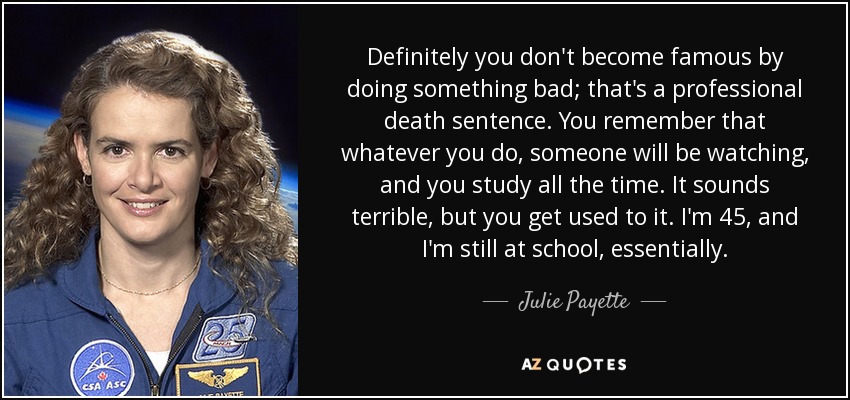
Definitely you don't become famous by doing something bad; that's a professional death sentence. You remember that whatever you do, someone will be watching, and you study all the time. It sounds terrible, but you get used to it. I'm 45, and I'm still at school, essentially.
I always was into singer-songwriters like Bright Eyes. When I was in high school I wanted to do a project that was like that. Weatherbox is the name of a song by Mission of Burma so I just had a theoretical acoustic project while I was in high school that didn't actually exist.
When my friends who were college age took a year off of school, they'd play in Weatherbox, or between high school and college. People always joined on a short-term basis and I did things one day at a time, I guess. There was never a big plan when someone was joining. They were never joining on a full-time membership basis. Since then, we just deal with it. I'd like to have a band that's a total constant, but it's probably not realistic at some point.
First I went to a Jewish school, when I was very little. But when I was 12, they put me in a school with a lot of traditions, and they were educated people and they were talking about Greece and the Parthenon and I don't know what. All the kids, all the girls they had already seen that and knew that from their family, and I would say, "What are you talking about, what's that?" It's not my world. My grandparents were very well-educated people, but in the Jewish tradition. They knew everything about the Bible.
I love doing comedy, I really do. It was perhaps my first love. And I think, as an actor, you're young and you do school plays and the reason you go 'I might do more of this' is because you make people laugh in a school play. You don't go and do Hamlet when you're nine and go: "I feel people were really moved out there!" You do a silly voice and everyone laughs and you go: "Ooh, that feels quite nice. I might make a life out of this!"
Right away, I knew I didn't want to have that look of other guys with long hair and bell-bottom pants, because everybody else had that look. I kind of adopted my boarding-school look, which made me stand out. Then the next thing you know, the first song on my first record is a song called "School Days." It's about going to the boarding school I went to. So then I just started to write about myself. The very first song I ever wrote was about a guy I met in a boatyard that we were working in. So I've always had this thing about sticking to more or less what I knew.
Tom Hart, David Lasky, Ed Brubaker, Megan Kelso, Julie Doucet. These people lived comics. The people in Seattle got together every week to draw and critique each other's work. Outside of art school, I never did that. When I came back from that trip, I had a physical, palpable sense of being self-conscious. It was the first time I'd drawn where I was like, "Holy cow, people are going to read this. They're going to like it, or they might not like it. Maybe I really should make my drawings a little more solid, or really think about what I'm doing. Maybe this shouldn't be so sloppy."
I discovered lots of music; electronic synth bands from the mid-'80s like Depeche Mode, Soft Cell and Cabaret Voltaire. My friends and I used to take two-hour trips to the record store in Newcastle and we started buying copies of The Face and i-D. And then I went to art school and as time progressed, I ended up where I am now.
The Ramones couldn't play in my key. They couldn't switch keys, so Ed Stasium literally had to play all the instruments for my version of "Rock 'N' Roll High School," and I always thought that was so weird, because it's not the Ramones playing. It's the producer, who happened to just be a musician and could play everything.
Four times a year, Warner Bros. Records send out their little statements, and they're like eight pages with all the countries from all over the world, and I end up getting a check for $48. But I think, obviously, the Ramones make some good money, because they must get a writer's share from the Rock 'N' Roll High School.
My strategy to show caricature idea of American youth culture, which I think worked after talking about it for so many years, is that I had only a few things. I wanted to buy my own wardrobe for Rock 'N' Roll High School, which of course they said "Yes" to, because their clothing budget was $200, and I ended up spending my whole salary - which I think was about $2,100 - on my clothes. And also, any time I was onscreen, I wanted to have as much energy as I possibly could. I think it just really worked for the character.
When I'm getting to know someone, I look for someone who has passions that I respect, like his career. Someone who loves what he does is really attractive. In high school, I used to think it was "like sooooo cool" if a guy had an awesome car. Now none of that matters. These days I look for character and honesty and trust.
There's a lot of different ways of going about teaching acting and ultimately you have to just kind of create your own. You have to be the author of your own acting school in a way. I mean you can take from this and this and you can watch people and you can watch performances on the stage. You can watch movies. But ultimately you have to figure it out for yourself.
Modern acting is method acting, most of it. And there are sort of different schools, so I guess I'm not really from one school or another. I had a number of different teachers but they were all kind of drawing from the same pool, which is - What do you want? What are you doing to get what you want? And, what is in the way? These are basic acting questions. Knowing the answers to those questions. So you're talking about objectives and actions and obstacles. That's a sort of shorthand that gives you a language.
I'm very glad I've got a make-up artist. I have trouble going to school when I've got bad spots and things like that so I still don't understand how I got up in front of a camera and did it. I almost had a moment of madness every time I did that. It's difficult and it's scary and you hope that people won't be looking at your flaws, especially when you're in 3D as well.
I find it hard to act unprofessionally because I can't do drama at school, it's hard for me to do drama out of school, I don't have time any more. I dance as well. I don't have time to work and dance and still have a good social life. I miss that security but I'm hoping that this is a good time for me. I'm trying to do as much as possible to get myself out there and hopefully it will work out.
I miss working. It's real, you know? But I don't know anything but songwriting, and I don't even know that. I didn't go to school; the only thing I know how to do is this. The only thing that I know is that I know nothing.
I took piano lessons when I was a little kid, but even before that, you're singing in the classroom and wherever. Gosh, children are always singing. But I took music lessons, some choir and things like that at school. I learned how to play the guitar when I was about 13... ancient history.
The first rules about Islamic law weren't even written down for a century and a half after the Prophet's death, and it was another five centuries, half a millennium, before they assumed anything like a definitive form. So there have always been huge arguments over what Islamic law actually requires. There are four main schools of law in Sunni thought and there's a separate school of law in Shia thought, so these arguments do take place.
You know the first objective is to get out of your hometown, second objective, get it together in the capital. The awful thing about left the school, is that you'd feel you'd be important. It would matter what you did.
When I went to school, it was really just to immerse myself in listening to, studying, and making music. I came out like, "How is this going to be more than a hobby I'm always paying off debt for?" I could've sat at a desk and written pieces for orchestras that never would have been played, or I could've written music for me as a performer. I play electronics, and the places I was gonna be playing were bass clubs and house parties.
I decided when I was 19 that I didn't like all these stereotypes that I was supposed to fit into. I wasn't comfortable and they made me very unhappy. So I tried and I spent a miserable summer, and then I went back to school and said, 'I'm going to do my own thing because I think I have a thing to do. I'm not going to live in anybody else's image because I don't like that.' I felt much better. I didn't do it to rebel against anybody or anything.
I have finished school and so it's becoming a real job, and as an actor, you cannot always just play roles. To me, it's important to live, to be who I am and then to get out of that, because when you play a role, it's always a bit of yourself. Okay, you can get some things, but that's why it's so important to gain life experience in order to act - it's important to care about this.
I went to University after my A levels and did a degree in performing arts. It was only when I got there that I realized there were stage schools out there, and you had your union and your contacts and The Spotlight and this whole world of the acting industry that I had no idea about. So when I graduated, I took a year out and just thought really hard about whether it was something I knew enough about, and whether it was the career I could dedicate the rest of my wacky life to.
Kerry James Marshall especially was a huge influence on me in graduate school, as were Wangechi Mutu and Julie Mehretu. These artists are titans. My education was also very much in comic books, so I've been going to comic book events in New York and have met a few artists there.
Follow AzQuotes on Facebook, Twitter and Google+. Every day we present the best quotes! Improve yourself, find your inspiration, share with friends
or simply: