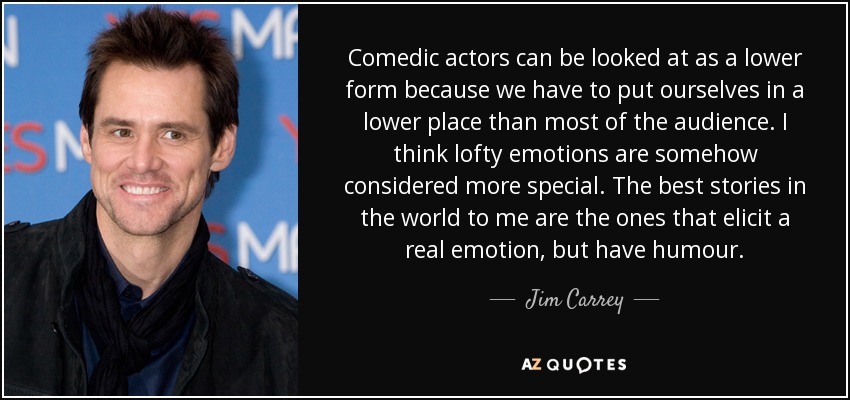
Comedic actors can be looked at as a lower form because we have to put ourselves in a lower place than most of the audience. I think lofty emotions are somehow considered more special. The best stories in the world to me are the ones that elicit a real emotion, but have humour.
The light that has guided us is still unquenched, and the causes that have carried us so far in the van of free nations have not spent their power; because the story of the future is written in the past, and that which hath been is the same thing that shall be.
This is not pessimism but rather casting a cold eye on things. It is only one man's story, and I think that things will go better, but difficulties exist and nothing is served by hiding them under a poetic veil or under a lyricism of the past. I am against slogans.
"We have heard stories about white men who make the powerful guns and the strong drinks and took slaves away across the seas, but no one thought the stories were true." [said Obierika]"There is no story that is not true," said Uchendu. "The world has no end, and what is good among one people is an abomination with others. We have albinos among us. Do you not think that they came to our clan by mistake, that they have strayed from their way to a land where everybody is like them?"
In the old days, people would gather around the fire, or they would gather at a tavern, and they'd tell a story. And then, maybe a week later, someone would tell the same story, but with a different twist on it. That's how folk takes evolved.
When I see a news story on a site, about a movie that I'm interested in, it's like the mouse going for the pleasure button and I click it. But then, when I see the movie, it's like, "Oh, I would have enjoyed the movie that much more, if I hadn't known that."
As a child in Sydney, my German Mum and my Austrian Dad would spontaneously tell me stories about what they saw and what they did as children. It was like a piece of Europe coming into our house... Those stories led me to my writing.
Like stories, people have individual lives, and are all caught up in this murky thing. All of them have the best intentions. In that sense, you could just as easily tell the same story from another character's perspective. Maybe that's a good idea for a TV series.
I've been reading tabloids since I was nine. I love a good story.
For me, it's always filmmaker and then character and then story. They're all equally important but if you don't have a great filmmaker, you will not have a great film unless you just get lucky.
I don't want to do only movies that I'm in. I definitely want to start to branch out and do TV and stuff that I'm not in and really make a good run at it as a production. I'm probably going to take a break from acting after a little while because I've enjoyed the developmental process so much. It helps you as an actor to learn story and to learn how to really nurture a script and work with a writer so you're not sitting there having to write it yourself and give notes.
I don't know if I've ever written anything that's not a bill! I do write stories but I don't put a stamp on them. I wrote a story for my wife over Christmas and gave it to her as a present because she asked me to, but I don't put a stamp on things and send them to people.
Whenever I work on a film, I have three rules. Only three and I tell them to every screenwriter. I say let's retain the spirit and the intent of the overall story. Let's make it the best film that we possibly can.
If you have no conflict, you have no story. That's number one. That's a rule of novels.
I'm not a big dreamer. I never have been.The only thing I've sort of obviously extracted from the research of dreams is that I don't think there's a specific science you can put on dream psychology. I think that it's up to, obviously, the individual. Obviously, we suppress things, emotions, things during the day - thoughts that we obviously haven't thought through enough, and in that state of sleep when our subconscious or mind just sort of randomly fires off different surreal story structures, and when we wake up we should pay attention to these things.
When you're in sync with the director, on the type of movie you want to make, the arc of the characters, how the characters intertwine and interact, plotlines and story, and things like that, it really makes a difference.
What seems most significant to me about our movement is that we have freed painting from the importance of the subject. I am at liberty to paint flowers and call them flowers, without their needing to tell a story.
In creating the strange milieu in which your story takes place, you must first understand as well as you possibly can the familiar milieu in which your own life is taking place. Until you have examined and comprehended the world around you, you can't possibly create a complex and believable imaginary world.
I was always fascinated by fairy stories, fantasy, you know, demons, necromancers, gods and goddesses, everything that is out of our kin and out of our everyday world. I was always interested in enchantment and magicians and still am.
That's why we sail. So our children can grow up and be proud of whom they are. We are healing our souls by reconnecting to our ancestors. As we voyage we are creating new stories within the tradition of the old stories, we are literally creating a new culture out of the old.
GraceQuest is a gripping story of one man's (and his family's) struggle with tremendous weakness and pain, but it is also a narrative theodicy--defense of God's goodness in spite of the undeniable reality of evil. . . . This is an honest and hard-hitting book about God's grace in and through tremendous loss of health and strength. Readers will find hope and help here if they are open to its message about the God-given 'strength to suffer well.'
I think a good writer is a mix of confidence (sure that what they're writing is going to appeal to their readers) and uncertainty (what if all these words are crap?). If you're too confident, you get an attitude that seeps through into your writing, affecting the characters and the story. If you're too uncertain, you'll never finish anything.
I never even considered writing a career option. I just liked the play of words. I was certainly interested in story, but the stories I was telling then were in narrative verse and prose poems, short and succinct, except for one novel-length poem written in narrative couplets.
I've always believed the lies we use to make our fictions reveal the truth with far more honesty than any history or herstory or life story.
The only real reason for self-referencing is the fun factor. It's fun for the writer, getting little peeks at what old characters might be up to. And it's fun for readers to spot a familiar face, or pick up on a made-up book title or something from an earlier story. I don't know that it does -- or even should -- contribute to the story in hand being any better than it would have been without it.
Follow AzQuotes on Facebook, Twitter and Google+. Every day we present the best quotes! Improve yourself, find your inspiration, share with friends
or simply: