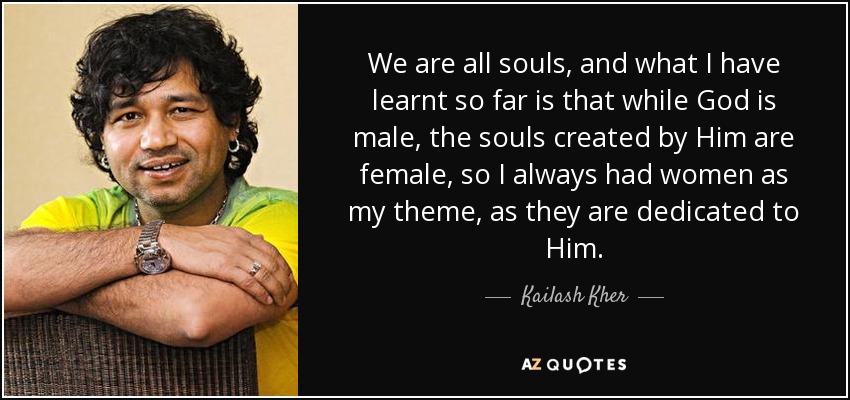
We are all souls, and what I have learnt so far is that while God is male, the souls created by Him are female, so I always had women as my theme, as they are dedicated to Him.
I have never found, in anything outside of the four walls of my study, an enjoyment equal to sitting at my writing desk with a clean page, a new theme, and a mind awake.
While the accompanimental [sic] figures come from Prelude, the melody is wholly original to this theme. First stated on a lonely duduk, and then in octaves by the violins and violas, it is a melancholy and contemplative tune.
Ed Welch says that all counseling is a variation on a single theme: knowing and praying for the counselee. Of all the questions the counselor might ask, then, the central guiding question in the counselor's mind is, "How can I pray for you?
Not a specific song. What I do maybe love above all about Nick Cave is how he's created this universe, this world, where there are all these characters and songs and themes. It's very unique, and I appreciate it. It's very hard to say that I have a specific favourite; I just actually love everything that he does.
You could do much more in movies than you could on TV, and even movies were heavily censored. But in television, the areas of timorousness were fairly laid out. Race relations. Sex. Politics. There was a whole conglomeration of taboo themes. And even to date, though television has become a much freer medium, it's still far less free, far less creatively untrammeled than are the movies. They're infinitely more adult in that respect.
There's an aesthetic theme, which is cities at two o'clock in the morning. Not cities packed with people going out to clubs and dancing but desolate, empty streets. It's off-putting but there's a strange comfort to it as well, that desolate urban environment.
Language is a theme in the whole book, no? I mean it ends with the title poem about words are all we have. I guess midrash makes sense. How does it change in the course of the sequence? Well, God is into No and into Stasis/Nouns. Adam and Eve, in order to be in this world (and get this world going) must choose verbs. Which is to gain sex but also to choose death and all else that goes with change. To choose becoming over being.
I can't actually explain why my lines got shorter, but they did. Just as I can't explain why my early poems were 'all image' and my current ones are relatively abstract. The sense of the line changed with the theme, somehow my ear (or brain or heart/mind) fell in love with a short line and very very simple words.
You probably have to trust that your work is following certain themes and certain movements, but then the rest is a kind of piecing together so that the whole becomes larger than the parts.
There are times when you need to step back and realize that movie studios today are not necessarily the same things that they were many years ago. Many movie studios are international conglomerates now. They own everything from theme parks to toy companies to T-shirt companies to video companies. There's a lot of different wheels to be greased.
"Biblical theology" refers to something more precise than theology that is faithful to the Bible. It might be helpful to draw a contrast: at the risk of oversimplification, systematic theology tends to organize theology topically and with an eye cast on its contemporary relevance, while biblical theology tends to organize the same biblical material so that it is easier to see the distinctive contribution of each biblical book and human author, and to trace the trajectories of themes across the Bible so we see how the books of the Bible hold together.
Systematic theology will ask questions like "What are the attributes of God? What is sin? What does the cross achieve?" Biblical theology tends to ask questions such as "What is the theology of the prophecy of Isaiah? What do we learn from John's Gospel? How does the theme of the temple work itself out across the entire Bible?" Both approaches are legitimate; both are important. They are mutually complementary.
It's better to emphasize biblical theology, partly because there are fine Study Bibles already available that lean into systematic theology, and partly because biblical theology is particularly strong at helping readers see how the Bible hangs together in its own categories: that is, God in his infinite wisdom chose to give us his Word in the 66 canonical books, with all of their variations in theme, emphasis, vocabulary, literary form, and distinctive contributions across time.
I just am a person who loves houses. In a way, it's dovetailed into one of the themes of The Unspeakable: Why do you have to change? Why don't you just accept that this is how you are? Why do you have to grow from an experience?
People have taken advantage of the very well-trodden pathways that divide science and faith on other issues, such as creation, evolution, and the age of the universe, to pigeonhole climate change as yet another variant on the same theme.
Translated books rarely get reviewed in the press. Books or poems or works of art that don't seem to have a corresponding style or figure or theme, obviously they're hard to digest.
One of the unspoken themes that I'm grappling with in Day of Honey is the relationship between violence and cosmopolitanism. It's one thing to comprehend violence as an outgrowth of ignorance, poverty, and backwardness. It's another matter entirely to confront incredible atrocities in a country with a rich civic and intellectual life.
As far as CGI and hand-drawn animation, I consider them both nothing more than tools for drawing pictures, the same as crayons or oils. Which is why, to me, the most important thing is what it is you are drawing, and in the themes that I depict, I think hand-drawing is the most effective.
I want to take themes that are shared throughout the world, express them through animation, and make movies from them.
There are definitely recurring themes in humanity's relationship with our environment. The biggest is probably adaptation, because humans are incredibly good at adapting to new environments in relatively short periods of time. The ancestors of Homo sapiens started leaving Africa over one million years ago, moving from warm, tropical climates into the freezing wilderness of Europe and the desert ecosystems of the Middle East.
I love outsider stories. And I also like a lot of genre fiction, too. So I wanted to write a literary book that flirted with thriller and fantasy and even science fiction. I wanted the coming-of-age story and the love story to be about "outsiderdom" - one of the themes I am most interested in.
I write first drafts feverishly fast, and then I spend years editing. It's not that sentence-by-sentence perfectionist technique some writers I admire use. I need to see the thing, in some form, and then work with it over and over and over until it makes sense to me - until its concerns approach me, until its themes come to my attention. At that editing stage, the story picks itself and it's just up to me to see it, to find it. If I've done a good job, what it all means will force me to confront it in further edits.
The Illusionist is the storyteller in so many ways. Symbols become his obsession. It's not simply about creating plot - one must also grapple with theme. Nowadays we have a lot of characters and a lot of action but it's hard to sit still and really meditate on meaning, worldviews, concepts, ideologies even. I make my Illusionist do what I've had to do, often with copious amounts of stumbling and frustration. His real humanity comes from being an artist, I think - his creativity is what makes him a man.
California seemed to me to be all about secrets and the need for safety. And this leads to this thematic messiness I'm still trying to figure out what to do with. I mean, when it comes to the themes, this is nothing like an Atwood novel.
Follow AzQuotes on Facebook, Twitter and Google+. Every day we present the best quotes! Improve yourself, find your inspiration, share with friends
or simply: