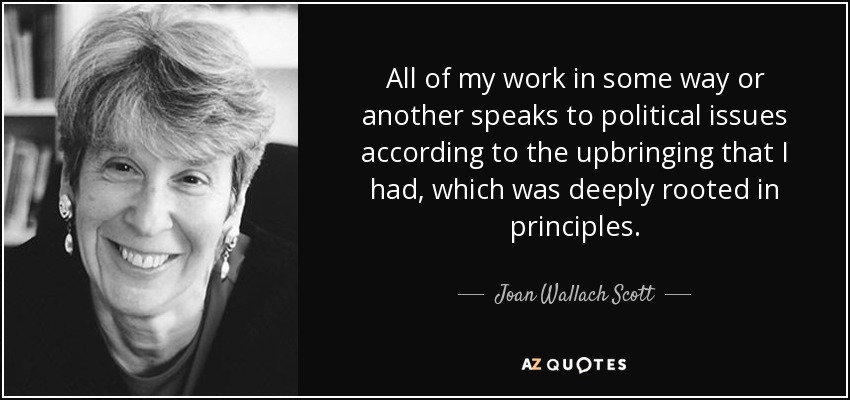
All of my work in some way or another speaks to political issues according to the upbringing that I had, which was deeply rooted in principles.
Taste is a phenomenon. Most of taste is unconscious - it comes from your upbringing, from your family, from your society, your gender, your race; it's a melange of all those things.
My upbringing was pretty interesting. It was a rigorous, intellectual upbringing, but with the idea that we were a part of an important and legitimate enterprise. What that meant was sitting around the dinner table from a really early age with people from all different backgrounds who believed in God. When I was reporting in the wake of September 11th in Iraq and elsewhere, I felt I had the capacity to talk to people whose beliefs might sound outlandish to more secular journalists. I felt like I could be a translator between those two worlds.
My mother insisted that I have a normal upbringing.
In American fiction, belief is like that. Belief as upbringing, belief as social fact, belief as a species of American weirdness: our literary fiction has all of these things. All that is missing is the believer.
It is quite clear that beauty does depend on one's culture and upbringing for certain kinds of beauty, pictures, literature, poetry and so on...But mathematical beauty is of a rather different kind. I should say perhaps it is of a completely different kind and transcends these personal factors. It is the same in all countries and at all periods of time.
I had quite a religious upbringing. I gave my life over to Christ at 11. I took it back when I was about 14.
Ours was a very progressive Protestant family, but my parents were God-loving rather than God-fearing. We went to church, and I still go with my mum and dad when I return home - it's a family thing. I played flute in my dad's marching band, but I had an integrated upbringing. We had a lot of Catholic friends.
I came from a very normal, un-Hollywood background. My parents provided me with every sort of normal upbringing that they could.
Not disown my past or upbringing, but I'd admired American actors, really American movie star - particularly the rebel heroes of the '50s.
Hitch was interested in what I had to offer, like one of my background ideas for Norman's upbringing.
The country experience was more of a departure. When you consider my education and my upbringing, you can see that was more of country rock outgrowth of my popular music aspirations.
I play guitar, the ukulele and the piano. I grew up on a mountain in Tennessee and we had The Mountain Opry, where anyone could just get up on stage to perform. It was just about the soul and heart of music. My upbringing was less about being great and more about just doing what you love. It was always for joy.
I had a good upbringing, we didn't have any money, but there was a lot of love in my family.
I come from a missionary family - I grew up in China - and in my case, my religious upbringing was positive. Of course, not everyone has this experience. I know many of my students are what I have come to think of as wounded Christians or wounded Jews. What came through to them was dogmatism and moralism, and it rubbed them the wrong way.
I'm not sure that my upbringing has in itself informed my acting choices.
I was born and raised in the University of Chicago area and had an uneventful middle-class Catholic childhood. I had a heavy Catholic upbringing and Catholicism is terrible - it's the reason there were slaves. Mass every morning at seven o'clock during Lent. It's a totally negative, man-made religion.
For years I've been interested in a fundamental question concerning what I call the psychology of evil: Why is it that good people do evil deeds? I've been interested in that question since I was a little kid. Growing up in the ghetto in the South Bronx, I had lots of friends who I thought were good kids, but for one reason or another they ended up in serious trouble. They went to jail, they took drugs, or they did terrible things to other people. My whole upbringing was focused on trying to understand what could have made them go wrong.
Jesus was not content to derive his ethics from the scriptures of his upbringing. He explicitly departed from them. [...] Since a principal thesis of this chapter is that we do not, and should not, derive our morals from scripture, Jesus has to be honoured as a model for that very thesis.
Having a diverse sense of taste - or lack of taste - I loved so many different things. I was drawn to the stupidity and excitement of glam, I had a thorough upbringing in rhythm and blues.
My upbringing was very un-Hollywood. I was born in New York and grew up on a ranch. I was never really smitten by the business in those days, never a fan type - just a basic kid watching TV. It wasn't like I was an insider. I was never really brought into the show business side of my father's life. I guess that's been a blessing and a downfall. But it's made my own work the initiation.
I was friends with all different people and all different groups. And that led me to being friends with a few people who didnt even go to my school. Now I have the most amazing collection of friends of all ethnic backgrounds and upbringing and financial backgrounds.
The right of parents to direct the upbringing of their children is among the unalienable rights with which the Declaration of Independence proclaims 'all Men are endowed by their Creator.'
My upbringing made me think that real legitimate music is written, not heard
I'm a free spirit and that definitely comes from my upbringing, so it's definitely shaped me as an artist.
Follow AzQuotes on Facebook, Twitter and Google+. Every day we present the best quotes! Improve yourself, find your inspiration, share with friends
or simply: