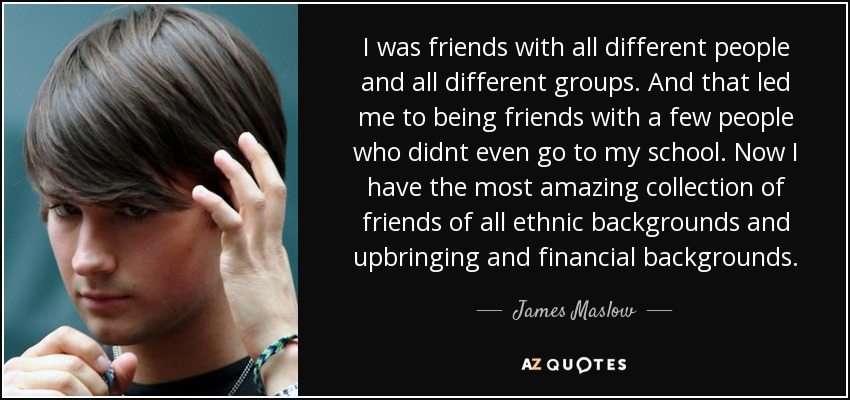
I was friends with all different people and all different groups. And that led me to being friends with a few people who didnt even go to my school. Now I have the most amazing collection of friends of all ethnic backgrounds and upbringing and financial backgrounds.
The right of parents to direct the upbringing of their children is among the unalienable rights with which the Declaration of Independence proclaims 'all Men are endowed by their Creator.'
My upbringing made me think that real legitimate music is written, not heard
I'm a free spirit and that definitely comes from my upbringing, so it's definitely shaped me as an artist.
Many teachers think of children as immature adults. It might lead to better and more 'respectful' teaching, if we thought of adults as atrophied children. Many 'well-adjusted' adults are bitter, uncreative, frightened, unimaginative, and rather hostile people. Instead of assuming they were born that way, or that that's what being an adult entails, we might consider them as people damaged by their education and upbringing.
It was deeply important for me to understand where Mandela came from. Because we know where he was going, and that's a famous story, but who was he? Where did he come from? What was his upbringing?
Because of my Calvinistic upbringing, I was trained to think that what you do has to have a purpose.
I went to an all-girls pre school where everyone went off to Harvard or Yale, and I had zero interest in doing so. I think they thought I was on drugs. There was a neighboring all-boys school, so we'd get together and do dumb things. It was your typical Catholic-American upbringing.
My father was very clear; I had to have an ordinary upbringing. I was put to work as a lowly-paid trainee after college. I didn't like it at the time, but I can't help but feel that that was probably the best thing for me.
I guess I had what you could call an unconventional upbringing.
Cornwall has lots of folk and Celtic music and has that kind of surfer vibe as well. That was my kind of upbringing.
When I arrived in America, I experienced serious culture shock. For someone with a religious upbringing, the 1960s were an extremely difficult time. Even though religion was a big part of the civil rights and peace movements, in my college religion was treated as irrelevant, hopelessly stodgy, and behind the times.
Unfortunately, when someone asks me for a favor, I cant say no. Because of my upbringing - my Catholic guilt - if I dont do it, it plagues me.
My upbringing was middle-class but my parents' families were both working-class so I had this odd combination of working-class background but in a privileged position.
The world men inhabit is rather bleak. It is a world full of doubt and confusion, where vulnerability must be hidden, not shared; where competition, not co-operation, is the order of the day; where men sacrifice the possibility of knowing their own children and sharing in their upbringing, for the sake of a job they may have chosen by chance, which may not suit them and which in many cases dominates their lives to the exclusion of much else.
I'm not sure that my upbringing has in itself informed my acting choices.
In the cosmology behind psychology, there is no reason for anyone to be here or to do anything... I'am an accident - a result - and therefore a victim... if I'm only a result of past causes, then I'm a victim of those past causes.... or, if you look at it from the sociological perspective, I'm the result of upbringing, class, race, gender, social prejudices, and economics. So I'm a victim again. A result .
I was born and raised in the University of Chicago area and had an uneventful middle-class Catholic childhood. I had a heavy Catholic upbringing and Catholicism is terrible - it's the reason there were slaves. Mass every morning at seven o'clock during Lent. It's a totally negative, man-made religion.
Having a diverse sense of taste - or lack of taste - I loved so many different things. I was drawn to the stupidity and excitement of glam, I had a thorough upbringing in rhythm and blues.
For years I've been interested in a fundamental question concerning what I call the psychology of evil: Why is it that good people do evil deeds? I've been interested in that question since I was a little kid. Growing up in the ghetto in the South Bronx, I had lots of friends who I thought were good kids, but for one reason or another they ended up in serious trouble. They went to jail, they took drugs, or they did terrible things to other people. My whole upbringing was focused on trying to understand what could have made them go wrong.
My upbringing was very un-Hollywood. I was born in New York and grew up on a ranch. I was never really smitten by the business in those days, never a fan type - just a basic kid watching TV. It wasn't like I was an insider. I was never really brought into the show business side of my father's life. I guess that's been a blessing and a downfall. But it's made my own work the initiation.
The virtue of Yankee upbringing spiritually speaking is of more downright value to me than any past heritages.
I was taught in my religious upbringing to spell God with a dash, G-d. But now my dash is pink.
Science is showing us that there are neurological (brain) factors that contribute to self-control and willpower, along with learning and upbringing. And when these brain systems are functioning improperly or become damaged, normal levels of self-control and willpower are impossible.
Thanks to my ridiculous, sometimes tragic, and always unsteady upbringing, I was given the gift of bone-crushing insecurity. One thing you'll notice about people with mental problems is constant self-absorbation. I think that's because it's such a struggle just to be who they are, so they have a hard time getting past it.
Follow AzQuotes on Facebook, Twitter and Google+. Every day we present the best quotes! Improve yourself, find your inspiration, share with friends
or simply: