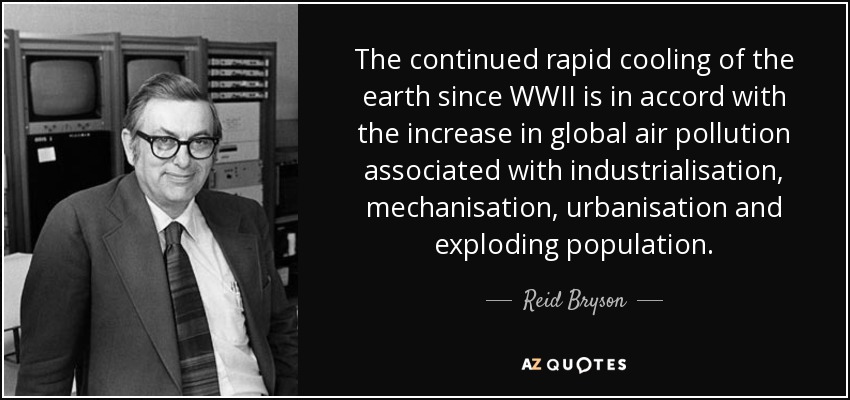
The continued rapid cooling of the earth since WWII is in accord with the increase in global air pollution associated with industrialisation, mechanisation, urbanisation and exploding population.
If you look back historically at the post-WWII period on average, if you get a 100-basis-point increase in Fed funds, the spillover to the ten-year is only 35 basis points, and 25 basis points into the 30-year - it's a fairly small spillover effect.
No, I'm all man. I even fought in WWII. Of course, I was wearing women's undergarments under my uniform.
The postwar [WWII] GI Bill of Rights - and the enthusiastic response to it on the part of America's veterans - signaled the shift to the knowledge society. Future historians may consider it the most important event of the twentieth century. We are clearly in the midst of this transformation; indeed, if history is any guide, it will not be completed until 2010 or 2020. But already it has changed the political, economic and moral landscape of the world.
Even post-WWII, nobody talked about the Holocaust. It wasn't until the '50s that people started talking about it.
'Feminist comedy,' practically an oxymoron, had a couple of good years after WWII. Chalk it up to the forced female autonomy that occurred during wartime, when Rosie the Riveter went to work in the factories, constructing the Allies' war machines while taking charge of the finances, the home, and the children.
As far as I'm concerned, if you want to find out about the last day of WWII or the roots of the Indian Mutiny, get thee to a books catalogue.
I did a film called 'Fort McCoy,' based on a true story of one of the few internment camps during WWII that was actually in the United States.
All of my high school male teachers were WWII and/or Korean War veterans. They taught my brothers and me the value of service to our country and reinforced what our dad had shown us about the meaning of service.
A friend of ours said if the same laws were applied to U.S. Presidents as were applied to the Nazis after WWII, that every single one of them, every last rich white one of them, from Truman on would be hung to death and shot. And this current administration is no exception. They should be hung and tried and shot as war criminals.
No matter how much of our liberty Washington takes away in the name of security, there are no guarantees that there won't be another terrorist attack. Instead of attacking American liberties, the government ought to go after terrorists in their countries of origin. It should be like what our military attempted during WWII. Don't wait to defend ships against the kamikaze -- bomb the fields where they take off.
By...WWII, I.G. Farben had become...part of the most gigantic and powerful cartel of all history...interlocking agreements...over 2,000 of them...In the US, the cartel had established important agreements with
When WWII ended, the Cold War started, and the interest of the Western world was not to completely break Germany. So all those Nazis who had been controlling the country now had the power to rebuild it. I think there were many of them who just continued their life in society; it's a very known fact.
In 1969, at the age of 19, I was lucky enough to work with George C. Scott in the definitive portrayal of his career over a period of many months and several countries on the definitive film version of Patton's WWII career.
The big fun in Battleship is that there are no current battleships in the Navy today. The battleships are about 1,000 feet long and they have huge guns. They were what you saw in WWII. The last battleship that was used was the Missouri, which is what the Japanese surrendered to...
I was a soldier in WWII. The last couple of months of the war I was actually in combat.
Sometimes, with leaders, the stakes are very high indeed. Churchill, in WWII, for example, could not afford to utter publicly his concerns about England's ability to survive Hitler's onslaught. He thought about them, but the leadership conversation sometimes needs to inspire, not voice doubt.
For the three decades after WWII, incomes grew at about 3 percent a year for people up and down the income ladder, but since then most income growth has occurred among the top quintile. And among that group, most of the income growth has occurred among the top 5 percent. The pattern repeats itself all the way up. Most of the growth among the top 5 percent has been among the top 1 percent, and most of the growth among that group has been among the top one-tenth of one percent.
We had early on women having the right to vote, then women in the workforce during WWII, just going back in history, and then we had the higher education of women, and then women more fully participating in the economy and in business, the professions, education, you name the subject... but the missing link has always been: is there quality, affordable healthcare for all women, regardless of what their family situation might be?
I'm trying to think of what happens if we take expulsion off the table for everyone, and instead think about the rights of those who have been expelled already, which would include the various rights of refugees who came to Israel in the aftermath of WWII, but also those from other countries, and what rights the Palestinians have who have been dispossessed of their lands and homes.
To look back at history, during WWII, Rosie the Riveter and all that, when women needed to get to work, the US opened a LOT of daycare centers very fast. When we have the will, we do it; we're capable of doing these things. Continuing to raise awareness is important.
I learned in grade-school that after WWII European politicians considered sending Jews to Madagascar instead of Palestine. At the time I thought: Madagascar would've been so great.
An era that I specifically like is sort of late 50's, early 60's. I guess mid 50's too. I like these types of films that deal with post WWII America and this more complex leading man that kind of emerges from that.
I'm going to leave WWII. I considered and rejected doing something on the Pacific. Fourteen years is enough. I'd like to take on a different challenge and probably a different era. But it will be another war. It's what I do.
WWII is something contemporary readers already know a lot about. If our schools are doing their jobs, they know about the invasion of Normandy, the Hitler Youth, the Holocaust, and at least a few of the horrors of the Eastern Front.
Follow AzQuotes on Facebook, Twitter and Google+. Every day we present the best quotes! Improve yourself, find your inspiration, share with friends
or simply: