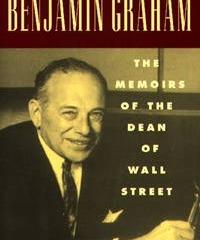





Logic is the subject that has helped me most in picking stocks, if only because it taught me to identify the peculiar illogic of Wall Street. Actually Wall Street thinks just as the Greeks did. The early Greeks used to sit around for days and debate how many teeth a horse has. They thought they could figure it out just by sitting there, instead of checking the horse. A lot of investors sit around and debate whether a stock is going up, as if the financial muse will give them the answer, instead of checking the company.
A stock market decline is as routine as a January blizzard in Colorado. If you're prepared, it can't hurt you. A decline is a great opportunity to pick up the bargains left behind by investors who are fleeing the storm in panic.
I deal in facts, not forecasting the future. That's crystal ball stuff. That doesn't work.
Hold no more stocks than you can remain informed on.
When management owns stock, then rewarding the shareholders becomes a first priority, whereas when management simply collects a paycheck, then increasing salaries becomes a first priority.
You have to let the big ones make up for your mistakes.
Investing is fun and exciting, but dangerous if you don't do any work.
The typical big winner in the Lynch portfolio generally takes three to ten years to play out.
I can't recall ever once having seen the name of a market timer on Forbes' annual list of the richest people in the world. If it were truly possible to predict corrections, you'd think somebody would have made billions by doing it.
Owning stocks is like having children - don't get involved with more than you can handle.
Visiting stores and testing products is one of the critical elements of the analyst's job.
I'm always fully invested. It's a great feeling to be caught with your pants up.
Your investor's edge is not something you get from Wall Street experts. It's something you already have. You can outperform the experts if you use your edge by investing in companies or industries you already understand.
Bargains are the holy grail of the true stockpicker. The fact that 10 to 30 percent of our net worth is lost in a market sell-off is of little consequence. We see the latest correction not as a disaster but as an opportunity to acquire more shares at low prices. This is how great fortunes are made over time.
Invest in businesses any idiot could run, because someday one will.
Average investors can become experts in their own field and can pick winning stocks as effectively as Wall Street professionals by doing just a little research.
You shouldn't just pick a stock - you should do your homework.
Invest in what you know.
If you hope to have more money tomorrow than you have today, you've got to put a chunk of your assets into stocks. Sooner or later, a portfolio of stocks or stock mutual funds will turn out to be a lot more valuable than a portfolio of bonds or CDs or money-market funds.
If you can find a company that can get away with raising prices year after year without losing customers (an addictive product such as cigarettes fills the bill), you've got a terrific investment.
If you can follow only one bit of data, follow the earnings - assuming the company in question has earnings. I subscribe to the crusty notion that sooner or later earnings make or break an investment in equities. What the stock price does today, tomorrow, or next week is only a distraction.
I think you have to learn that there's a company behind every stock, and that there's only one real reason why stocks go up. Companies go from doing poorly to doing well or small companies grow to large companies.
Everyone has the brainpower to follow the stock market. If you made it through fifth-grade math, you can do it.
The most important organ in the body as far as the stock market is concerned is the guts, not the head. Anyone can acquire the know-how for analyzing stocks.
Thousands of experts study overbought indicators, oversold indicators, head-and-shoulder patterns, put-call ratios, the Fed's policy on money supply, foreign investment, the movement of the constellations through the heavens, and the moss on oak trees, and they can't predict markets with any useful consistency, any more than the gizzard squeezers could tell the Roman emperors when the Huns would attack.
Follow AzQuotes on Facebook, Twitter and Google+. Every day we present the best quotes! Improve yourself, find your inspiration, share with friends
or simply: