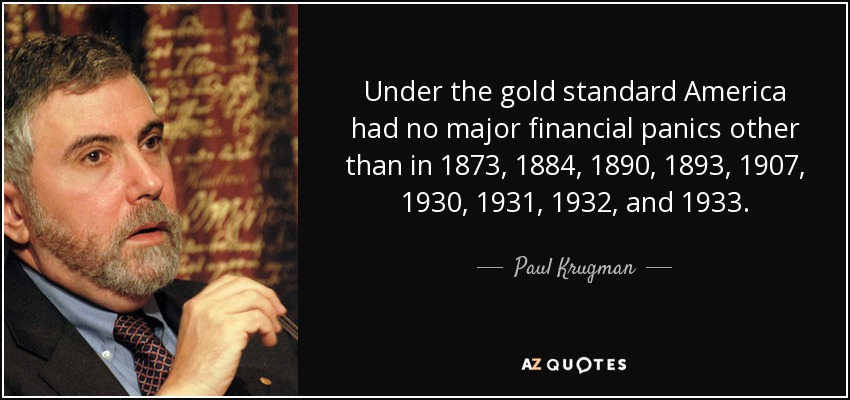
Under the gold standard America had no major financial panics other than in 1873, 1884, 1890, 1893, 1907, 1930, 1931, 1932, and 1933.
A major boom in real stock prices in the US after Black Tuesday brought them halfway back to 1929 levels by 1930. This was followed by a second crash, another boom from 1932 to 1937, and a third crash. Speculative bubbles do not end like a short story, novel, or play. There is no final denouement that brings all the strands of a narrative into an impressive final conclusion. In the real world, we never know when the story is over.
Those who controlled private capital largely walked away from the US economy for the entire 1930s, refusing to pump in enough new investment even to replace the machinery and goods-in-process that were consumed during the decade.
I'm a huge fan of 1930s horror - Universal films. I grew up with them and I just absolutely love them.
When I was a kid I was a big fan of the Universal Monsters movies of the 1930's and the 1940's. I loved movies like The Wolfman (1941) and Dracula (1931). I really wanted to be in those movies. Eventually I started nagging my parents about it, and it turned from, "I wanna be in a monster movie! I wanna be in a monster movie!" to "I just wanna be in a movie." So I think my parents just thought that if they took me to one audition I'd see how boring it was and I wouldn't wanna do it. But I ended up getting the part, and I got a bunch of roles after that as well.
The 1930s Hollywood was capable of hurting me so much. The things about Hollywood that could hurt me (when I first came) can't touch me now. I suddenly decided that they shouldn't hurt me - that was all.
Clearly the anti-Semitism in Germany in the 1930s went overboard and it was clearly a terrible moment in history.
This crisis of long-term unemployment is having a profoundly damaging impact on the lives of those bearing the brunt of it. We know this thanks to a series of careful studies of the problem conducted in the depths of the 1930s Great Depression.
I like to imagine, if I was in the 1930s and was rich and a psychopathic killer, I probably would be moving about very freely and having a lot of fun.
Working in 3D I didn't experience much of a difference, except that the cameras are very big so they can't be moved around with as much ease. It was more like, when you've seen photos of cameras from the 1930s being moved around with these huge cranes. So there was something quite sort of old-fashioned about it almost.
In the late 1930s, both the British and American movie industries made a succession of films celebrating the decency of the British Empire in order to challenge the threatening tide of Nazism and fascism and also to provide employment for actors from Los Angeles's British colony. The best two were Hollywood's Gunga Din and Britain's The Four Feathers...
Until the 1930s, the Constitution served as a major constraint on federal economic interventionism. The government's powers were understood to be just as the framers intended: few and explicitly enumerated in our founding document and its amendments. Search the Constitution as long as you like, and you will find no specific authority conveyed for the government to spend money on global-warming research, urban mass transit, food stamps, unemployment insurance, Medicaid, or countless other items in the stimulus package and, even without it, in the regular federal budget.
The government is now in a position to do what Franklin D. Roosevelt did during the Great Depression of the 1930s - use a crisis of the times to create new institutions that will last for generations. To this day, we are still subsidizing millionaires in agriculture because farmers were having a tough time in the 1930s.
The Internet bubble circa 2000 is the most extreme in modern capitalism. In the 1930s, we had the worst depression in 600 years. Today is almost as extreme in the opposite way.
In the 1930s, there was a stretch where you could borrow more against the real estate than you could sell it for. I think that's what's going on in today's private-equity world.
I had just come off of doing a play in Los Angeles which actually got me the role. It was called Bent and it was at the Mark Taper Forum. I was playing a homosexual in 1930 to 1934 Berlin who is eventually put into a concentration camp for the second half of the play. I had lost about 38 pounds for that.
When the New Deal programs were passed in the mid 1930s, millions of workers were joining unions, striking, and occupying factories to fight for a better life. It was this radical labor movement that forced the establishment to make concessions.
Whether we're talking about the New Deal or the Great Society: they didn't come about because they wanted to buy people off with "hush money." They were the outcomes of struggles. They were the outcomes, in the 1930s, of a viable socialist-communist movement. They were the outcomes of a viable workers' movement. FDR didn't give in because he wanted to shut people up, he gave in because he was under pressure. He had no choice.
My first big break was with the Ted Fio Rito band. Fio Rito had a bunch of record hits in the 1930s and did a lot of radio work back then. When he came to my home town in early 1942, I sat in with the band. Ted liked me and offered me a job.
The labor movement had been pretty much killed in the 1920s, almost destroyed. It revived in the 1930s and made a huge difference. By the late 1930s the business world was already trying to find ways to beat it back.
The government is a functionary of the corporations - and there's nothing new about that. You can find people in the 1930s talking about the army basically working for Wall Street in all of these countries [it invades].
As a result of the efforts of Hayek .. and the many others who share his general outlook, the idea of a centrally planned and centrally administered economy, so popular in the 1930s and early 1940s, has been discredited.
I loved 1930's women's pictures'films by Josef Von Sternberg or William Wyler. So, I fashioned a style out of that. The integrity and ethos of what I would write, however, came from the films of Ousmane Sembene and from reading Richard Wright, Toni Morrison, Sylvia Plath and Alice Walker.
I would not say that Harvard possesses any sort of absolute dominance. And I personally do not take the rankings of schools all that seriously. However, I think that Harvard's global visibility increased significantly in the 1930s and 1940s and that the new commitment to excellence at Harvard spread to other institutions.
Labor has been severely undermined, but that's happened before. In the 1920s, the labor movement was virtually crushed, in large part by Wilson's Red Scare, but it dramatically revived in the 1930s. It spearheaded the social-democratic New-Deal style changes which were beneficial to the country - not sufficient, but beneficial. That could happen again.
Follow AzQuotes on Facebook, Twitter and Google+. Every day we present the best quotes! Improve yourself, find your inspiration, share with friends
or simply: