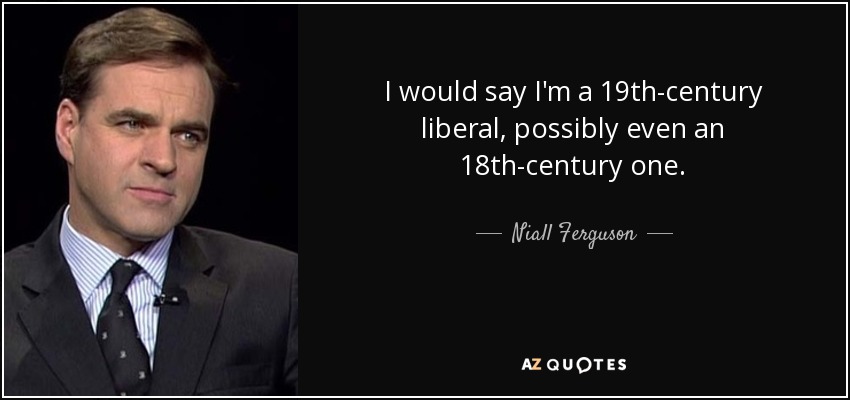
I would say I'm a 19th-century liberal, possibly even an 18th-century one.
The problem in the 19th century with information was that we lived in a culture of information scarcity, and so humanity addressed that problem beginning with photography and telegraphy and the - in the 1840s. We tried to solve the problem of overcoming the limitations of space, time, and form.
When it comes to rapacious 19th century capitalism, my family's hands are clean.
I was shy. Bookish. The kind of 13-year-old girl who, instead of having a boyfriend, would have a crush on a dead, 19th-century author!
The instruments, glassware, and chemical reagents necessary for my project were the same as my 19th-century predecessors had.
In the 19th century, the English were loathed. Every memoir that you read of that period, indicates the loathing that everybody felt for the English, the only difference between the English and Americans, in this respect, is the English rather liked being loathed and the Americans apparently dislike it intensely.
In the 19th century, Berlin was called the German Chicago. Or Chicago was called the American Berlin because they were sort of new cities or new powerhouses.
People are now layering all kinds of different things together. Eighteenth century, 19th century, rustic, modern. Three dimensional printed pieces, very high end technological pieces, but mixed with local artisan stuff.
Specifically, the part where in the early 19th century America reconstituted the U.S. Marine Corps to battle the Islamic Barbary Pirates, though I don't think that's what Obama meant.
To be an Irish poet after that 19th century in which there was such a struggle toward the light, I think still will always be in the hearts of the writers of my generation and the generations before and hopefully the generations after.
I read a lot of fantasy. I adored 'Anne of Green Gables'. But my favourite books as a child were probably Laura Ingalls Wilder's 'Little House' series, about a pioneer family in the mid-19th-century American west. I often thought of them as I was writing 'The Last Runaway'.
The United States' poetry emerged when there was a high literacy rate in the United States, even in the 19th century. People read the poetry when it was written. In Ireland, there was a poor literacy rate and people remember that poetry. That was handed on as a memorial tradition.
As I started reading about it, I saw that at the beginning of the 19th century, outside of New England - which was an unusually literate place - practically no one could read or write. And even in New England, the overall rate was only about 60 percent. That still means four out of 10 people couldn't put their name to a will.
A movement got started for common schools, and by the end of the 19th century, 91 percent of Americans could read and write.
Going to the Huntington gardens and libraries was radically important for me. They have one of the best collections of 18th- and 19th-century British portraiture that you can imagine in Southern California. One doesn't think about Southern California as being the capital of great art.
My view of an excellent novel was probably set in the golden age of fiction in the 19th century: narrative, character and voice are of equal importance.
Let's be honest - Bill Murray was onto something when he laughed at Andie MacDowell's degree in 19th century French poetry in 'Groundhog Day'.
The demolishment of the power of organized Christianity in the Western world to finally realize the emancipation of women and give them the vote in 1920. Women couldn't even own property in their own names until the last quarter of the 19th century in America.
During the 19th-century struggle for womens rights in America, many saw a competition between rights for black people and those for women.
I'm a very old-fashioned novelist. I write 19th-century novels, where a lot of rules apply.
Many of the received models of modern architecture and planning owe their ultimate origin to the building code and public health reform movements of the second half of the 19th century.
Growing up as a black kid with a white father who loves you, who affirms you, who was part of your life is fundamentally different than what black people in my family were subjected to in the 19th century or the 18th century. But unfortunately, it doesn't change the old racial order. I think we need to let the old racial order just stay where it is and not seek to improve upon it. Not try to create more racial categories, because all that does is it makes a race stick around longer.
What came out of that was an intense obsession with status anxiety. So much of these portraits are about fashioning oneself into the image of perfection that ruled the day in the 18th and 19th centuries. It's an antiquated language, but I think we've inherited that language and have forwarded it to its most useful points in the 21st century.
One of the reasons [William] Shakespeare is so endlessly fascinating is that you can look at that figure from about 10 different angles: Caliban in Shakespeare's day was probably viewed as a sort of comic, barbarian type, but into the 19th century there were productions where Caliban was the hero. He's a potential rapist of a minor. Is that a good thing? No, it is not. On the other hand, Prospero's got him cooped up in a cave and tortures him if he doesn't do what Prospero wants. Is that a good thing? No. Shakespeare doesn't let you off easy.
But are they all horrid, are you sure they are all horrid? [Referring to Gothic novels, fashionable in England at the beginning of the 19th century, but frowned upon in polite society.]
Follow AzQuotes on Facebook, Twitter and Google+. Every day we present the best quotes! Improve yourself, find your inspiration, share with friends
or simply: