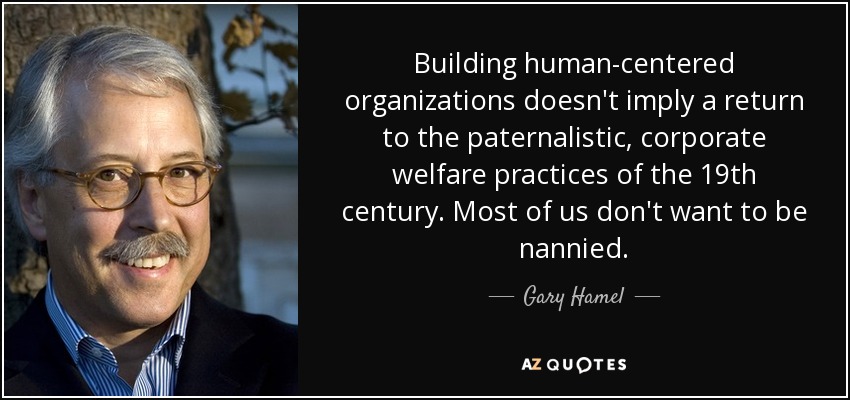
Building human-centered organizations doesn't imply a return to the paternalistic, corporate welfare practices of the 19th century. Most of us don't want to be nannied.
You can't name the inventor of the camera. The 19th-century invention was chemical: the fixative.
If you look at that incredible burst of fantastic characters that emerged in the late 19th century/early 20th century, you can see so many of the fears and hopes of those times embedded in those characters. Even in throwaway bits of contemporary culture you can often find some penetrating insights into the real world around us.
I basically have the diet of a 19th-century Irish navy, apart from the litre of stout a day. It's meat and potatoes and bread and cheese: those are my four food groups.
In the post-enlightenment Europe of the 19th century the highest authority was no longer the Church. Instead it was science. Thus was born racial anti-Semitism, based on two disciplines regarded as science in their day - the 'scientific study of race' and the Social Darwinism of Herbert Spencer and Ernst Haeckel.
There are so many great 19th-century photographers, and it's really my favorite period, but the amateurs did such beautiful work.
Well, biology today as I see it has an amiable look - quite different from the 19th-century view that the whole arrangement of nature is hostile, 'red in tooth and claw.' That came about because people misread Darwin's 'survival of the fittest.'
Modernism, rebelling against the ornament of the 19th century, limited the vocabulary of the designer. Modernism emphasized straight lines, eliminating the expressive S curve. This made it harder to communicate emotions through design.
I'm a 21st-century kid trapped in a 19th-century family.
There is a theory going around that the U.S.A. was and still is a gigantic Masonic plot under the ultimate control of the group known as the Illuminati. It is difficult to look for long at the strange single eye crowning the pyramid which is found on every dollar bill and not begin to believe the story, a little. Too many anarchists in 19th-century Europe—Bakunin, Proudhon, Salverio Friscia—were Masons for it to be pure chance. Lovers of global conspiracy, not all of them Catholic, can count on the Masons for a few good shivers and voids when all else fails.
Though now we think of fairy tales as stories intended for very young children, this is a relatively modern idea. In the oral tradition, magical stories were enjoyed by listeners young and old alike, while literary fairy tales (including most of the tales that are best known today) were published primarily for adult readers until the 19th century.
The real 19th century prophet was Dostoevsky, not Karl Marx.
Beyond doubt, the most salient characteristic of life in this latter half of the 19th Century is its SPEED
My general impression about people like Steve Gould and Carl Sagan and so on is that when they disappear as individuals and are no longer appearing on the stage and they are no longer writing, that their lifetime of acknowledgement by the general reading public is not very long... There were many people in the 19th century who were equally famous people who gave working man's lectures, supporters of Darwin, we as scholars know their names but the general public never heard of them.
Many of the received models of modern architecture and planning owe their ultimate origin to the building code and public health reform movements of the second half of the 19th century.
Specifically, the part where in the early 19th century America reconstituted the U.S. Marine Corps to battle the Islamic Barbary Pirates, though I don't think that's what Obama meant.
During the 19th-century struggle for womens rights in America, many saw a competition between rights for black people and those for women.
But are they all horrid, are you sure they are all horrid? [Referring to Gothic novels, fashionable in England at the beginning of the 19th century, but frowned upon in polite society.]
I read a lot of fantasy. I adored 'Anne of Green Gables'. But my favourite books as a child were probably Laura Ingalls Wilder's 'Little House' series, about a pioneer family in the mid-19th-century American west. I often thought of them as I was writing 'The Last Runaway'.
The 19th century belonged to England, the 20th century belonged to the U.S., and the 21st century belongs to China. Invest accordingly.
I wanted to explore cancer not just biologically, but metaphorically. The idea that tuberculosis in the 19th century possessed the same kind of frightening and decaying quality was very interesting to me, and it seemed that one could explore the idea that every age defined its own illness.
I would say I'm a 19th-century liberal, possibly even an 18th-century one.
The problem in the 19th century with information was that we lived in a culture of information scarcity, and so humanity addressed that problem beginning with photography and telegraphy and the - in the 1840s. We tried to solve the problem of overcoming the limitations of space, time, and form.
When it comes to rapacious 19th century capitalism, my family's hands are clean.
I was shy. Bookish. The kind of 13-year-old girl who, instead of having a boyfriend, would have a crush on a dead, 19th-century author!
Follow AzQuotes on Facebook, Twitter and Google+. Every day we present the best quotes! Improve yourself, find your inspiration, share with friends
or simply: