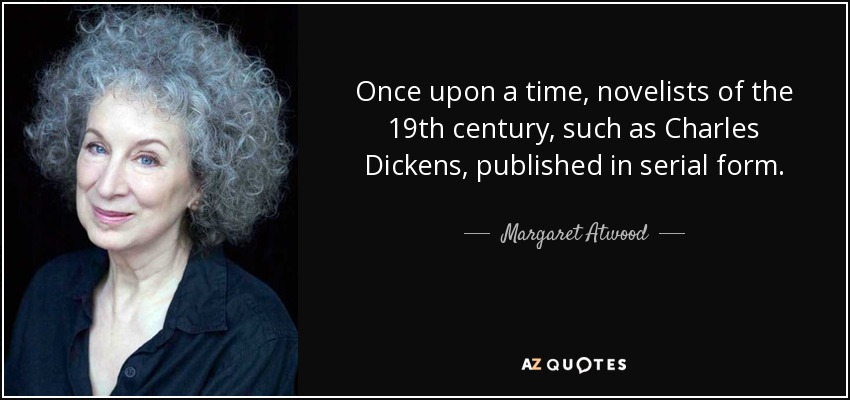
Once upon a time, novelists of the 19th century, such as Charles Dickens, published in serial form.
We've got 21st century technology and speed colliding head-on with 20th and 19th century institutions, rules and cultures.
This movement among the Jews is not new... This world-wide conspiracy for the overthrow of civilisation and for the reconstitution of society on the basis of arrested development, of envious malevolence, and impossible equality, has been steadily growing... It has been the mainspring of every subversive movement during the Nineteenth Century.
to "set the standard for beauty in classical and modem cookery, and attest to the distant future that the French chefs of the 19th century were the most famous in the world.
For more than twenty years by my own work and personal initiative, I have gathered from all the old streets of Vieux Paris photographic plates, 18 x 24 format, artistic documents of the beautiful civil architecture of the 16th to the 19th century: the old hôtels, historic or curious houses, beautiful facades, beautiful doors, beautiful woodwork, door knockers, old fountains This vast artistic and documentary collection is today complete. I can truthfully say that I possess all of Vieux Paris.
Neo-Hoodoo is the 8 basic dances of 19th century New Orleans' Place Congo- the Calinda the Bamboula the Chacta the Babouille the Conjaille the Juba the Congo and the VooDoo- modernized into the Philly Dog, the Hully Gully, the Funky Chicken, the Popcorn, the Boogaloo and the dance of great American choreographer Buddy Bradley.
This is the river of the great 19th-century landscapists; of Cole, Cropsey and Church, and at the end of the summer it lies motionless under the haze as under a light coat of varnish.
By tracing the careers of the four members of the Philosophical Breakfast Club, Laura Snyder has found a wonderful way not just to tell the great stories of 19th-century science, but to bring them vividly to life.
OMG YOU GUYS it has come to my attention that SOMEONE on the internet is saying that my fictional 19th century zombies are NOT SCIENTIFICALLY SOUND. Naturally, I am crushed. To think, IF ONLY I’d consulted with a zombologist or two before sitting down to write, I could’ve avoided ALL THIS EMBARRASSMENT.
. . . Luddites were those frenzied traditionalists of the early 19th century who toured [England] wrecking new weaving machines on the theory that if they were destroyed . . . old jobs and old ways of life could be preserved . . . At certain times in his life each man is tempted to become a Luddite, for there is always something he would like to go back to. But to be against all change-against change in the abstract-is folly.
..there is need for a person to be generally educated. Otherwise you shrivel up much too soon. Whether this means reading the bible (I read the New Testament every few years) or reading the great 19th century novelists (the greatest and shrewdest judge of people and of society who ever lived), or classical philosophy (which I cannot read-it puts me to sleep immediately), or history (which is secondary). What matters is that the knowledge worker, by the time he or she reaches middle age, has developed and nourished a human being rather than a tax accountant or a hydraulic engineer.
I read mostly fiction, a lot of 19th-century novels.
The very idea of photography is as Oliver Wendell Holmes said in the 19th century, "it's a mirror with a memory."
I just don't care about popular culture. It looks to me pointless and superficial. If I had free time I'd rather read a 19th century novel.
The Bin Ladens must not be confused with authentic jihad - it's quite something else. If you want an example of external jihad, you should cite Amir Abd al Qadir who fought against the French in the 19th century, which was quite something else.
Don't assume that the way that one searches and researches is the same from one era to another - it isn't. In the 19th century, most research was done by amateurs: either individuals who were rich or individuals who had a day job. In the 20th century, most researchers worked at universities or think tanks and received money from the government or from foundations to pursue their work. In our time, the sources of support and the locations for research may be quite different.
One of the prime backers of land bill was a Republican Congressman, a Paul Gosar. And when he was challenged by an Apache on this bill, he said, well, you know, Indians are wards of the federal government. This happened recently.That congressperson is obviously stuck in the 19th century when he thinks about Indians. How is that person going to legislate and treat Indians fairly and respect their rights when he has this sort of infantilized image of Indians as not being, you know, up to the same level of responsibility as everybody else?
Back in the 19th century, our marketing folks decided to play up the refined usage angle because prescriptivism was very popular: our dictionary is where you go to learn anything about anything. That really set the tone in North America for how people responded to dictionaries.
Is there a gender gap in the music industry? It is true that there are more professional male music creators than female. For some reason, it's taking a lot longer in music than in literature and the visual arts to reach equilibrium. It was almost acceptable by the 19th century for female writers to be published, yet it's only in the last couple of decades, since about 1980, that historical female composers have really emerged.
There are real issues that the president Donald Trump and particularly Steve Bannon, his political adviser, are pushing. It's a vision, a rather dark vision, of a 19th century world where great powers do transactional issues.
The Armstrong record that I personally like the most, is a recording of a song by Harold Arlen called, "I Got a Right to Sing the Blues" . Most of Armstrong's solos tended to stick pretty close to the melody. But for some reason, it's like he let go of the tether and suddenly he's playing this beautiful high, almost abstract line that's floating above the beat. I compare it to the way that a 19th century operatic tenor might have sang an Aria because he's just completely let loose of the background and he's making this magic sort of flying above the staff.
Historical costumes from the 18th and 19th centuries look so complicated, but when you see the patterns, it's very systematic. I've always been impressed by how the patterns economize the fabric.
The big change, the really radical change in communication, was in the late 19th century. The shift from sailing ships to telegraph is astronomical. Everything since then has been small increments, including the internet. So you don't have to wait for a letter to get to England in six weeks, you have almost instant communication. That was an enormous shift.
I'm a Red Tory. To get a fix on this category, you have to go back to the 19th century. The Tories were the ones who believed that those in power had a responsibility to the community, that money should not be the measure of all things.
As far as Marx's analysis of capitalism, there's a lot of very useful ideas in it, but he's developing an abstract model of 19th century capitalism. It's abstract and it's changed.
Follow AzQuotes on Facebook, Twitter and Google+. Every day we present the best quotes! Improve yourself, find your inspiration, share with friends
or simply: