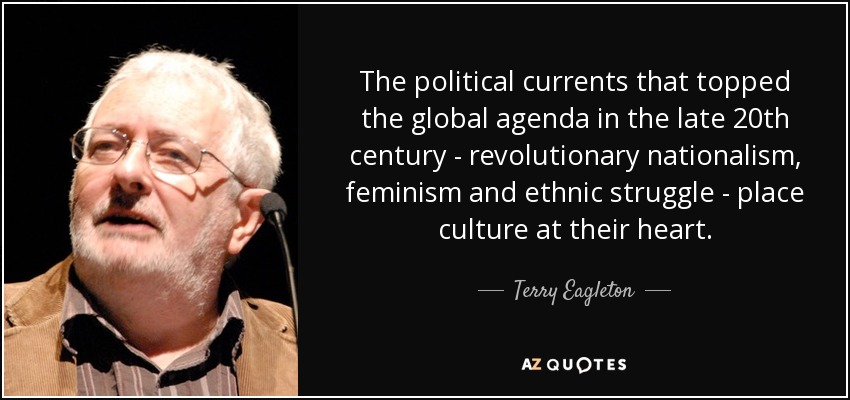
The political currents that topped the global agenda in the late 20th century - revolutionary nationalism, feminism and ethnic struggle - place culture at their heart.
Somehow in the 20th Century an idea has developed that music is an activity or skill which is not comprehensible to the man in the street. This is an arrogant assertion and not necessarily a true one.
Then you get to the last half of the 20th century, Americans are getting very skeptical about their leaders and their institutions, and another place that is affected is parties and conventions.
I know absolutely nothing about the 20th Century.
A lot of populists after populism died just became socialists. At the beginning of the 20th century, socialism looked like it was going to take off. It didn't, of course, but a lot of people thought it was going to.
For most of the 20th century, we didn't just enjoy economic success in Michigan, we defined it. Our innovators and entrepreneurs created the world's most productive companies, and our unions made sure that productivity led to broad middle class prosperity.
I really appreciate artists of the 20th century, and I can see a lot of their influence on my work, but to suggest that my design only fits within an 'ism' kind of bothers me.
I grow tired of 18th century moralities in a 20th century space-atomic age
The 20th century mind is nostalgic for the paradise that once existed on the mushroom dotted plains of Africa where the plant-human symbiosis occurred that pulled us out of the animal body and into the tool-using, culture-making, imagination-exploring creature that we are. And why does this matter? It matters because it shows that the way out is back and that the future is a forward escape into the past. This is what the psychedelic experience means. Its a doorway out of history and into the wiring under the board in eternity.
From Roger Bacon, the 13th century Franciscan who pioneered the scientific method, to George Lemaitre, the 20th century Belgian priest who first developed a mathematical foundation for the 'Big Bang,' people of faith have played a key role in advancing scientific understanding.
I firmly believe that we who are alive and can think today-in the closing years of the 20th century-have a commitment to our species to make sure that the flicker of movement we have thus managed in space stays sufficiently kindled so that the people of the 21st century can build upon and extend the human abode from Earth to the cosmos beyond.
What you have now is a Hollywood that is pure poison. Hollywood was a central place in the history of art in the 20th century: it was human idealism preserved. And then, like any great place, it collapsed, and it collapsed into the most awful machinery in the world.
The revival of Islam dates from the early years of the 20th century. It was brought about by their humiliation, by their sense of how low they'd fallen compared with the West.
In the 20th century, the Muslim world created a vision of religious nationalism. Turkey, for example, had to be ethnically Turkish. Kurds, Armenians, other minorities didn't have a place in such a vision of a nation-state.
The Europe we are in the process of building is the Europe of the 21st century; it's not the Europe of the 20th century.
But I still do believe that there are useful things to say about Elvis Presley, including what his own ordinariness as a poor Southerner says about 20th-century hero-making.
When I started formulating the first Frank comic, I knew I wanted it to be something that was beyond time and specific place. I felt that having the characters speak would tie it to 20th-century America, because that would be the idiom of the language they would use, the language I use.
Given the events of even the 19th century, Zionism was inevitable. Given the events of the 20th century, Israel was inevitable.
I think future generations will say the late 20th century and the early 21st century was a time of great convulsions and upheavals.
I was practically born and raised at 20th Century Fox studio, started to work there selling papers when I was around seven years old, and every summer vacation from school I would work in a various department at the studio. So I was an old-timer when I was 15.
After World War II society had to settle back for a moment before it picked up the 20th century.
Diane Arbus is one of the most mysterious, enigmatic, and frighteningly daring artists of the 20th century. Her work emerged from a deeply private place and profoundly affected all those who came into contact with it.
Until the Left took over American public education in the second half of the 20th century, it was generally excellent - look at the high level of eighth-grade exams from early in the 20th century and you will weep. The more money the Left has gotten for education - America now spends more per student than any country in the world - the worse the academic results. And the Left has removed God and dress codes from schools - with socially disastrous results.
By the end of the 20th century, "liberals" had again discredited themselves, to the point where they went back to calling themselves "progressives" to escape their past, much as people do when they declare bankruptcy.
Many of the wonderful achievements of the 20th century were the result of the pursuit of profits. Unfortunately, demagoguery has led to profits becoming a dirty word. Nonprofit is seen as more righteous, particularly when people pompously stand before us and declare, 'We're a nonprofit organization.'
Follow AzQuotes on Facebook, Twitter and Google+. Every day we present the best quotes! Improve yourself, find your inspiration, share with friends
or simply: