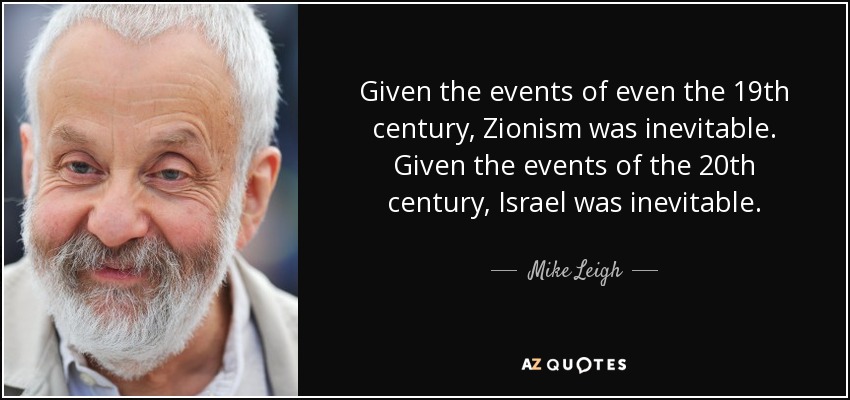
Given the events of even the 19th century, Zionism was inevitable. Given the events of the 20th century, Israel was inevitable.
I think future generations will say the late 20th century and the early 21st century was a time of great convulsions and upheavals.
I was practically born and raised at 20th Century Fox studio, started to work there selling papers when I was around seven years old, and every summer vacation from school I would work in a various department at the studio. So I was an old-timer when I was 15.
I should say many things. Mexico has been one of the losers of the 20th century. We tried many different alternatives to development and unfortunately we have 40 percent of the population poor; we have a per capita income that is extremely low.
By 1940 the literacy figure for all states stood at 96 percent for whites. Eighty percent for blacks. Notice for all the disadvantages blacks labored under, four of five were still literate. Six decades later, at the end of the 20th century, the National Adult Literacy Survey and the National Assessment of Educational Progress say 40 percent of blacks and 17 percent of whites can't read at all. Put another way, black illiteracy doubled, white illiteracy quadrupled, despite the fact that we spend three or four times as much real money on schooling as we did 60 years ago.
The result of these ungodly unions was a race of very wicked and very powerful hybrid (half-fallen angel, half-human) offspring - the Nephilim - who corrupted, harassed, even killed mankind. Now, at the end of the 20th century, we have the return of "alien" entities with apparent supernatural powers.
The fact that you couldn't see Alfred Hitchcock's first film The Mountain Eagle, or that you couldn't see so many of F.W. Murnau's masterpieces, or that you couldn't see so many of Oscar Micheaux's really intriguing race melodramas, made with fierce independent spirit against all odds in '20s and '30s America. That stuff haunted me. They really did bring to life a sense of 20th Century history: cultural history, pop history, gender politics and race politics, socio economic history, all that stuff. It was bracing and instructive.
In fact, the 20th century I think was the most fascinating century and the whole of man civilization because so much happened.
The most significant event of the 20th century will be the fact that the North Americans speak English.
The Gospel that worked in the 20th Century may not work in the 21st Century. The reason is because it is truncated. It only speaks of "Sin and Salvation" and not of the COSMIC GOSPEL that transforms all things.
That is the onslaught. It has been going on a long time, I argue, but in the 20th century humans have certainly perfected it, extending domination to every single corner of the earth and our Homo sapiens population to more than 6 billion - until no place is untouched by despoliation.
I abhor Earth Hour. Abundant, cheap electricity has been the greatest source of human liberation in the 20th century. Every material social advance in the 20th century depended on the proliferation of inexpensive and reliable electricity.
Many of the wonderful achievements of the 20th century were the result of the pursuit of profits. Unfortunately, demagoguery has led to profits becoming a dirty word. Nonprofit is seen as more righteous, particularly when people pompously stand before us and declare, 'We're a nonprofit organization.'
The effort of painting from life has cost my models a great deal of physical discomfort, and cost me a great deal of money in model fees... I have wanted to make the camera obsolete... because, in my reading about early 20th century art, I found that the most frequently used argument made in favor of abstraction was that the camera made realist painting obsolete.
Xenophobia looks like becoming the mass ideology of the 20th-century fin-de-siecle.
Hoyle's enduring insights into stars, nucleosynthesis, and the large-scale universe rank among the greatest achievements of 20th-century astrophysics. Moreover, his theories were unfailingly stimulating, even when they proved transient.
Many consider that Shostakovich is the greatest 20th-century composer. In his 15 symphonies, 15 quartets, and in other works he demonstrated mastery of the largest and most challenging forms with music of great emotional power and technical invention...All his works are marked by emotional extremes - tragic intensity, grotesque and bizarre wit, humour, parody, and savage sarcasm.
Just as women needed the help of the law to enter the workplace in the 20th century, men will need the help of the law to love their children in the 21st century.
I don't particularly care about having [my characters] talk realistically, that doesn't mean very much to me. Actually, a lot of people speak more articulately than some critics think, but before the 20th century it really didn't occur to many writers that their language had to be the language of everyday speech. When Wordsworth first considered that in poetry, it was considered very much of a shocker. And although I'm delighted to have things in ordinary speech, it's not what I'm trying to perform myself at all: I want my characters to get their ideas across, and I want them to be articulate.
Don't be afraid of anything. We've seen so much suffering and evil in the 20th century and we got through it. We can go on. God is with us. God will help us. Trust Him.
India is the Saudi Arabia of human resources for the 21st century. The power that we used to get from oil in 20th century, we will get it from people like you in 21st century.
Norman Rockwell, the Brueghel of the 20th century bourgeoisie, the Holbein of Jell-O ads and magazine covers; by common assent, the most American artist of all.
Originally I was supposed to do Grand Prix, but I was under contract to 20th Century Fox at that time and Alex North was supposed to do Sand Pebbles, but he got sick, so Fox preempted me out of Grand Prix, and to my good fortune, I got to do Sand Pebbles. It was my first time working with Robert Wise and it was a great experience.
The 20th century peatlands ditching in Finland was the worst human environmental destruction action in Europe.
If you want to get an interesting perspective do not think of Hugh as a traditional 20th century physicist but more of a Renaissance man with interests and skills in many different areas. He was smart and lots of things interested him and he brought the same general conceptual methodology to solve them. The subject matter was not so important as the solution ideas.
Follow AzQuotes on Facebook, Twitter and Google+. Every day we present the best quotes! Improve yourself, find your inspiration, share with friends
or simply: