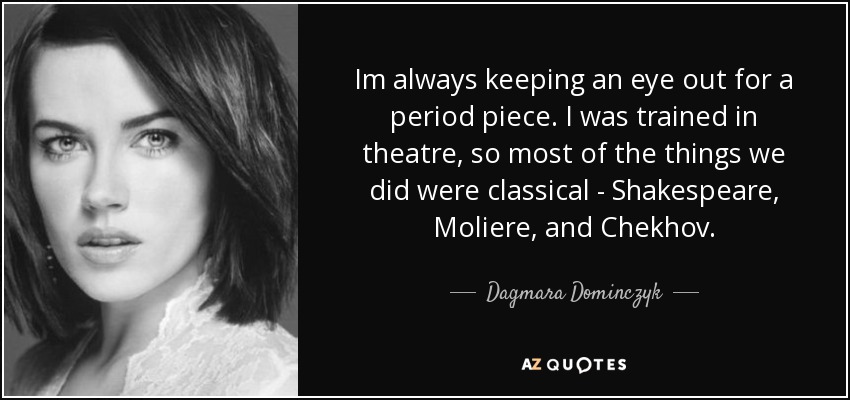
Im always keeping an eye out for a period piece. I was trained in theatre, so most of the things we did were classical - Shakespeare, Moliere, and Chekhov.
I’m not interested in teaching books by women.
No author has created with less emphasis such pathetic characters as Chekhov has.
Chekhov - shall I be blunt? - is the greatest short story writer who ever lived.
I saw Chekhov a number of times in English, and I thought that it translates very well in English, for some reason, from the Russian to the English.
Ivan and Misha is the great American Russian Novel told as Chekhov would tell it, in stories of delicacy, humanity, and insight. From Kiev to Manhattan, Brighton Beach and Bellevue, Michael Alenyikov lays out a series of compelling arguments for brotherhood between brothers, between lovers, between men from an old country. Alenyikov confronts big subjects—illness and madness, sex and love in the age of AIDS, old and new world values, a fallen wall, the metaphysics of survival, the march of generations.
Chekhov said: let's put God - and all these grand progressive ideas - to one side. Let's begin with man; let's be kind and attentive to the individual man - whether he's a bishop, a peasant, an industrial magnate, a convict in the Sakhalin Islands, or a waiter in a restaurant. Let's begin with respect, compassion, and love for the individual - or we'll never get anywhere.
I wasnt a Star Trek fan, yet I knew who all the characters were. that goes to show what an impact the show had not just in entertainment but in life. I knew who Chekhov was and I knew who Kirk and Spock were, although I probably had never seen the show.
Chekhov used to correspond with aspiring writers, and once he gave this advice to Maxim Gorky when he was encouraging him to pare his wordy sentences: "When someone expends the least amount of motion on a given action, that's grace." The short story, by definition, embodies this notion of grace, because it requires such forceful compression to achieve its effects.
I come from the theatre where there are no boundaries to the style you're doing; you're doing Molière, then you're doing Chekhov and then you're doing Arthur Miller in a season and no-one bats an eye.
I was deeply influenced by the sartorial practices of both preachers and jazz musicians and actually Masha in Act One of Anton Chekhov, my favorite writer's master piece,Three Sisters,when she arrives reflecting on whether they're ever going to get to Moscow, memories of the death of their father, and she's in black, and she says I'm in mourning for the world, saying in part that I have a sad soul and a cheerful disposition.
I see this quality [real interest and joy] in the work of [Pavel] Chekhov, of course, and [Alexei] Tolstoy and really just about any great writer.
I had a very sparse comic upbringing - not because I was being whipped into reading Chekhov and Dickens, but I read Asterix on holidays when I was a kid, and Tin Tin was featured, I remember, for a few years.
How many really great writers are there who are totally non-political? You can hear the French Revolution in the poetry of [Percy Bysshe] Shelly and [John] Wordsworth; you can sense the vast inequalities of Tsarist Russia in [Anton] Chekhov and [Lev] Tolstoy.
Another older writer that had a huge influence on me is Chekhov. More contemporarily, it's hard to say.
Educate yourself, welcome life's messiness, read Chekhov, avoid becoming an architect at all costs.
Some photographs are like a Chekhov short story or a Maupassant story. They're quick things and there's a whole world in them. But one is unconscious of it while shooting.
English country life is more like Chekhov than The Archers or Thomas Hardy or even the Updike ethic with which it is sometimes compared.
I go to see plays all the time, and whenever I see Chekhov, I'm amazed at how this Russian play strikes home to me living 100 years later in New York City. I'm drawn to him because of his way with characters and their relationships with each other.
The great writers like Chekhov know that tragedy and laughter are just a few steps from each other ... but it took me a long time as an actress to learn that. Actually Arthur Miller taught me in the Seventies. We were making a CBS TV drama of his play Playing for Time about Auschwitz but the characters were laughing. It was a big insight for me to realise that that was what's called gallows humour, in this case worse than the gallows, that humans need to laugh and make jokes in order to survive.
The Socratic demonstration of the ultimate unity of tragic and comic drama is forever lost. But the proof is in the art of Chekhov.
Russia is a place of great culture. If you've read Tolstoy's "War and Peace", Dostoyevsky, Pushkin, Chekhov...the culture of the great Russian literature is amazing. The human narrative you get out of "War and Peace" is universal.
Chekhov will seek out the key situation in the life of a cabman or a charwoman, and make them glow for a brief moment in the tender light of his sympathy.
In Chekhov, when people leave, a carriage is taking them away forever. The stakes are so high just for someone to make a simple exit. And now we have all this access to public transportation, automobiles and jets and the Internet; we're so easily distracted, but the world is still designed to destroy you. It just happens quicker and faster now.
Master Chekhov says Man is what he believes. From here we conclude that when Man believes in a crap, Man becomes a crap!
Follow AzQuotes on Facebook, Twitter and Google+. Every day we present the best quotes! Improve yourself, find your inspiration, share with friends
or simply: