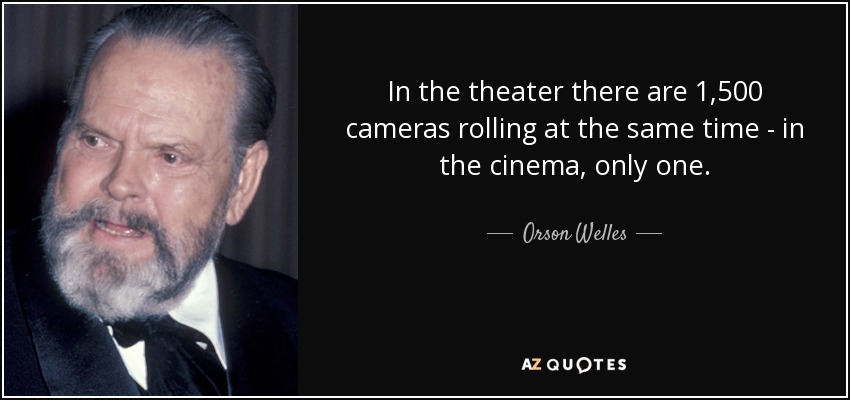
In the theater there are 1,500 cameras rolling at the same time - in the cinema, only one.
Music has a role, fashion has a role, cinema has a role, intellectuals have a role, parliamentarians, politicians, diplomats - all of it.
I am grateful to theatre for making me what I am today. But it's not like theatre is my first love. I am equally attached to cinema, which is, actually, a child of theatre, since it borrows heavily from it.
I prefer working in good cinema, wherever it is. I like subjects that have a universal appeal.
I first came to cinema as a passionate filmgoer, when I was a child. Then, when I was a very young man, I became a film critic precisely because of my knowledge of cinema. I did better than others because of this. Then I moved on to screenwriting. I wrote a film with Sergio Leone, 'Once Upon a Time in the West.' And then I moved to directing.
I know there is one kind of cinema that exists in the world, that is good or bad cinema.
Bicycle Thief is a triumphant discovery of the fundamentals of cinema, and De Sica has openly acknowledged his debt to Chaplin.
When you write a scene where somebody is afraid of something you instantly go to decades of genre cinema: horror, suspense, and thrillers. Those are very cinematic genres, when you shoot a close-up of someone and you can see fear in the person's face, or anticipation, or some kind of anxiety, it's a very cinematic image.
I'm a storyteller who uses all of the beauty and power of cinema to tell tales of human struggles for positive social change.
Just look at the cinema itself: It's comprised of lots of movies about graphic novels, and if you're not 20 years old and wearing a cape and a mask and white, you're out of business. Today's cinema is a proliferation of comedies, which are in some ways creating caricature images. They're one-dimensional.
What I'm doing in writing has been thoroughly and exhaustively explored in other fields like visual art, music, and cinema, yet somehow it's never really been tested on the page.
I truly value the cinema experience, the tribal gathering in the dark to watch something larger than life. I like to sit in the first row with no heads in front of mine, and become one with the screen. I always stay for the complete credits so I can linger in the film's story just a little longer.
We believe that the cinema's capacity for getting around, for observing and selecting from life itself can be exploited in a new and vital art form
I am very happy to be part of European and world cinema as a British filmmaker.
I'm not a fan of action movies. I don't watch many action movies, I don't have a lot of references except for 70s action movies or cinema noir.
I'm an eclectic and avid filmgoer. I try to see everything from romantic comedies to blockbusters to art house films, world cinema and documentaries.
I don't watch television and I rarely go to the cinema, but I recently watched 'The King's Speech' on a flight. It was so beautiful and so simple.
Personally, I prefer contemporary films, but the market calls for more period choices, especially since China opened up a cinema market in Hong Kong. There's a lot of restriction for contemporary films simply because of subject matter.
I think that in the realm of commercial, popcorn cinema, the amount of message or smuggling of ideas you can get in there is quite limited. Like, if you think you're going to make a difference or change anything, you're on pretty dangerous thin ice.
I would argue that something dark is lurking between the sexes, and that it is seeping out into cinema.
Chennai is the birthplace of a new language in cinema. The audiences here are the most evolved moviegoers to be found anywhere in India.
For any movement to emerge, it has to be innovatively independent from the mainstream cinema, and I don't see that much.
Most, especially the young filmmakers, do not see strength in communal or collective existence. They just think they're going to conquer the world as individuals. There is no world like that. In cinema it's always, even in Hollywood, a collective surge.
In the vast majority of movies, everything is done for the audience. We are cued to laugh or cry, be frightened or relieved; Hitchcock called the movies a machine for causing emotions in the audience. Bresson (and Ozu) take a different approach. They regard, and ask us to regard along with them, and to arrive at conclusions about their characters that are our own. This is the cinema of empathy.
War is cinema, and cinema is war
Follow AzQuotes on Facebook, Twitter and Google+. Every day we present the best quotes! Improve yourself, find your inspiration, share with friends
or simply: