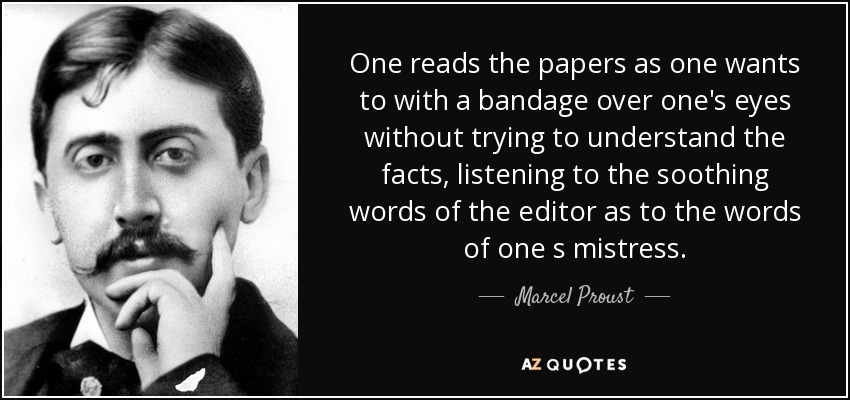
One reads the papers as one wants to with a bandage over one's eyes without trying to understand the facts, listening to the soothing words of the editor as to the words of one s mistress.
After university, I got a job sub-editing and for years I was a literary editor.
I have a huge editor in my head who's always making me miserable. But sometimes, I try to let my unconscious act out.
The New York Times Bestseller 'The Amateur,' written by Ed Klein, former editor of the 'New York Times Magazine,' is one of the best books I've read.
LUMINARY, One who throws light upon a subject; as an editor by not writing about it.
Here's a slightly outrageous tip: Don't respect the text. Just because you've written something down doesn't mean it has a right to exist. If your internal editor can find a better way to say something, junk the original version and go with the new one. If you can't find a better way, and the passage really isn't good, junk it.
Writers think in metaphors. Editors work in metaphors. A great reader reads in metaphors. All are continually asking, "What does this represent? What does it stand for?" They are trying to take everything one level deeper. When they get to that level, they will try to go deeper again.
Nothing can now be believed which is seen in a newspaper. Truth itself becomes suspicious by being put into that polluted vehicle... Perhaps an editor might begin a reformation in some such way as this. Divide his paper into four chapters, heading the 1st, Truths. 2d, Probabilities. 3d, Possibilities. 4th, Lies. The first chapter would be very short.
I am never happy when I finish a book. I always start feeling good, and then I get to about Page 75 and start losing momentum - and I kind of pull it together at the end, but by then I think it's just all over. It's become almost a running joke among my agent and my editor - I always say that, so they don't take me seriously anymore.
I once had an editor advise me, as I was revising one of my early novels, to add more characters. I played around with the idea. As soon as I'd decided a few fresh faces and give them something to do, I realized that what my editor had really asked for was more plot. Ding. More characters equals more action.
I learned not to be so bitterly defeated when my fiction took a beating from editors. I learned in advertising to color in the lines and have my work done on time and to make it the very best it could be.
As one of the first editors at 'Outside' magazine in 1975, it was my contention that most American writing going back to James Fennimore Cooper and then through Twain up to Hemingway had been outdoor writing. At that time, adventure writing meant stuff like 'Saga' or 'Argosy.' 'Death Race with the Jungle Leper Army!' That kind of thing.
I always warn aspiring reporters to observe three basic rules: 1. Never trust an editor. 2. Never trust an editor. 3. Never trust an editor.
Newspapers and their editors have to become as accountable as the rest of us - they are not 'a special case,' and they have only themselves to blame for having lost the argument for 'exceptionalism' - and with it the right to 'self-regulation.
I always have trouble with titles for my books. I usually have no title until the editor has to present the book and calls me frantically, 'Judy, we need a title.
I have dictated stories from an airport after writing the story out in longhand on the plane that I got from phone interviews and then was applauded by editors for 'working magic.
I tend to overwrite; I need a good editor.
I always read what I write out loud, and I did that long before any radio thing. My editor finds that unusual.
To practice - write each and every day if possible - then try to attend professional writer's conferences where you can learn your craft, get to know fellow writers, and meet editors and agents.
I studied philosophy, religious studies, and English. My training was writing four full-length novels and hiring an editor to tear them apart. I had enough money to do that, and then rewriting and rewriting and rewriting.
Film is an editor's medium. You can create very good raw material and they can make it horrible, or you can do not so well and they can make it beautiful. You don't really know.
Writing doesn't come real easy to me. I couldn't write a novel in a year. It wouldn't be readable. I don't let an editor even look at it until the second year, because it would just scare them. I just have to trust that all these scraps and dead-ends will find a way.
And if you want to know why great editors scare the pants off of writers everywhere, read 'Eats, Shoots and Leaves' by Lynne Truss. The punctuation police are everywhere!
I enjoyed reading and learning at school, and at university I enjoyed extending my reading and learning. Once I left Cambridge, I went to Yale as a fellow. I spent two years there. After that, George Gale made me literary editor of 'The Spectator.
I have been blessed to have the same editor and work for a great publishing house.
Follow AzQuotes on Facebook, Twitter and Google+. Every day we present the best quotes! Improve yourself, find your inspiration, share with friends
or simply: