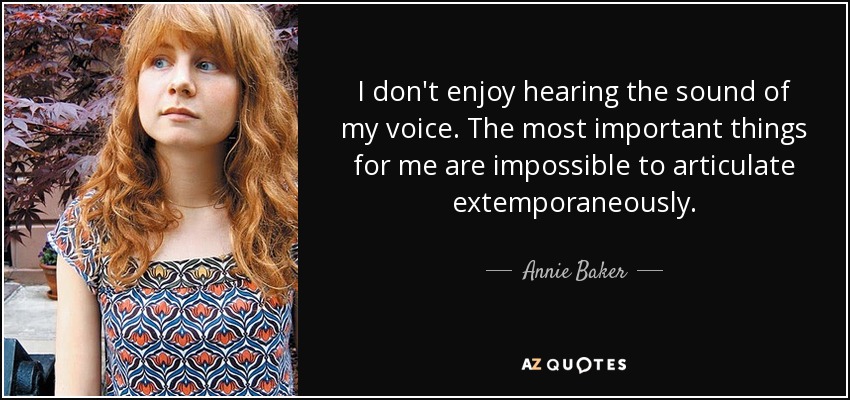
I don't enjoy hearing the sound of my voice. The most important things for me are impossible to articulate extemporaneously.
The first choral music I remember hearing was Handel's 'Messiah' when the Mormon Tabernacle Choir broadcast it over the radio.
Dante Alighieri is a universal poet, and great creators, they are writing for everybody always. Every single verse is very moving, and the beauty - if we don't understand, we just stay listening to the sound and it's like hearing music.
Although becoming a singer was my plan A after first hearing Whitney Houston when I was 17, I started off with plan B by going to the teacher-training college that my dad went to. It was a slow coming of age.
And therefore we must seek dialogue in this networked world. We must ask which voice was actually attempting to make itself heard and saw no other possibility of gaining a hearing. To that extent, for a while this also represented a forced opening of a cosmopolitan view.
In college, I went to school for acting; we had to learn phonetics just to be able to do dialects and all that stuff. I'm somebody who does better just hearing it. I'll just imitate it, and I get it better that way. When I know too much information, I'm not great.
You cannot get PTSD from reading a book or from hearing a story, even repeated stories over and over.
Sometimes you do a sound installation, and the first day or two it is very exciting. Then you are hearing this every day for a month, and it becomes like a torture.
Close to birth... I lost, like, 80 percent of my hearing, and I had difficulty speaking.
I suppose I don't hear things, but I listen, if you know what I mean. And there is a big difference between hearing and listening. So it's like a conversation, you know. When you speak to someone, it's one on one, and that's exactly how I play.
I was the little French boy who grew up hearing people talk of De Gaulle and the Resistance. France against the Nazis! Then when that boy grew up, he began to uncover things. We began to legitimately ask the question, 'What exactly did our parents do during the Occupation?' We discovered it was not the story they were telling us.
Nature is about smelling, hearing, tasting, seeing.
You ought certainly to forgive them as a Christian, but never to admit them in your sight, or allow their names to be mentioned in your hearing.
All these financiers, all the little gnomes of Zürich and the other financial centres, about whom we keep on hearing.
If you're a short-seller, that's a cacophony of negative reinforcement. You're basically told that you're wrong in every way imaginable every day. It takes a certain type of individual to drown that noise and negative reinforcement out and to remind oneself that their work is accurate and what they're hearing is not.
People will have MP3s of every Miles Davis' record but never think of hearing any of them twice in a row - there's just too much to get through.
I grew up hearing about the walking undead. I had a fascination with it as a child.
Unfortunately, you've grown up hearing voices that incessantly warn of government as nothing more than some separate, sinister entity that's at the root of all our problems. Some of these same voices also do their best to gum up the works. They'll warn that tyranny is always lurking just around the corner. You should reject these voices.
In every enterprise ... the mind is always reasoning, and, even when we seem to act without a motive, an instinctive logic still directs the mind. Only we are not aware of it, because we begin by reasoning before we know or say that we are reasoning, just as we begin by speaking before we observe that we are speaking, and just as we begin by seeing and hearing before we know what we see or what we hear.
Since I am from Spain, once the morning has gone, I like to take a nap while falling asleep to black and white movies. It feels less lonely. There is a comfort in hearing their voices, like when you're a child and your mother tells you a story before bedtime.
He was too good to be Where ill men were, and was the best of all Amongst the rar'st of good ones- sitting sadly Hearing us praise our loves of Italy For beauty that made barren the swell'd boast Of him that best could speak; for feature, laming The shrine of Venus or straight-pight Minerva, Postures beyond brief nature; for condition, A shop of all the qualities that man Loves woman for; besides that hook of wiving, Fairness which strikes the eye- CYMBELINE.
At one time,' Golenishchev continued, either not observing or not willing to observe that both Anna and Vronsky wanted to speak, 'at one time a freethinker was a man who had been brought up in the conception of religion, law, and morality, who reached freethought only after conflict and difficulty. But now a new type of born freethinkers has appeared, who grow up without so much as hearing that there used to be laws of morality, or religion, that authorities existed. They grow up in ideas of negation in everything - in other words, utter savages.
Obliged to you for hearing me, and now old Sojourner ain't got nothing more to say.
Goethe died in 1832. As you know, Goethe was very active in science. In fact, he did some very good scientific work in plant morphology and mineralogy. But he was quite bitter at the way in which many scientists refused to grant him a hearing because he was a poet and therefore, they felt, he couldn't be serious.
All people are special, and all moments are golden. There is no person and there is no time more special than another. Many people choose to believe that God communicates in special ways and only with special people. This removes the mass of the people from responsibility for hearing God's message, much less receiving it (which is another matter), and allows them to take someone else's word for everything.
Follow AzQuotes on Facebook, Twitter and Google+. Every day we present the best quotes! Improve yourself, find your inspiration, share with friends
or simply: