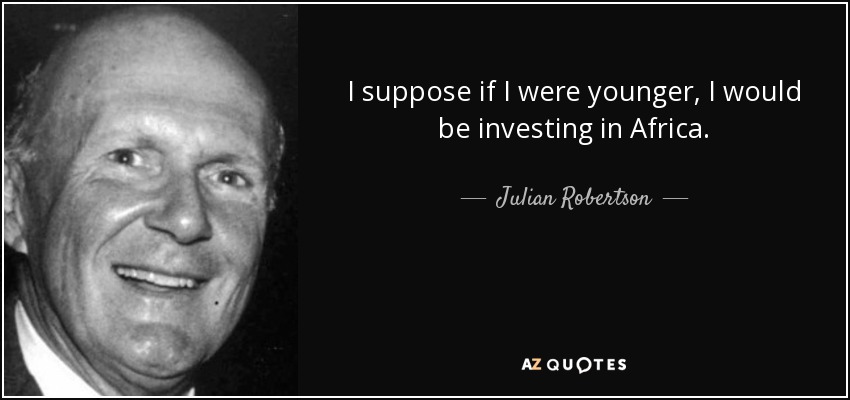
I suppose if I were younger, I would be investing in Africa.
My advice to this investor is the same that I give to the young investors in my classes Devote the same earnest attention to investing that $50,000 as you devoted to earning it.
Experience taught me to listen to your gut, no matter how good something sounds on paper.
Surprise! The returns reported by mutual funds aren't actually earned by mutual fund investors.
Wall Street, with its army of brokers, analysts, and advisers funneling trillions of dollars into mutual funds, hedge funds, and private equity funds, is an elaborate fraud.
I can't figure out why anyone invests in active management, so asking me about hedge funds is just an extreme version of the same question. Since I think everything is appropriately priced, my advice would be to avoid high fees. So you can forget about hedge funds.
The distribution of the market is fat-tailed relative to the normal distribution... For passive investors, none of this matters, beyond being aware that outlier returns are more common than would be expected if return distributions were normal.
Hint: money flows into most funds after good performance, and goes out when bad performance follows.
Even fans of actively managed funds often concede that most other investors would be better off in index funds. But buoyed by abundant self-confidence, these folks aren't about to give up on actively managed funds themselves. A tad delusional? I think so. Picking the best-performing funds is 'like trying to predict the dice before you roll them down the craps table,' says an investment adviser in Boca Raton, FL. 'I can't do it. The public can't do it.'
The S&P is up 343.8 percent for 10 years. That is a four-bagger. The general equity funds are up 283 percent. So it's getting worse, the deterioration by professionals is getting worse. The public would be better off in an index fund.
Question: So investors shouldn't delude themselves about beating the market? Answer: "They're just not going to do it. It's just not going to happen."
While the apostles of the new so-called "behavioral" theory present ample evidence of how often human beings make irrational financial decisions, it remains to be seen whether these decisions lead to predictable errors that create systematic mispricings upon which rational investors can readily and economically capitalize.
The first rule (of investing) for me is don't have rules. You find one amazing investment and that's all that matters. If you pick the right body of water, you might not need a boat.
The more you think you know, the more closed-minded you'll be.
Sunshine is the best disinfectant
I take the market-efficiency hypothesis to be the simple statement that security prices fully reflect all available information.
There is no such thing as a value trap. There are investing mistakes.
Most people might just as well buy a share of the whole market, which pools all the information, than delude themselves into thinking they know something the market doesn't.
Even if this advice to portfolio decision makers to drop dead is good advice, it obviously is not counsel that will be eagerly followed. Few people will commit suicide without a push. And fewer still will pay good money to be told to do what is against human nature and self-interest to do.
The debate can be put in the form of the question: Resolved, that the best of money managers cannot be demonstrated to be able to deliver the goods of superior portfolio-selection performance. Any jury that reviews the evidence, and there is a great deal of relevant evidence, must at least come out with the Scottish verdict: Superior investment performance is unproved.
The sad truth is that it is precisely those who disagree most with the hypothesis of efficient market pricing of stocks, those who pooh-pooh beta analysis and all that, who are least able to understand the analysis needed to test that hypothesis.
First, those who disagree with market efficiency simply assert that it stands to common sense that greater effort to get facts and greater acumen in analyzing those facts will pay off in better performance somehow measured. (By this logic, cure for cancer must have been found by 1955).
It's human nature to find patterns where there are none and to find skill where luck is a more likely explanation (particularly if you're the lucky manager).
Mutual fund manager performance does not persist and the return of stock picking is zero.
Buy a cross section of American industry, and if a cross section of American industry doesn't work, certainly trying to pick the little beauties here and there isn't going to work either.
Follow AzQuotes on Facebook, Twitter and Google+. Every day we present the best quotes! Improve yourself, find your inspiration, share with friends
or simply: